
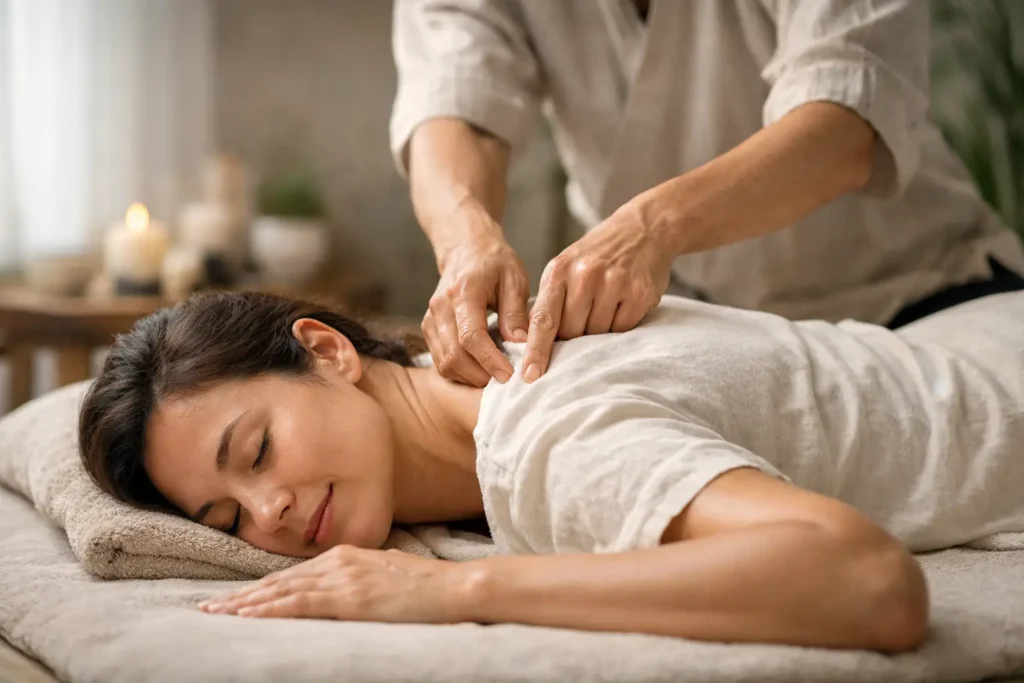
Tension rarely stays in one place. It settles into the neck after long hours at a desk, gathers across the shoulders during stressful weeks, and can leave the low back feeling guarded and fatigued. That is why many people seek shiatsu massage benefits for tension not only to feel temporary relief, but to address the deeper patterns that keep tightness returning. If you’re in Portland and dealing with ongoing tension in your body, this is a very common pattern I see.
Shiatsu can be especially supportive when tension is tied to both physical strain and mental overload. Rather than treating the body as a collection of separate sore spots, this approach considers how posture, stress, breathing, circulation, and nervous system activity all affect one another. For people who feel wound up, stiff, and tired at the same time, that whole-body perspective often matters.
What makes shiatsu different?
Shiatsu is a Japanese bodywork modality that uses focused pressure, gentle stretching, and attentive contact along areas of the body associated with circulation, mobility, and energetic balance. Unlike a standard relaxation massage that relies mostly on gliding oil-based strokes, shiatsu is often performed through comfortable clothing or with minimal lubricant, allowing the practitioner to apply sustained, precise pressure.
That difference matters for tension. Sustained pressure can give tight muscles time to soften rather than react. It can also help the nervous system shift out of a guarded state. Many clients describe the experience as deeply calming, but also surprisingly specific. Instead of feeling generally massaged, they feel that the exact areas contributing to their discomfort are being understood and addressed.
Shiatsu is not always about using stronger pressure. In fact, more force is not always better when the body is already bracing. A skilled session adjusts pressure and pacing to the person in front of the table. For some, that means deeper work through the shoulders and upper back. For others, it means gentler contact that allows chronic holding patterns to release without aggravation.
Shiatsu massage benefits for tension in the neck, shoulders, and back
One of the clearest shiatsu massage benefits for tension is that it can reduce the feeling of constant contraction in overworked muscles. The neck, shoulders, and back often tighten in response to repetitive movement, poor ergonomic setup, old injuries, or emotional stress. Shiatsu addresses these areas with steady pressure and carefully chosen stretches that encourage muscles to let go.
In the neck and shoulders, tension often involves more than muscle fatigue. People may unconsciously lift their shoulders while working, clench the jaw, or breathe shallowly through the chest. Shiatsu can help interrupt those habits by calming the surrounding tissues and supporting easier breathing. When the upper body no longer feels like it has to stay on alert, pain and stiffness may begin to ease.
In the back, tension can show up as a dull ache, a sense of compression, or the feeling that certain movements are harder than they should be. Shiatsu may help improve comfort by reducing muscular guarding and encouraging better circulation to tight, tired tissue. That can translate into easier movement during ordinary activities like driving, standing at the kitchen counter, or getting up after sitting for too long.
For some clients, the biggest change is not dramatic pain relief in a single session. It is the gradual return of mobility, better body awareness, and fewer flare-ups. That slower kind of progress is still meaningful, especially when tension has been building for months or years.
The nervous system piece is often the missing piece
People often think of tension as a muscle problem, but the nervous system plays a major role. When stress stays high, the body tends to remain in a state of low-level readiness. Muscles tighten, breathing becomes shallower, sleep may suffer, and pain can feel more persistent. Even when there is no immediate danger, the body behaves as though it needs to stay prepared.
Shiatsu can be helpful here because the rhythm and consistency of pressure can signal safety to the body. When that happens, the nervous system may downshift. Clients often notice that their jaw softens, their breathing deepens, and their thoughts slow down during treatment. Those changes are not separate from physical relief. They are part of it.
This is one reason shiatsu may feel different from treatments that focus only on chasing knots. If the body is stuck in a protective pattern, aggressive work can sometimes make it brace more. Thoughtful bodywork takes into account how the body responds, not just where it hurts.
When shiatsu helps most – and when it depends
Shiatsu can be a good fit for tension related to desk work, stress, repetitive strain, mild to moderate postural tightness, and general muscular fatigue. It may also support people who feel disconnected from their bodies after long periods of overwork or emotional strain. The method encourages awareness as much as release, which can help clients notice how and where they hold tension during daily life.
That said, results depend on the cause of the tension. If discomfort is tied to an acute injury, nerve irritation, inflammatory condition, or a more complex medical issue, massage may need to be adapted or used alongside other care. Severe pain, numbness, progressive weakness, or unexplained symptoms should always be evaluated appropriately.
It also depends on personal preference. Some clients love the grounded, sustained feeling of shiatsu pressure. Others respond better to a blend of shiatsu with Swedish or deep tissue techniques. In a therapeutic setting, the best treatment is not the one with the most impressive label. It is the one that fits the person, the tissues, and the reason they came in.
Why personalized care matters for lasting relief
Tension is rarely identical from one person to the next. Two people may both complain of shoulder tightness, but one is dealing with stress and poor sleep while the other is compensating for limited mid-back mobility and repetitive work habits. If both receive the same routine treatment, one or both may leave without meaningful improvement.
Personalized shiatsu bodywork looks at the pattern behind the pain. A practitioner may pay attention to how tension in the neck connects to the upper back, how hip restriction contributes to low back strain, or how stress is showing up in breathing and posture. That broader view can make the session feel more effective because the work is not limited to the loudest symptom.
At Senju Holistic Healing, that individualized approach is central to the experience. For clients in Southwest Portland and nearby communities who want more than a standard spa massage, this kind of one-on-one care can make a real difference. Privacy, careful listening, and technique selection all support the same goal: relief that feels thoughtful and lasting, not generic.
What to expect after a shiatsu session
Some people feel immediate lightness and easier movement. Others notice that the first change is a sense of calm, followed by reduced tightness over the next day or two. It is also normal to feel mildly tender or tired after focused work, especially if the body has been holding tension for a long time.
Hydration, rest, and gentle movement after the session can help the body integrate the work. A short walk, slower breathing, or simply paying attention to posture later in the day may help extend the benefits. If tension is chronic, one session can be a strong start, but repeated treatment is often where deeper change becomes more noticeable.
The goal is not to force the body into release. It is to create conditions where release becomes possible.
Shiatsu massage benefits for tension are strongest when care is consistent
For recurring neck, shoulder, and back tightness, consistency often matters more than intensity. Occasional bodywork can feel good, but regular sessions tend to do more to shift long-standing patterns. That is especially true when tension is linked to work stress, caregiving demands, commuting, or repetitive physical habits that continue week after week.
Consistent care also gives the practitioner time to learn the body’s responses. Some areas may open quickly, while others need a slower approach. Over time, treatment can become more precise, helping reduce flare-ups and support steadier comfort between visits.
Shiatsu offers something many tense bodies are missing: focused attention without force, therapeutic pressure without rush, and a chance for both body and mind to settle at the same time. When relief feels hard to hold onto, that quieter, more intentional approach can be exactly what helps tension finally begin to loosen.
If you’re dealing with ongoing tension in Portland, a personalized session may help address the underlying patterns, not just the symptoms.
You can book a session here.