
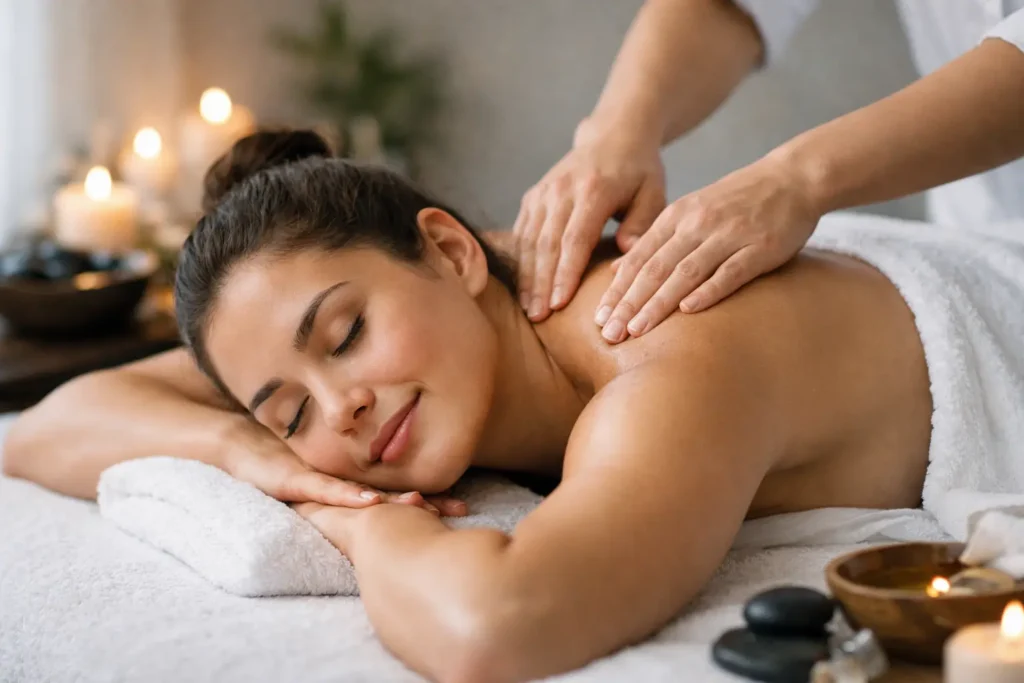
Some stress lives in the mind. Some of it settles into the body so quietly that you do not notice it until your shoulders stay lifted, your jaw aches, or your breathing never quite drops into ease. That is where massage for emotional stress relief can be especially meaningful. It does not ask you to think your way out of tension. It gives the body a safe, skillful way to soften, regulate, and begin letting go. If you’re in Portland and dealing with emotional stress that is showing up physically, this is a very common pattern I see.
For many people, emotional stress does not arrive as a dramatic event. It builds through deadlines, caregiving, poor sleep, grief, conflict, overstimulation, or simply carrying too much for too long. Over time, the nervous system adapts to that pressure by staying on alert. Muscles tighten to brace and protect. Digestion changes. Sleep becomes lighter. Pain may show up in the neck, shoulders, low back, or between the shoulder blades.
Massage therapy can help interrupt that cycle. Not by erasing the source of stress, but by changing how the body is holding it.
How massage for emotional stress relief works
Emotional stress has physical patterns. A person under chronic strain often breathes more shallowly, tenses the upper body, and has a harder time shifting into a restful state. This is not a personal failing. It is the body doing its best to cope.
Thoughtful massage supports a different response. Gentle, steady pressure can encourage the nervous system to move away from constant vigilance. As muscles begin to release, the body may recognize that it does not have to brace in the same way. Many clients describe this as feeling lighter, quieter, or more grounded after a session, even when they arrived feeling mentally scattered.
There is also a simple but powerful effect in receiving one-on-one care in a calm, private setting. When a session is tailored to your needs rather than delivered as a routine sequence, the body often responds more deeply. Areas of guarding can be approached with attention and pacing. Breathing can slow. That sense of being safely supported matters, especially when stress has been running high for a long time.
The body signs of emotional overload
Stress does not always look like panic. Sometimes it looks like recurring headaches, tight hips, a locked-up upper back, or waking up tired after a full night in bed. Emotional pressure often travels through the body in familiar channels.
Neck and shoulder tension are especially common. When the day feels demanding, many people subtly lift the shoulders and tighten the muscles around the base of the skull. Others feel stress in the chest, where shallow breathing creates a constant sense of tightness. Some hold it in the low back or abdomen, especially when they are pushing through fatigue without enough recovery.
If this sounds familiar, massage can be useful not only because it feels good in the moment, but because it helps identify your specific stress pattern. One person may need slow Swedish work to settle an overactive nervous system. Another may benefit from more focused therapeutic massage for deep, chronic holding in the shoulders and back. For someone else, Shiatsu may support a feeling of balance by working with tension patterns in a more integrated way.
That is why individualized care matters. Emotional stress is personal, and the body does not express it the same way in everyone.
What a session can help you feel
The immediate effect of massage is often physical relief. Muscles loosen. Breathing deepens. The body feels warmer and less compressed. But emotional stress relief tends to unfold in layers.
Some people notice a quieter mind during the session itself. Others feel the biggest shift later that evening when they realize they are not clenching their jaw or replaying the day with the same intensity. Better sleep is another common benefit. When the body is no longer working so hard to stay guarded, rest can come more naturally.
There can also be an emotional release. This does not happen in every session, and it is not something to force. But when longstanding tension starts to soften, some clients feel sadness, relief, or unexpected tenderness. That response is normal. The body stores patterns of protection, and releasing them can sometimes bring emotion to the surface.
A skilled therapist makes space for that without turning the session into something dramatic. The goal is steady, respectful care that helps you feel more settled in yourself.
Choosing the right pressure and style
A common misconception is that deeper pressure always creates better results. For emotional stress, that is not necessarily true. If the nervous system is already overloaded, very intense work can sometimes feel like one more thing the body has to endure.
Often, slower and more moderate pressure is more effective at first. Swedish massage can be especially supportive when exhaustion, anxiety, or mental overstimulation are part of the picture. The long, calming strokes and consistent rhythm can help the body shift toward rest.
That said, emotional stress and physical pain frequently overlap. If you have been carrying tension in the same places for months, therapeutic deep tissue work may also be appropriate, especially in the neck, shoulders, and back. The key is not using deep pressure for its own sake. It is applying the right technique, in the right amount, at the right time.
Shiatsu can offer another kind of support. Its grounded, intentional approach may help when stress feels diffuse and you want a session that addresses the body as an interconnected whole. For many clients, the best treatment is not one modality alone, but a thoughtful blend based on how they present that day.
When massage helps most, and when it is only part of the answer
Massage can be a strong support for emotional stress, but it works best when expectations are realistic. If your stress is tied to an intense season of life, bodywork may help you recover more quickly and feel more resilient between demands. If stress has become chronic and is contributing to persistent pain, regular sessions can help interrupt the cycle before it becomes your normal.
At the same time, massage is not a replacement for mental health care, medical treatment, or meaningful life changes. If someone is dealing with trauma, severe anxiety, depression, or burnout, massage may be one valuable part of support rather than the entire solution. There is no weakness in that. Healing often works best when care is layered.
The good news is that body-based support can still play an important role. Even when the source of stress cannot be fixed immediately, helping the nervous system feel safer and less burdened can make everything else more manageable.
Getting more from massage for emotional stress relief
The most effective sessions begin with honest communication. If you are mentally overloaded, sensitive to pressure, or feeling emotionally raw, say so. If you have trouble relaxing when a room feels rushed or impersonal, that matters too. A personalized session should reflect what your body can receive, not just what it can tolerate.
Consistency also makes a difference. One session can bring meaningful relief, especially during a difficult week, but recurring stress patterns usually respond best to ongoing care. When massage becomes part of your wellness rhythm, it is often easier to address tension before it hardens into pain, headaches, poor sleep, or emotional exhaustion.
Simple habits after the session can help extend the benefits. Drink water, keep your evening lighter if possible, and notice whether your body wants quiet, movement, or rest. You do not need a perfect self-care routine. You just need enough space to let the treatment settle.
For many adults balancing work, family, pain, and constant mental input, that pause is not a luxury. It is part of staying functional and well.
At Senju Holistic Healing, this is why the work is approached as more than a standard massage appointment. Personalized bodywork in a calm, private setting allows space to address both physical tension and the deeper stress patterns that shape it.
Emotional stress has a way of making the body feel like a place you are only trying to get through the day in. The right massage can help it feel like home again – steadier, softer, and more capable of rest.
If you’re dealing with emotional stress and physical tension in Portland, a personalized session may help support your nervous system and overall recovery.
You can book a session here.