
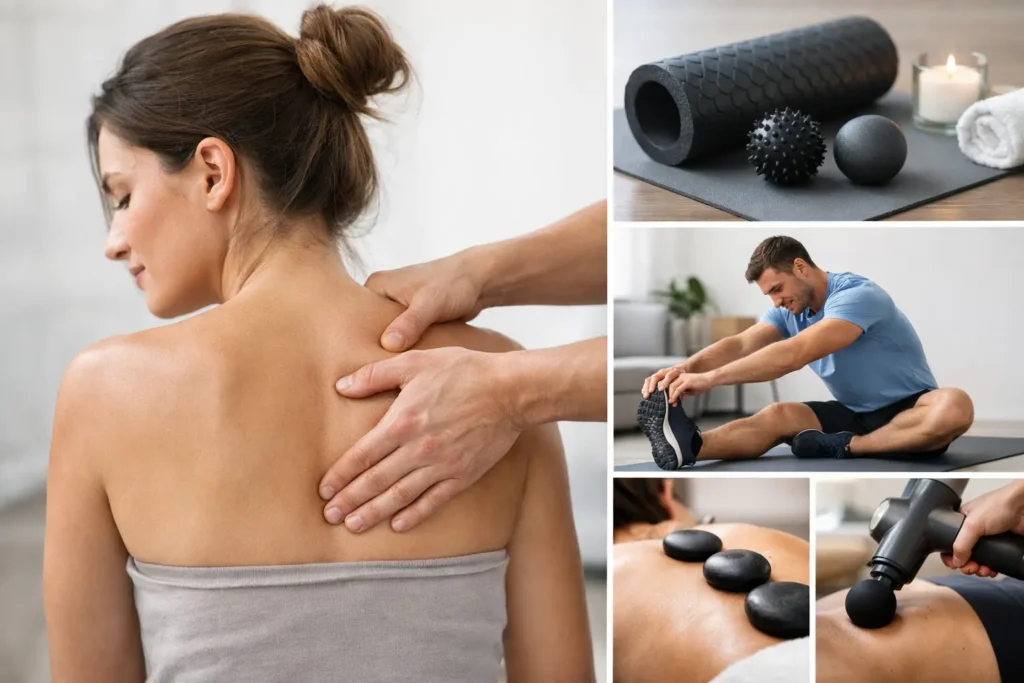
That tight, stubborn spot between your shoulder blades or along your lower back rarely appears out of nowhere. Back knots often build slowly – from hours at a desk, stress held in the body, lifting patterns, poor sleep, or workouts that outpace recovery. If you are searching for the best ways to relieve back knots, the goal is not only to press on the sore area until it softens. If you’re in Portland and dealing with back knots that keep returning, this is a very common pattern I see. Real relief usually comes from understanding why that tension formed in the first place and choosing the right kind of care for your body.
A back knot is not usually a literal knot in the muscle. More often, it is an area of muscle tension, irritation, and guarding that may feel dense, tender, and achy. Sometimes it refers pain outward, so the spot that hurts most is not always the only area involved. That is why some methods bring temporary relief while others create more lasting change.
Best ways to relieve back knots at home
Home care can be very effective when the tension is mild to moderate and has not become part of a long-standing pain pattern. The key is to avoid treating every knot with maximum force. When muscles are already irritated, aggressive pressure can make them tighten more.
Start with gentle heat
Heat is often one of the simplest ways to calm a guarded back muscle. A warm compress, heating pad, or hot shower can help increase circulation and make the tissue more receptive to movement. For many people, 10 to 20 minutes is enough to reduce that gripping sensation.
Heat tends to work best for stiffness and stress-related tightness. If the area feels inflamed, freshly strained, or unusually sharp, heat may not be the first choice. In those cases, gentler care and rest may be more appropriate.
Use pressure, but with patience
A massage ball or tennis ball against the wall can help release a localized knot, especially around the upper back. Lean in gradually, breathe slowly, and stay on a tender point for 20 to 30 seconds rather than rolling quickly over everything. Slow, steady pressure is usually more useful than chasing pain.
The trade-off is that self-release tools are easy to overdo. If the area feels bruised the next day or tenses up during the pressure, back off. Relief should feel like a gradual softening, not a fight between you and your muscles.
Add movement after release
Once a knot eases slightly, gentle movement helps the body keep that change. Shoulder rolls, chest opening stretches, cat-cow, or a slow walk can reduce the chance that the muscle tightens again right away. This matters because tissue often responds better to a release-plus-movement approach than to pressure alone.
If your knots are in the lower back, focus on comfortable range of motion rather than deep stretches. Forcing flexibility into an already protective area can increase irritation.
Why massage is one of the best ways to relieve back knots
Massage therapy can be especially helpful when back knots are recurring, hard to reach, or clearly linked to stress and posture patterns. Skilled bodywork does more than push on a sore spot. It can improve circulation, reduce protective muscle holding, and identify related areas that are contributing to the tension.
For example, a knot near the shoulder blade may be affected by chest tightness, neck strain, or how your shoulder moves throughout the day. Lower back tension may be tied to glute, hip, or hamstring restriction. This is where individualized treatment matters. A generic full-body massage may feel good, but a focused therapeutic session can better address the pattern behind the discomfort.
Different techniques can be useful depending on the person. Swedish massage supports relaxation and can be ideal when stress is a major driver of muscle tightness. Deep tissue work may help when layers of chronic tension need more specific attention, though deeper is not always better. Shiatsu and other pressure-based methods can support both muscular release and nervous system regulation, which is valuable when the body has been holding tension for a long time.
At a practice like Senju Holistic Healing, that personalized approach is central. When treatment is shaped around your pain history, stress level, movement habits, and pressure tolerance, relief tends to feel more complete and more sustainable.
When stretching helps and when it does not
Stretching is often recommended for back knots, but timing and technique matter. A muscle that feels tight is not always truly short. Sometimes it is overworking because another area is weak, restricted, or poorly supported. In that case, stretching may feel good briefly without solving much.
Gentle stretching helps most when the body is warm and the intensity stays moderate. Think steady breathing, soft shoulders, and a stretch sensation you can tolerate without bracing. If you feel pinching, sharpness, or your body starts resisting, that is a sign to stop.
For upper back knots, opening the chest and moving the thoracic spine can be useful. For lower back tension, hip mobility often matters more than repeatedly bending and twisting the low back itself. It depends on the pattern. The body rarely works in isolated pieces.
The role of stress in back knots
One of the most overlooked causes of muscle knots is emotional and mental stress. Many people notice their shoulders creeping upward during a busy workday or their back tightening after poor sleep, conflict, or long periods of mental strain. This is not imaginary. The nervous system and muscular system constantly affect each other.
When the body stays in a guarded state, muscles do not fully let go between tasks. That low-grade contraction can become tenderness, fatigue, and recurring knots. In these cases, physical treatment works best when paired with regulation practices such as slower breathing, regular breaks, hydration, and enough rest.
This is also why massage often helps people beyond the tissue itself. When the body feels safe enough to downshift, tension can release more naturally. Lasting relief is not only mechanical. It is also neurological.
Posture matters, but not in the way most people think
Poor posture gets blamed for almost every knot, but the issue is usually not one exact position. It is staying in any position too long. Even a fairly balanced sitting posture can create stiffness if you barely move for hours.
Instead of chasing perfect posture, focus on variation. Change positions often, stand up every 30 to 60 minutes, adjust your screen height, and support your arms when working at a desk. If you drive a lot, check whether your shoulders tense or your lower back flattens against the seat for long stretches.
Small shifts repeated throughout the day can matter more than a single stretch session at night. When back knots keep returning, daily habits usually deserve as much attention as the sore muscle itself.
Strength can prevent recurring back knots
If a certain area is always tight, it may be compensating for weakness elsewhere. Mid-back tension can develop when the upper back is deconditioned and the chest is dominant. Lower back knots may appear when the core and hips are not sharing load well.
That does not mean you need an intense program. Often, simple strengthening done consistently makes a difference. Rows, band pull-aparts, glute bridges, and core stability exercises can help reduce recurring strain patterns when chosen appropriately. The right exercises depend on your body and your history.
This is an area where nuance matters. If you are in an active flare, strengthening may need to wait until the irritation settles. If you push too soon, you can reinforce the cycle rather than break it.
When to get professional help for back knots
Home care is useful, but some signs suggest it is time for professional support. If the knot keeps returning in the same place, limits your movement, disrupts sleep, or starts radiating discomfort into the neck, shoulder, or hip, it is worth getting it assessed. The same is true if self-massage never seems to help for more than a few hours.
You should also seek medical evaluation if back pain comes with numbness, tingling, weakness, fever, recent injury, or unexplained changes in bladder or bowel control. Those symptoms call for medical attention rather than massage or self-treatment.
For more routine muscular tension, working with a licensed massage therapist can help you understand whether the issue is stress-driven, postural, movement-related, or a combination. That clarity often saves time and frustration.
A more lasting way to relieve back knots
The best ways to relieve back knots usually involve layers of care rather than one magic fix. Gentle heat can soften guarding. Targeted massage can release deeper tension. Movement helps the body hold that change. Better work habits, stress support, and strength can reduce how often the knots come back.
If your back keeps asking for attention, that is useful information, not a personal failure. Your body may be asking for less force, more consistency, or a more individualized approach. When you listen early and respond with care, relief often becomes easier to find and easier to keep.
If you’re dealing with recurring back knots in Portland, a personalized massage session may help address the muscle tension, compensation patterns, and stress habits behind the discomfort.
You can book a session here.