
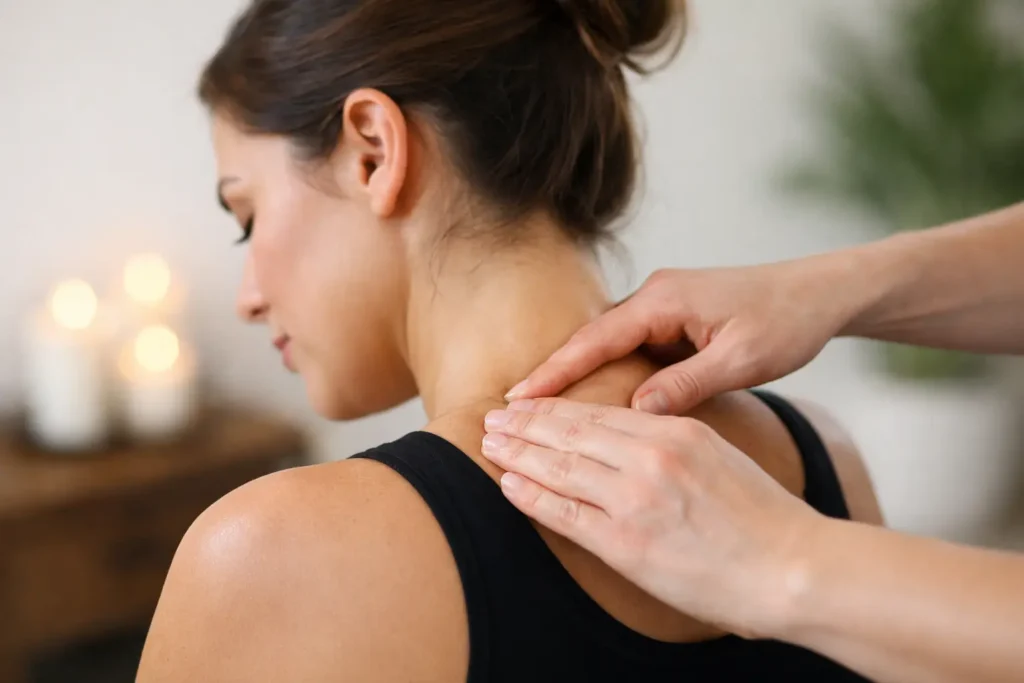
That hard, stubborn spot between your neck and shoulder often does not show up out of nowhere. It builds quietly from long hours at a desk, stress that settles into your upper body, workouts that outpace recovery, or the habit of lifting one shoulder without realizing it. If you are wondering, can massage help shoulder knots, the short answer is often yes – but the real answer depends on why the knot formed, how long it has been there, and how your body responds to touch.
A shoulder knot is usually not one single problem with one simple fix. In many cases, it is a mix of localized muscle tension, irritation in trigger points, guarding from overuse, and a broader pattern involving the neck, upper back, chest, and shoulder blade. That is why a thoughtful massage session can be more useful than simply pressing hard on the sore spot and hoping it disappears.
Can Massage Help Shoulder Knots or Just Temporarily Loosen Them?
Massage can help shoulder knots by reducing muscle tension, improving circulation to tight tissues, encouraging the nervous system to settle, and restoring better movement in the surrounding area. For many people, that means the knot feels less intense, less reactive, and easier to move with after a session.
At the same time, massage is not always a one-session erase button. Some knots soften quickly. Others return because the underlying pattern is still there – a workstation setup that keeps the shoulders rounded, stress that leads to constant bracing, side-sleeping on the same shoulder, or repetitive strain from parenting, driving, or training. Relief is often real, but lasting change usually comes from both hands-on work and changes in daily habits.
That practical perspective matters. A good therapeutic session does not chase symptoms only. It pays attention to the bigger pattern that keeps feeding the tension.
What Shoulder Knots Usually Involve
People often use the word knot to describe any tight, tender spot in the upper shoulder. Most often, the area involved is the upper trapezius, levator scapulae, or muscles around the shoulder blade. These tissues can become sensitive when they are overloaded, under-recovered, or doing extra work to compensate for posture and movement habits.
The sore spot you feel may only be part of the story. Tightness through the chest can pull the shoulders forward. Limited movement in the upper back can make the neck and shoulders work harder. Jaw tension and stress can increase holding in the same region. Even if the knot feels very specific, the body pattern behind it is often broader.
This is one reason therapeutic massage can be helpful. Instead of treating the shoulder in isolation, the session can include the muscles that support and influence that area.
Why Massage Sometimes Works Better Than Self-Pressure
A tennis ball, massage gun, or stretching routine can be useful, but they have limits. When a spot is very irritated, aggressive pressure can make it guard more. Many people also miss the surrounding tissues that are contributing to the problem.
Skilled hands-on work allows for more nuance. Pressure can be adjusted based on how reactive the tissue feels. Trigger point work may be used when appropriate, but not forced. Slower deep tissue work, shiatsu-informed bodywork, and other therapeutic techniques can help the body release in layers instead of fighting back.
In a personalized session, the goal is not simply to push hard into the knot. It is to work with the tissue in a way that helps it let go.
How Therapeutic Massage May Help Shoulder Knots
A session focused on shoulder tension often starts by assessing what feels restricted, what feels overworked, and what areas may be compensating. Sometimes the neck is clearly involved. Sometimes the upper back, chest, or rib area needs attention before the shoulder can settle.
Deep tissue massage may help when the muscles feel dense and chronically tight. Trigger point work can be useful for tender spots that refer discomfort into the neck, shoulder blade, or arm. Shiatsu-informed bodywork may support broader release through the upper body without relying on force alone. In some cases, therapeutic cupping or craniosacral work may be included as supporting techniques if they match the person and the pattern.
This kind of blending is often more effective than using one method throughout the entire session. Some areas respond well to focused pressure. Others respond better to slower contact, movement, or work on connected structures. A therapeutic massage practice like Senju Holistic Healing approaches this with flexibility, based on the person rather than a fixed routine.
When Massage Helps Most
Massage tends to help shoulder knots most when the tension is related to stress, posture, overuse, repetitive work, training load, or chronic tightness that has built over time. These are common patterns for desk workers, parents carrying children, people who commute often, and active adults who use their upper body heavily.
It can also be especially helpful when the knot is affecting your range of motion, making it uncomfortable to turn your head, or creating that familiar ache that creeps up by the end of the day. Even when the discomfort is not severe, ongoing shoulder tension can wear on your concentration, sleep, and mood. Releasing some of that holding can make everyday movement feel easier again.
The best results often come when the work is consistent enough to change the pattern, not just calm it for a day or two.
When It Depends
Not every shoulder knot responds the same way. If the area is highly inflamed, very recent, or tied to a strain that needs time, heavy work may not be the right approach. If the discomfort includes numbness, tingling, sharp pain, or symptoms that travel down the arm, massage may still be supportive in some cases, but it should be approached carefully.
There is also a difference between tissues that are truly shortened and tissues that are guarding because they feel overworked or stressed. The sensation may feel similar, but the body does not always need more force. Sometimes the most effective session is one that gradually reduces protective tension so the shoulder no longer feels like it has to brace.
That is why pressure alone is not the measure of quality. Good work is responsive, not mechanical.
Can Massage Help Shoulder Knots Long Term?
It can, especially when treatment is individualized and paired with awareness outside the session. Long-term improvement often depends on reducing the reasons the knot keeps returning. That may include adjusting your desk setup, taking movement breaks, changing how you carry a bag, balancing workouts, or noticing when stress is living in your shoulders before it becomes pain.
Massage can create a window where movement feels easier and the tissues are less guarded. That window is valuable. It gives the body a chance to reset, even if only partly at first. Over time, repeated sessions can support better tissue quality and less habitual tension for many people.
But honest expectations matter. If your daily routine keeps loading the same area in the same way, the knot may improve and still come back. That does not mean massage failed. It usually means the body needs both treatment and maintenance.
What a Good Session Should Feel Like
A productive session for shoulder knots should feel focused, intentional, and adaptable. Some tenderness is normal, especially around trigger points, but it should not feel like you are being attacked by pressure. Many people respond better when the work is deep enough to be effective but paced slowly enough that the muscles do not resist.
Afterward, you may notice less pulling when turning your head, a lighter feeling across the shoulders, or easier breathing through the chest. Some soreness can happen, particularly if the area has been tight for a long time, but you should generally feel like the body has more room rather than less.
Clear communication matters here. If pressure is too much, if a spot feels sharp rather than therapeutic, or if your body is tensing up on the table, the session should adjust.
Supporting the Results Between Sessions
What you do after massage can influence how long the relief lasts. You do not need an elaborate routine. Usually, a few simple changes help most: vary your posture instead of trying to sit perfectly, take short movement breaks during computer work, avoid clenching your shoulders during stress, and give overworked muscles some recovery after exercise.
Gentle mobility work can help, especially for the chest, upper back, and neck. Heat is comforting for some people. For others, better sleep support or changing how they use a phone or laptop makes a bigger difference. The key is to match the strategy to what is feeding the tension in your body.
Shoulder knots are common, but they are not something you have to simply tolerate. A calm, individualized therapeutic approach can often reduce tension, improve movement, and make the whole upper body feel less burdened. If the same spot keeps returning, that usually means your body is asking for a more thoughtful approach, not just more pressure.