
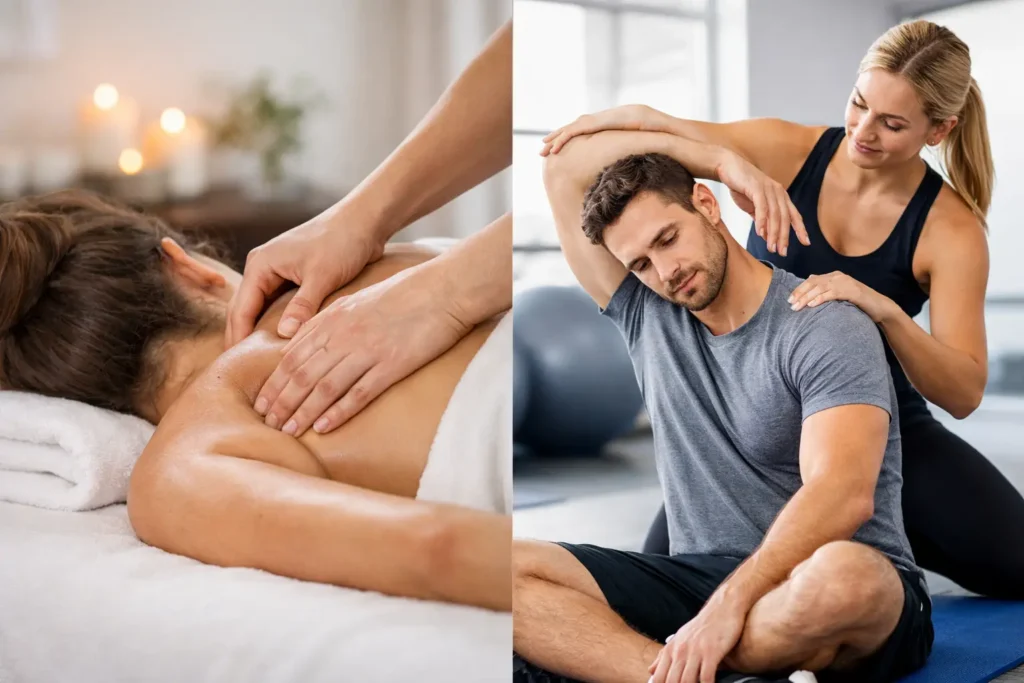
A tight band at the base of your neck, a stubborn spot between the shoulder blades, or a sore patch in the low back can make a normal workday feel much longer. When deciding between massage or stretching for knots, the most useful answer is often not one or the other. Each can help in a different way, and the better choice depends on how your body feels, what may be contributing to the tension, and whether the area settles down or keeps returning.
A gentle stretch can be useful for temporary stiffness. Skilled, targeted massage may be more helpful when an area feels guarded, tender, difficult to move, or unchanged despite regular stretching. For recurring tension, the most effective approach is often a thoughtful combination of hands-on care, appropriate movement, and small adjustments to daily habits.
What people mean by a muscle knot
“Muscle knot” is a practical term, not a precise diagnosis. People usually use it to describe a small, sensitive area that feels dense, tight, or achy. It may hurt when pressed, make nearby movement feel limited, or refer discomfort into a surrounding area.
These spots commonly develop where the body works hard to hold a position. Desk work can leave the neck and upper shoulders doing more than their share. Driving, lifting a child, carrying a bag on one side, training without enough recovery, or bracing during a stressful week can create similar patterns. The sensation may be local, but the contributing pattern is not always limited to the exact spot that hurts.
That distinction matters. Pressing, stretching, or rolling directly on a tender point may bring short-term relief, yet the tension can return if the surrounding muscles, movement habits, or workload are not addressed.
Massage or stretching for knots: when stretching helps
Stretching is most useful when a muscle feels generally shortened or stiff and responds comfortably to lengthening. Think of the chest after hours leaning toward a screen, the hips after sitting, or the calves after a long walk. A slow, easy stretch can remind the body that it has more available movement.
The key word is easy. For a knot-like area, pushing into a strong stretch can cause the body to guard more, especially when the spot is already sensitive. A mild sensation of lengthening is usually enough. Hold the position while breathing normally, then come out of it gradually. If you feel sharp pain, tingling, numbness, or a strong increase in symptoms, stop rather than trying to force progress.
Stretching is also most helpful when it is specific. Repeatedly pulling your head hard to one side may not solve upper shoulder tension if the real issue is a stiff upper back, a forward-reaching work setup, or fatigue in the muscles that support the shoulder blades. Sometimes a few comfortable movements – shoulder rolls, a gentle chest opening, or standing up for a short walk – do more than one intense stretch.
Why stretching does not always release a stubborn spot
A tender area may not need more length. It may need less demand, better circulation through ordinary movement, or time for the nervous system to stop bracing. Stretching the exact painful location again and again can feel productive while leaving the larger pattern untouched.
This is especially common with recurring neck and shoulder tension. If you stretch every evening but spend most of the day with your shoulders lifted, your head angled toward a second monitor, or your arms reaching forward, the relief may be brief. Stretching remains a useful tool, but it works better as part of a broader routine than as a contest of flexibility.
When massage may be the better choice
Therapeutic massage can be particularly useful when you cannot comfortably reach the area yourself, when the tissue feels persistently dense or sensitive, or when several regions seem connected. For example, upper-back tension may be influenced by the neck, chest, shoulder blades, arms, and breathing pattern. A skilled therapist can assess how those areas feel and adapt the work rather than focusing only on the most painful point.
Massage does not need to mean maximum pressure. Deep tissue and trigger point work can be helpful when applied with care, but more pressure is not automatically better. The appropriate depth is the amount that allows the body to respond without making you brace, hold your breath, or feel worse for days afterward.
A personalized session may include slower therapeutic massage, focused trigger point work, and shiatsu-informed techniques to address a particular tension pattern. Depending on your comfort and goals, supporting methods such as therapeutic cupping, craniosacral work, or gentle movement may also be incorporated. The purpose is not to chase every tight spot. It is to help reduce unnecessary holding and support more comfortable movement.
Massage can also offer something stretching cannot always provide: professional feedback. A therapist may notice that the place you identify as the knot is not the only area involved, or that one side of your body is doing far more work than the other. That information can make your home care more practical.
A useful way to combine both approaches
For many people, massage creates a more comfortable starting point, while gentle movement helps maintain the change between sessions. If a session has eased a tight shoulder, follow it with ordinary, unforced use of the area rather than immediately testing its limits. Take walks, change positions regularly, and use short movement breaks during the workday.
At home, start with a few minutes of easy motion before choosing a stretch. Move the shoulders, rotate the upper back gently, or take a relaxed walk. Then use one or two comfortable stretches instead of a long routine you will not repeat. Consistency matters more than intensity.
It also helps to pay attention to timing. A stretch may feel good after sitting, while massage may be more valuable when tension has been building for weeks and the area no longer responds to your usual routine. After demanding exercise, light movement and recovery may be preferable to aggressive stretching or deep pressure on already sore tissue.
Avoid turning relief into irritation
The urge to “work out” a knot can be understandable, particularly when discomfort is distracting. But repeated hard digging with a massage ball, percussion tool, elbow, or foam roller can leave an area more irritated. If self-massage causes you to tense your jaw, hold your breath, or feel increasingly sore, lighten the pressure or stop.
The same applies to stretching. A gentle stretch should leave you feeling easier, not unstable or sharply painful. More is not necessarily more therapeutic. Your body often responds better to calm, repeatable input than to occasional intensity.
A recurring knot also deserves a look at the conditions around it. Consider how often you change positions, whether your workstation encourages reaching or twisting, how you recover from training, and whether stress shows up as shallow breathing or raised shoulders. You do not need a perfect routine. One or two realistic changes can reduce the demand that keeps feeding the tension.
When to seek additional guidance
Massage and stretching are appropriate for many everyday tension patterns, but they are not the answer to every kind of pain. Seek prompt medical evaluation for pain after a serious injury, unexplained weakness, numbness that persists, loss of coordination, severe or worsening pain, fever, or symptoms that concern you. A massage therapist can work within their professional scope and may recommend that you consult another qualified provider when hands-on bodywork is not the right next step.
For the familiar ache of work, stress, training, or repetitive daily activity, a personalized therapeutic massage session can be a practical place to start. At Senju Holistic Healing in SW Portland, care is adapted to your comfort level and the way your tension shows up that day. The goal is not to force your body to change, but to give it skilled support, clearer feedback, and room to move with less effort.
The next time a knot appears, try asking a simpler question than “How do I get rid of this fast?” Ask what your body needs most right now: a little movement, a gentler stretch, focused hands-on care, or a break from the habit that keeps asking the same muscles to do too much.