
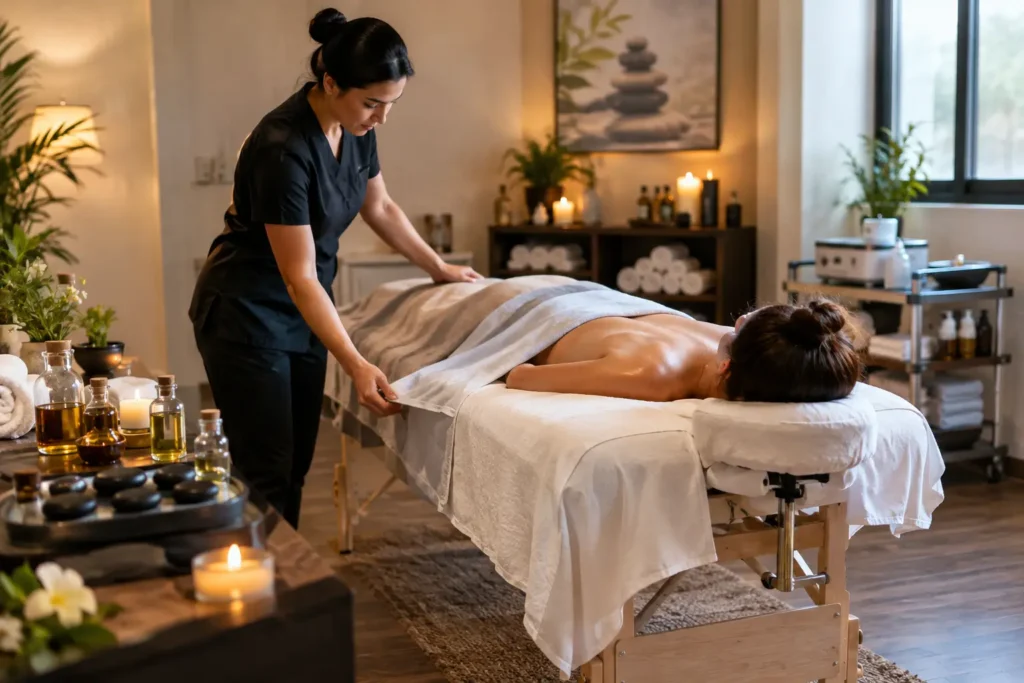
A stiff neck after another long day at the computer rarely stays only in the neck. Shoulders begin to creep upward, the upper back works harder, and a familiar knot can make turning your head or settling into sleep less comfortable. Private therapeutic massage offers a quieter, more focused way to address those patterns: one practitioner, one client, and a session shaped around what your body is carrying that day.
For many people, the difference is not simply privacy. It is the time and attention to notice where tension is concentrated, how it may be affecting movement and comfort, and which approach feels useful without pushing past your limits. A good therapeutic session is neither a routine nor a contest of how much pressure you can tolerate.
What makes private therapeutic massage different?
In a private therapeutic massage setting, the session begins with a conversation. You may be dealing with persistent shoulder tightness, an achy lower back after standing at work, recurring knots between the shoulder blades, or general fatigue from caring for others and keeping up with daily demands. The details matter because the same complaint can show up differently from person to person.
One client may need focused work around the upper back and chest after hours of laptop use. Another may feel better with slower, broader work through the hips and low back after training or a long drive. Someone who feels stressed and sensitive to touch may benefit from a gentler pace before deeper work is considered. The goal is to respond to the body in front of the practitioner, rather than applying a fixed sequence.
This one-on-one format also makes communication easier. You can say when pressure feels right, when an area feels too tender, or when you would prefer more attention somewhere else. That feedback is not an interruption. It is part of the work.
Therapeutic work is more than deep pressure
Deep tissue massage can be helpful for areas that feel dense, restricted, or chronically overworked. But deep tissue does not mean intense pressure at every moment. Effective therapeutic massage often varies in pace and depth. Sometimes a more measured approach allows a guarded area to soften more comfortably than forceful pressure would.
At Senju Holistic Healing, sessions may draw on therapeutic deep tissue massage, trigger point work, shiatsu-informed bodywork, and Japanese-informed massage techniques. These are supporting tools within personalized care, not separate formulas. Depending on your needs and comfort, a session may also incorporate therapeutic cupping, craniosacral work, lymphatic drainage techniques, visceral bodywork, reflexology, or gentler massage methods.
The technique matters, but the reasoning behind it matters more. A recurring shoulder knot, for example, may benefit from direct attention, but it may also be useful to spend time with the surrounding upper back, chest, arms, or neck. The body does not organize tension according to a single spot on a chart. Skilled hands-on work considers the broader pattern while staying grounded in what feels appropriate for you.
Common reasons people seek private therapeutic massage
People often arrive with discomfort that has built gradually rather than beginning with one clear event. Desk work can leave the head and shoulders held forward for hours. Work that involves standing, lifting, driving, or repetitive movement can create a different kind of strain. Training, family responsibilities, poor sleep, and ongoing stress can all make the body feel less resilient.
Private therapeutic massage can be especially useful when you notice recurring neck, shoulder, or back tension; stiffness after activity or long periods of sitting; muscle tightness that returns during stressful weeks; or a general sense that your body has been working too hard for too long. It can also support people who want to maintain comfort and mobility before small, familiar areas of tension become more disruptive.
There is no universal schedule for bodywork. Some people seek a session when a particular area flares up. Others find that regular appointments help them stay more aware of tension patterns and respond earlier. Frequency depends on your goals, daily demands, sensitivity, and how your body responds after each visit.
What a personalized session can look like
A thoughtful session usually starts before hands-on work begins. Your massage therapist may ask what has been bothering you, whether anything has changed since your last session, how much pressure you prefer, and what you hope to feel afterward. You do not need technical language. Describing where you feel tight, what movements feel limited, and when discomfort tends to show up is enough to begin.
The hands-on portion may start with slower work that helps the practitioner assess areas of tension and gives your body time to settle. From there, the session can become more targeted. Trigger point work may be used for specific tender, tight areas. Focused deep tissue work may be appropriate for persistent muscular density. Cupping may be considered when it suits the goal and your comfort level. At other times, a lighter technique is the better choice.
That adaptability is especially valuable when tension is connected to stress. A body that feels braced or fatigued does not always respond well to aggressive work, even when the person believes they need it. Productive pressure should feel purposeful and manageable, not like something you must endure. Mild tenderness during or after a session can happen, particularly with focused work, but sharp pain, lingering distress, or feeling pushed beyond your comfort is not the aim.
The value of a calm, private setting
For clients who spend much of their day responding to other people, privacy can be part of the relief. A quiet treatment room gives you space to focus on your own physical comfort without distraction or the rushed feeling that can come with a high-volume environment.
This setting also supports more consistent care. When you work with the same licensed massage therapist over time, they can become familiar with the areas that tend to hold tension, the approaches you prefer, and the changes you notice between sessions. That does not mean every appointment will look the same. It means the work can build from a clearer understanding of your individual patterns.
For adults in SW Portland and the greater Portland area, a private practice can be a practical fit for the realities of work, commuting, parenting, and active routines. The experience is centered on professional touch, clear boundaries, comfort, and care that respects both your time and your body.
How to get more from your massage sessions
The most useful information is often simple and specific. Let your therapist know if one shoulder always feels higher, if a low-back ache appears after sitting, if you have been waking up with neck tightness, or if a previous massage left you sore longer than expected. These details help guide choices about pressure, pacing, and where to focus.
After a session, give yourself a little room to notice how you feel. Some people feel lighter or more at ease right away; others notice changes gradually over the next day or two. Gentle movement, a regular water routine, and avoiding an unusually demanding workout immediately afterward can be sensible if your body feels tender. But there is no need for elaborate rituals. The most meaningful follow-up is paying attention to the habits and demands that repeatedly bring tension back.
Massage is most helpful when it is part of realistic body care rather than treated as a one-time fix. A small adjustment to your workstation, a brief walk between meetings, a change in training intensity, or more frequent pauses during repetitive work may help preserve the comfort you gain in a session. When discomfort is severe, persistent, worsening, or accompanied by concerning symptoms, seeking guidance from an appropriate healthcare professional is a wise next step.
Your body does not need to be at a breaking point to deserve attention. Making room for skilled, individualized care can be a steady way to respond to the strain of everyday life and return to what feels more comfortable, mobile, and manageable.