
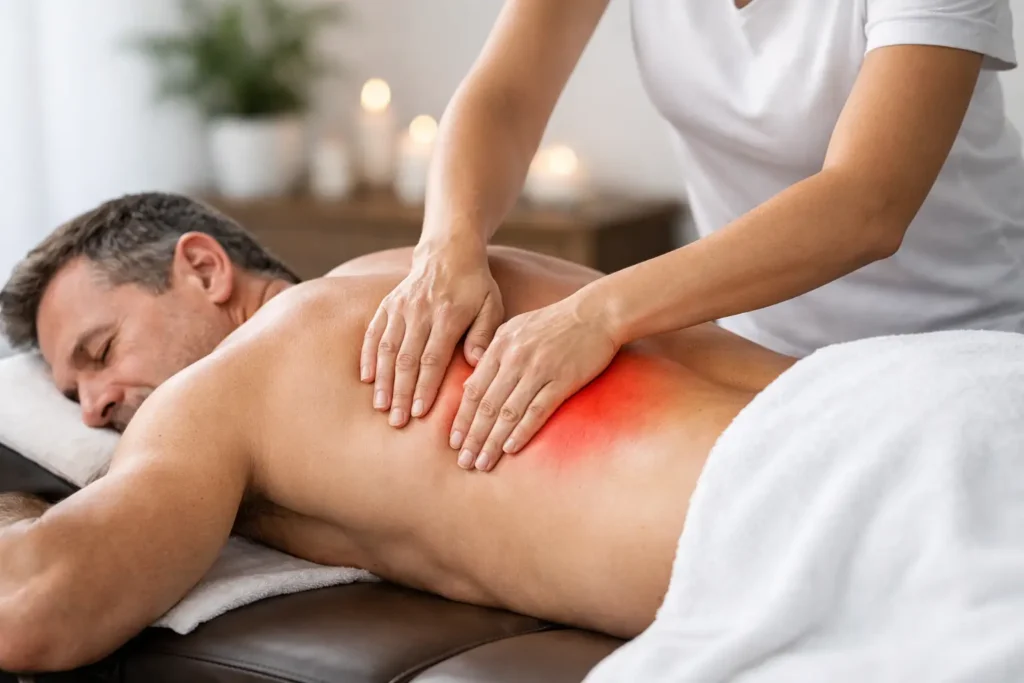
A tight lower back rarely starts as just a lower back problem. For many people, it builds quietly through long hours at a desk, stress held in the shoulders and breath, old injuries, uneven movement, or the simple habit of pushing through discomfort until it becomes daily life. That is why back pain massage is most helpful when it is thoughtful, targeted, and responsive to the whole body rather than focused only on the place that hurts. If you’re in Portland and dealing with back pain that keeps returning, this is a very common pattern I see.
When massage is personalized, it can do more than create temporary relief. It can calm an overworked nervous system, reduce protective muscle guarding, improve circulation, and restore movement patterns that have been restricted for weeks, months, or even years. The goal is not just to press on sore tissue. The goal is to understand why the area is strained and help the body shift out of that pattern.
What back pain massage can actually do
Back pain often involves more than muscle tightness alone. Sometimes the issue is clearly muscular, such as overuse, tension, postural fatigue, or strain from lifting. In other cases, discomfort is influenced by stress, poor sleep, lack of movement, compensation from hip or shoulder restrictions, or sensitivity in the nervous system that keeps the body braced.
A skilled back pain massage can support relief in several ways. It helps increase blood flow to tense areas, which may reduce that heavy, congested feeling in the muscles. It can improve tissue mobility so bending, standing, or turning feels less restricted. It also encourages the body to move away from a fight-or-flight state, which matters more than many people realize. When stress is high, muscles tend to hold tension more stubbornly, and pain can feel louder.
That said, massage is not a one-size-fits-all answer. Some people feel best with deeper, slower work that reaches chronic tension. Others need a gentler approach first, especially when the body is inflamed, highly sensitive, or guarding around pain. Relief often comes from matching the pressure and technique to the person, not from using the strongest pressure possible.
Why the source of pain matters
Back pain can show up in the upper back, around the shoulder blades, through the mid-back, or in the lower back and hips. Each pattern tends to have a different story.
Upper back discomfort is often tied to forward posture, screen time, driving, shallow breathing, and stress held through the neck and shoulders. Mid-back tension may reflect limited rib movement, sitting fatigue, or compensation from the shoulders. Lower back pain frequently involves the hips, glutes, hamstrings, abdominal support, and the way a person stands, walks, or lifts.
This is one reason a generalized massage can feel pleasant but not always create lasting change. If the lower back is working too hard because the hips are restricted, focusing only on the lumbar muscles may help briefly without addressing the underlying strain. If the shoulders are constantly elevated from stress, the upper back may tighten again quickly unless that broader pattern is recognized.
An individualized session looks at these relationships. It may include work on the back itself, but also on surrounding areas that affect how the back functions. That wider view is often where deeper relief begins.
Which massage style is best for back pain?
There is no single best style for every person. The most effective treatment depends on the type of pain, how long it has been present, your stress level, and how your body responds to touch.
Swedish massage for stress-related tension
Swedish massage is often underestimated by people who assume back pain requires intense pressure. In reality, this approach can be very effective when pain is linked to stress, general muscle fatigue, or a nervous system that feels overstimulated. Long, flowing strokes help the body settle, improve circulation, and reduce the overall tension load.
For someone whose back tightens after demanding workweeks, poor sleep, or emotional stress, Swedish massage can create the kind of relaxation that allows deeper holding patterns to release naturally.
Deep tissue massage for persistent tightness
Therapeutic deep tissue massage can be useful for more established tension, limited mobility, and areas that feel dense or chronically restricted. Done well, it is precise rather than aggressive. The purpose is not to overpower the body. It is to work gradually into layers of tension and create change where tissue has adapted to long-term strain.
This approach may help people who deal with repetitive movement, postural overload, or recurring knots through the back, shoulders, and hips. But more pressure is not always better. When the body feels threatened by forceful work, it may tighten further. Skill matters more than intensity.
Shiatsu and holistic bodywork
Shiatsu offers a different but valuable dimension for back pain massage. Through guided pressure and a whole-body perspective, it can help restore balance, encourage relaxation, and address the connection between physical tension and emotional stress. For some people, especially those who feel both physically tight and mentally drained, this style supports a sense of reset that reaches beyond muscular relief alone.
A holistic session may blend Eastern and Western approaches depending on what your body needs that day. That flexibility is often more beneficial than staying rigidly inside one method.
When massage helps most – and when it depends
Massage tends to be especially helpful for tension-related back pain, stiffness from sedentary work, recovery from overuse, and discomfort connected to stress or muscular compensation. It can also support maintenance for people who know their back pain returns when life gets busy and self-care slips.
Still, there are situations where the answer is more nuanced. If pain includes numbness, tingling, weakness, sharp radiating symptoms, fever, unexplained swelling, or a recent significant injury, massage may need to wait until a medical evaluation is completed. Even with chronic pain, some flare-ups require a lighter approach and careful pacing.
This does not make massage less valuable. It simply means effective care begins with listening to the body instead of forcing a standard routine onto every condition.
What a personalized session should feel like
For people seeking real relief, the treatment environment matters almost as much as the technique. A fully private, calm space allows the body to soften in a way that is difficult in noisy, rushed settings. Feeling safe, heard, and unhurried can reduce tension before the hands-on work even begins.
A personalized session should take into account where the pain is, what seems to trigger it, how long it has been happening, and what kind of pressure your body responds to best. It should also consider patterns outside the back itself, including neck tension, hip restriction, stress load, and the demands of your daily routine.
At Senju Holistic Healing, this kind of one-on-one care is central to the work. For clients in Portland who want more than a standard spa massage, individualized treatment can make the difference between temporary comfort and meaningful progress.
How to get better results from back pain massage
The best response to massage often comes from consistency and timing, not just a single appointment. If your back has been tight for months, one session may create noticeable relief, but the body may need repeated support to hold a new pattern. That is especially true when the original cause is still present, such as desk work, long commutes, caregiving strain, or chronic stress.
It also helps to notice what changes after a session. Do you stand taller? Breathe more easily? Sleep better? Move with less guarding? These small shifts matter because they show whether the treatment is addressing the pattern beneath the pain.
Hydration, gentle movement, and rest after massage can support the effects, but there is no need to overcomplicate recovery. Most people benefit from simply giving the body a little space to integrate the work. A short walk, easier evening, or a few deeper breaths can go further than a long list of instructions.
Choosing the right practitioner for back pain massage
If back pain is affecting your work, sleep, or ability to relax, it is worth looking for a massage therapist who treats the issue as more than a sore spot. Technical skill matters, but so does presence, assessment, and the ability to adapt. You want someone who understands tissue, movement, and stress as connected pieces of the same picture.
A good practitioner will not rush to apply a fixed routine. They will pay attention to your body, explain their approach clearly, and adjust based on how you respond. That kind of care tends to feel both therapeutic and restorative, which is often exactly what a strained back has been missing.
When back pain massage is tailored with intention, relief can feel steadier, movement can return more naturally, and the body can begin to trust ease again.
If you’re dealing with ongoing back pain in Portland, a personalized massage session may help address the tension patterns, compensation, and guarding behind the discomfort.
You can book a session here.