
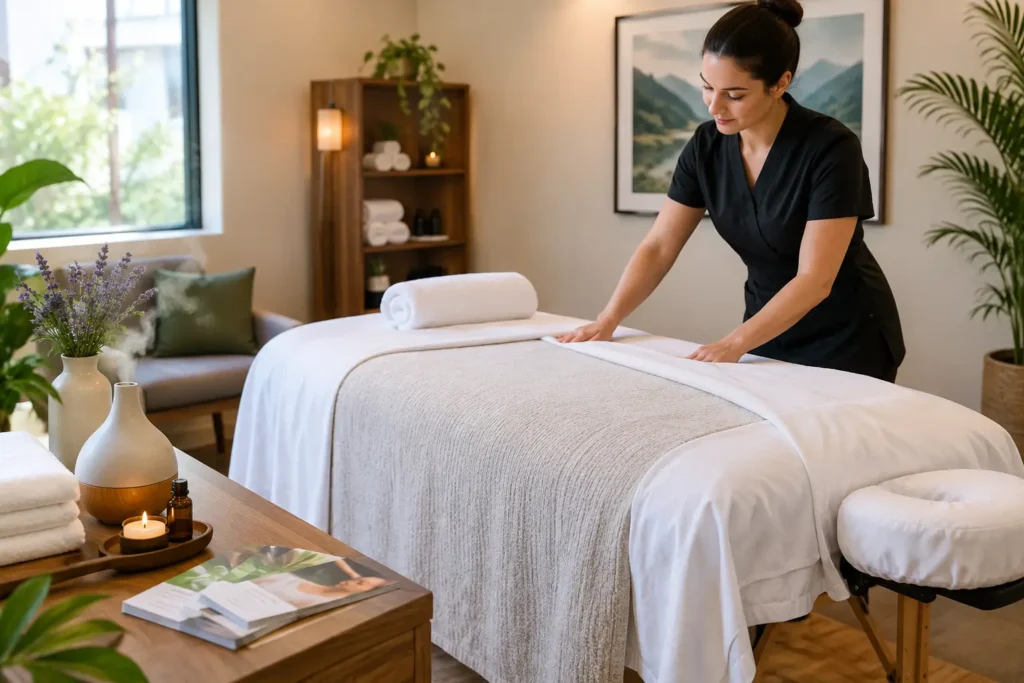
A stiff neck after computer work, a shoulder that never seems to settle, or a familiar knot along the upper back can make even ordinary tasks feel harder than they should. The benefits of private massage therapy come from having time, attention, and skilled hands focused on the patterns that are affecting your body – not from following a one-size-fits-all routine.
For many people, massage is most useful when it becomes practical body care: a place to address recurring tightness, notice changes in how the body is moving, and create more room for comfort. A private therapeutic setting supports that kind of care by making each session responsive to the person on the table.
Benefits of Private Massage Therapy for Ongoing Tension
Private massage therapy is centered on a simple advantage: the session is about you. Your practitioner can spend the full appointment listening to what has changed, observing areas of holding, and adjusting the work as your body responds.
That matters because neck, shoulder, and back discomfort rarely show up in exactly the same way for everyone. One person may feel strain after long hours at a desk. Another may notice lower back tightness after training, lifting children, driving, or sleeping in an awkward position. Even when two people point to the same area, the pressure they prefer, the tissues that feel sensitive, and the goals they bring into the session may be very different.
In a private one-on-one setting, those details guide the work. Rather than receiving a preset sequence, you can discuss what feels most pressing that day and what has or has not helped in the past. This can be especially valuable for recurring knots, stress-related muscle tension, and long-standing patterns that need thoughtful pacing rather than forceful pressure.
Care that adapts as your body responds
Therapeutic massage is not simply about working as deeply as possible. Productive pressure is pressure your body can receive without bracing against it. A skilled practitioner checks in, pays attention to changes in tissue response, and can lighten, deepen, slow down, or shift techniques when needed.
For example, a session may begin with broader work to help guarded areas settle before more focused attention is given to a persistent spot near the shoulder blade or along the hips. Deep tissue techniques and trigger point work may be useful for some areas, while gentler contact, movement, or slower compression may be a better choice elsewhere.
This flexibility is one of the clearest benefits of a private therapeutic practice. The goal is not to make every area feel the same. It is to work with your current condition, comfort level, and desired outcome.
More Space for Clear Communication
Good bodywork depends on communication before, during, and after the hands-on work. In a quiet private treatment environment, there is room to speak honestly about what you are feeling without needing to rush through the conversation.
You might explain that turning your head has felt limited this week, that a past injury makes one side more sensitive, or that you want help settling the accumulated tension of a demanding month. You can also say when something is too intense, when a technique feels particularly useful, or when you would prefer the work to stay away from a tender area.
Those exchanges are not interruptions. They help shape a session that is both more comfortable and more relevant. For people who are new to massage, private care can also make it easier to ask questions about positioning, pressure, or what to expect. Clear consent and ongoing feedback create a more grounded experience.
Privacy can make it easier to relax
There is a practical difference between being alone in a calm treatment room and receiving care in a busy, shared environment. Fewer distractions can help you notice how your body feels and make it easier to settle into the session.
Relaxation is not the only purpose of therapeutic massage, but it supports the work. When the body is less guarded, it may be easier for a practitioner to address areas of chronic tightness with care. Many clients also value having a quiet hour that is not organized around work demands, family needs, or the next item on a crowded schedule.
A Blended Approach Instead of a Fixed Modality
Bodies do not always respond best to one technique. Private massage therapy allows the practitioner to combine approaches thoughtfully rather than treating each appointment as a single-modality service.
At Senju Holistic Healing, sessions may draw primarily from therapeutic deep tissue massage, trigger point work, shiatsu-informed and Japanese-informed bodywork. Depending on the client’s needs and comfort, supporting techniques such as therapeutic cupping, craniosacral work, lymphatic drainage techniques, visceral bodywork, reflexology, or gentler massage methods may also be incorporated.
These approaches are tools, not a checklist. Cupping, for instance, may be considered when it is appropriate for areas that feel restricted, while slower, more subtle work may be better suited to someone who is highly sensitive or already carrying a great deal of stress. The usefulness of any technique depends on the person, the day, and the reason for the session.
This is also why a therapist should not promise that one appointment will resolve every issue. Some tension patterns build over months or years. They may be influenced by workload, sleep, movement habits, stress, training, and daily posture. Massage can support comfort and mobility, but lasting body care often benefits from paying attention to those broader patterns as well.
Support for Desk Work, Active Lives, and Everyday Demands
Private therapeutic massage can be particularly helpful for adults whose discomfort does not fit neatly into a single category. A Portland professional may spend most of the week at a laptop, then use the weekend for gardening or hiking. A busy parent may carry bags, children, and mental load in equal measure. An active person may train consistently but still feel that one side of the body is doing more than its share.
These are not necessarily problems to diagnose. They are common reasons the body can feel overworked, uneven, or persistently tight. A personalized session can focus on how those demands are showing up right now – perhaps through shoulder elevation, a compressed-feeling upper back, tired hips, or general muscle soreness.
Over time, regular sessions may also help clients become more aware of their own early signals. Instead of waiting until tension is overwhelming, they may recognize when their neck is beginning to stiffen, when their shoulders are creeping upward, or when recovery after activity is taking longer than usual. That awareness can make massage part of a realistic maintenance routine rather than an occasional response to discomfort.
What Makes a Session Feel Truly Individualized
Individualized care is not only about selecting techniques. It is also about pace, attention, and professional judgment. Some appointments call for focused work on a specific complaint. Others are better approached as full-body support because tension in one area may be connected to how the rest of the body is compensating.
A thoughtful practitioner also understands that your needs can change from visit to visit. The pressure that felt right last month may not feel right after a poor night of sleep or an unusually demanding week. A client who usually prefers direct deep work may need a slower session when stress has left them feeling depleted.
Private care makes those adjustments easier. There is no need to fit your body into a standard experience. The appointment can meet you where you are, while still keeping the work purposeful and grounded.
Choosing Private Massage Therapy With Realistic Expectations
The best outcomes tend to come from honest goals. You may leave a session feeling looser, calmer, or more comfortable in a movement that had felt restricted. You may also notice that certain areas need continued attention, especially when tension has been present for a long time.
Massage is not a substitute for medical evaluation when symptoms are severe, sudden, worsening, or accompanied by concerning changes. A licensed massage therapist can work within an appropriate scope of practice, adapt bodywork to your comfort, and encourage you to seek other support when needed.
For everyday tension, posture-related strain, and the physical effects of a full life, private therapeutic massage offers something increasingly rare: dedicated time to listen to your body and respond to it with care. A regular appointment can become a steady pause in which comfort, movement, and calm are given the attention they deserve.