
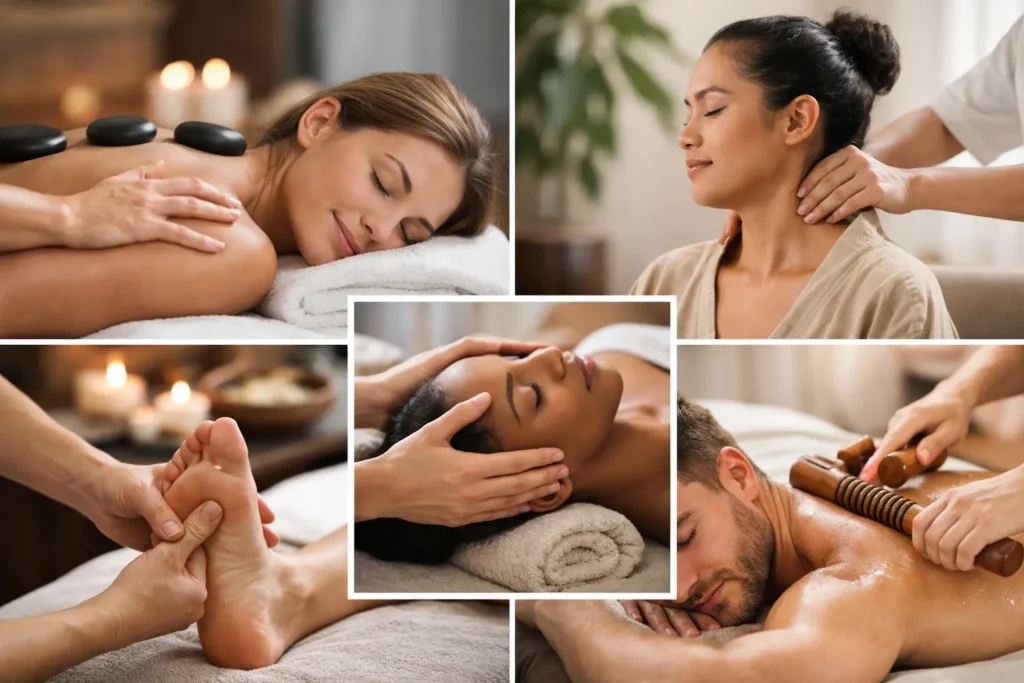
Stress rarely stays in your thoughts alone. It settles into your shoulders while you answer emails, tightens your jaw during a long commute, and turns your upper back into a hard, familiar knot by the end of the week. When people start looking for the best massage types for stress, they are usually not looking for something abstract. They want to feel more at ease in their body, breathe a little deeper, and stop carrying so much tension from one day to the next. If you’re in Portland and trying to choose the right massage for stress-related tension, this is a very common question.
The tricky part is that stress shows up differently from person to person. For some, it feels like a stiff neck and headaches that build through the afternoon. For others, it is low back tightness, shallow breathing, restless sleep, or a general sense that the body never fully lets go. That is why the best approach is not always the gentlest massage or the deepest one. It depends on how your stress is landing in your body, how sensitive your tissues feel, and what kind of pressure actually helps you relax instead of brace.
What makes a massage effective for stress?
A good stress-relief massage does more than feel pleasant in the moment. It helps calm an overworked nervous system while also addressing the muscle holding patterns that stress tends to reinforce. If your shoulders stay elevated all day or your low back is constantly gripping, relaxation alone may not be enough. The body often needs skilled, thoughtful work that helps those patterns soften.
That is where massage style matters less than technique selection and pacing. Many people search for one perfect category, but in practice, the best massage types for stress are often the ones that can be adjusted to your body instead of applied the same way to everyone.
Best massage types for stress and tension patterns
Therapeutic deep tissue massage
Deep tissue massage can be very effective for stress when stress is showing up as dense, stubborn tightness, especially in the neck, shoulders, upper back, and hips. This approach uses slower, more focused pressure to work through layers of tension that have built over time.
That said, deeper is not always better. If pressure is too aggressive, the body may tighten defensively rather than relax. The most helpful deep tissue work for stress is usually measured and responsive. It targets the areas doing too much work without overwhelming the nervous system.
This approach often fits people who spend long hours at a desk, carry stress in their posture, or feel like their muscles are constantly bracing.
Trigger point work
Trigger point work can be especially helpful when stress creates recurring knots or pain patterns that seem to return no matter how much you stretch. These are often the tight, tender spots in the upper traps, shoulder blades, neck, jaw, or glutes that feel small but create wider discomfort.
For stress relief, trigger point work is not about forcing tissue to release. It is about applying precise pressure in a way that helps the body stop holding on so tightly. When used carefully, it can reduce the sense of accumulated pressure that makes stress feel physically stuck.
This style is often best as part of a broader session rather than the whole session from start to finish. Too much localized work at once can feel intense, especially if your body is already running on edge.
Shiatsu-informed bodywork
Shiatsu-informed bodywork can be a strong option for people who feel stressed and wound up but do not want heavy pressure. It often uses sustained contact, compression, and rhythmic work to help the body settle. The effect can feel grounding without being forceful.
This can be a good match if your stress comes with fatigue, shallow breathing, general body tension, or a feeling that your system is simply overstimulated. It may also appeal to people who want therapeutic work that feels organized and calming rather than highly aggressive.
For many clients, this kind of bodywork supports a sense of reset. The body often responds well when the work is steady and clear, especially after periods of mental overload.
Craniosacral-informed work
Some people associate stress massage only with muscle pressure, but not every stressed body wants more input. If you are highly sensitive, exhausted, dealing with jaw clenching, headaches, or difficulty settling down, lighter craniosacral-informed work may be more appropriate.
This approach is subtle. It can help when the body feels overactivated and even moderate pressure sounds like too much. It is not the right fit for every session, especially if your main issue is heavy muscular tightness that needs more direct work. But when stress has pushed your system into a constant state of alertness, lighter techniques may create more change than stronger pressure.
Reflexology as a supporting technique
Reflexology can be a useful addition in stress-focused sessions, especially for clients who have trouble letting go mentally. Focused work on the feet can have a calming effect and may help shift attention away from the areas that are chronically guarding.
It is best understood as a supporting technique, not a complete answer for most tension-heavy cases. If you have neck and shoulder tightness from work stress, reflexology alone may not address the whole pattern. But paired with targeted bodywork, it can help the session feel more complete and restorative.
Gentle circulatory and lymphatic-style techniques
When stress is combined with fatigue, puffiness, or a sense of bodily heaviness, gentler circulatory or lymphatic-style techniques may be useful within a session. These methods are light and soothing, and they can support relaxation without demanding much from the body.
They are not meant to replace more focused therapeutic work when deeper tension is present. Still, for people who feel depleted, sore all over, or unusually sensitive, this gentler pace can be the better starting point.
The best type often depends on how stress lives in your body
If your stress shows up as hard knots between the shoulder blades, therapeutic deep tissue massage and trigger point work may be the most effective. If your body feels keyed up, restless, or sensitive to pressure, shiatsu-informed or craniosacral-informed work may be a better fit. If stress has left you feeling both mentally overloaded and physically depleted, a blended session often makes the most sense.
That blend matters. In a private therapeutic practice, sessions do not need to stay locked into one method from beginning to end. A therapist might use focused deep work on the upper back, gentler calming techniques around the neck and scalp, and compression or reflexology to help your whole system settle. That kind of individualized approach is often what makes stress-focused massage actually useful in real life.
What to consider before booking
It helps to think beyond the name of the massage. Ask yourself where you hold tension, how your body responds to pressure, and whether your goal is immediate relaxation, relief from chronic tightness, or both.
If you usually say, “I need deep tissue,” but leave sessions feeling sore and tense, you may need more precision and less force. If you always choose the lightest option but your upper back never improves, your body may benefit from more focused therapeutic work. Stress massage is not one-size-fits-all, and the best outcome usually comes from matching the work to your current state rather than your usual preference.
Communication matters too. A skilled therapist should be able to adjust pressure, pacing, and technique as your body responds. That is especially important if you are dealing with desk-work strain, recurring knots, or long-standing neck and shoulder tension. In those cases, stress relief often comes from treating both the mental load and the physical pattern it has created.
A more realistic way to choose the best massage types for stress
The most helpful question is not, “Which massage is best?” It is, “What kind of work does my body need right now?” Sometimes that means slower deep tissue work to unwind chronic holding. Sometimes it means lighter, steadier contact so your system can finally stop bracing. Often it means a thoughtful combination of techniques shaped around your comfort, goals, and tension patterns.
At Senju Holistic Healing in SW Portland, that personalized approach is central to the work. Sessions can draw from deep tissue, trigger point work, shiatsu-informed techniques, craniosacral work, reflexology, and other therapeutic methods as needed, rather than forcing your body into a fixed routine.
If stress has been living in your neck, shoulders, back, or breath for longer than you would like, the right massage is usually the one that meets your body where it is and helps it soften from there.
If you’re dealing with stress-related tension in Portland, a personalized massage session may help match the right combination of techniques to your tension patterns, pressure sensitivity, and stress level.
You can book a session here.