
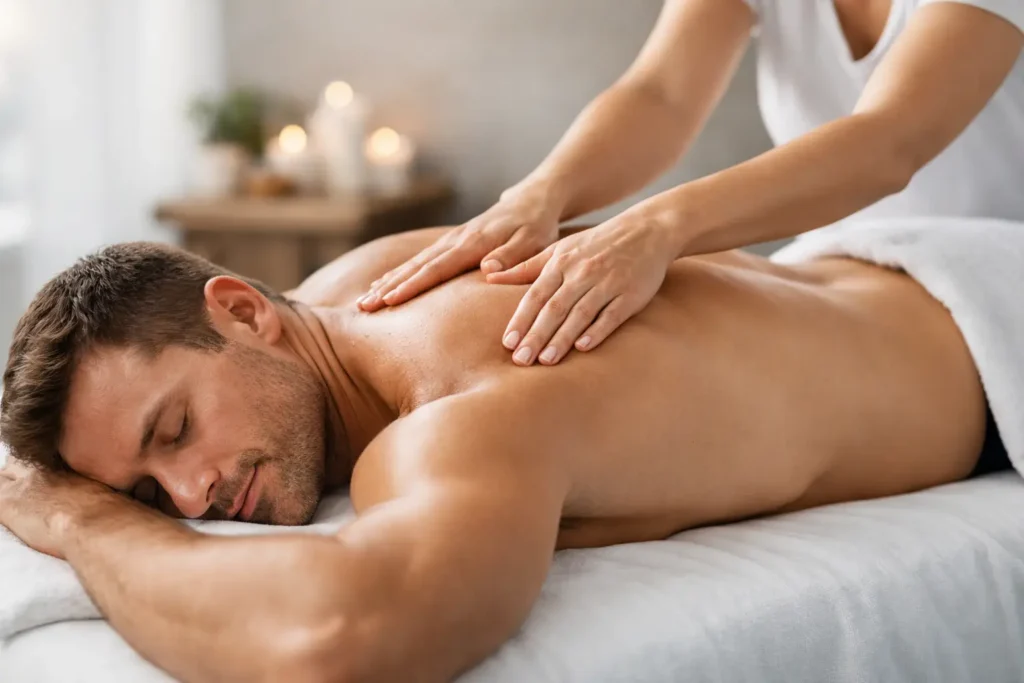
A shoulder that stays lifted while you answer emails, a low back that braces before you bend, or a neck that never quite lets go can feel like ordinary tightness. Often, though, the body is doing something more specific: protecting an area it perceives as vulnerable, irritated, overworked, or unsafe to move. Understanding how massage reduces muscle guarding can make the experience of therapeutic bodywork feel less mysterious and help you choose a pace that supports lasting comfort.
Muscle guarding is not a personal failure, and it is not always a sign that a muscle simply needs more force. It is a protective response. The nervous system can increase muscle activity around an area after strain, repetitive work, stress, poor sleep, an old injury, or an unfamiliar movement. That response may be useful in the short term. When it lingers, however, it can make movement feel restricted and leave nearby areas doing extra work.
What Muscle Guarding Feels Like in Daily Life
Guarding often shows up as a pattern rather than one isolated knot. Someone who spends long hours at a desk may notice the upper shoulders creeping toward the ears, the jaw tightening during concentration, and the mid-back becoming stiff by the end of the day. A runner or lifter may feel a hip that does not want to extend fully, followed by tension in the low back or hamstring. A busy parent may wake with a tight neck after carrying stress through the day and sleeping lightly at night.
The feeling can range from mild stiffness to a strong sense that the body is “holding on.” You may avoid turning your head, reach cautiously overhead, or feel sore after ordinary activity. Guarding can also fluctuate. A muscle may feel manageable one day and much more reactive the next, especially when work demands, stress, recovery, or activity levels change.
This is why a one-size-fits-all approach rarely makes sense. The goal is not to overpower a guarded area. It is to offer skilled, responsive input that helps the body tolerate contact and movement more comfortably.
How Massage Reduces Muscle Guarding
Therapeutic massage can influence guarding through several connected pathways. The exact response varies from person to person, but the most useful sessions combine careful assessment, clear communication, and techniques adjusted to what the body is ready to receive.
It provides a sense of safety through steady, skilled touch
Guarding is closely tied to the nervous system’s sense of protection. When touch is too abrupt, too intense, or poorly timed, the body may tighten further. When touch is gradual, specific, and adjusted based on your feedback, the opposite may occur: the area can begin to soften because it no longer needs to brace as strongly.
This does not mean massage needs to be light to be effective. Deep tissue work can be useful for persistent tension, but depth should be earned rather than forced. A therapist may begin with broader contact and slower work, then focus more precisely as the tissue and your comfort level allow. The most productive pressure is often the pressure that lets you breathe normally and stay present instead of bracing against the table.
It helps interrupt repetitive tension patterns
Muscles do not work alone. A guarded neck may be connected to overactive upper shoulders, a stiff chest, limited movement through the upper back, or habitual jaw clenching. A low-back pattern may involve the hips, glutes, abdominal wall, or the way someone stands after a long commute.
Massage helps by addressing the wider pattern, not just the loudest spot. Therapeutic deep tissue massage, trigger point work, and shiatsu-informed techniques can be used to work with areas contributing to that pattern. Rather than treating one tight band as the entire problem, a personalized session may include the surrounding tissues that are pulling, compensating, or remaining on alert.
For some clients, this broader approach brings a noticeable feeling of space or easier movement. For others, change is gradual and becomes more apparent over several sessions and in the hours after treatment.
It improves awareness of tension before it becomes overwhelming
Many people do not realize how much they are bracing until they lie down in a quiet treatment room and feel the contrast between one side of the body and the other. Massage can make subtle habits more noticeable: holding the breath during pressure, gripping the hands, tightening the glutes while walking, or raising the shoulders while concentrating.
That awareness has practical value. When you can recognize a pattern earlier, you have more options. You might reset your workstation, take a short walking break, change how you carry a bag, or pause for a few slower breaths before a meeting. Massage does not replace those daily adjustments, but it can make them easier to feel and apply.
It supports more comfortable movement afterward
Guarding can reduce the range of motion someone is willing to use. Gentle movement during a session, or simple reassessment afterward, can help the body explore motion without pushing into sharp discomfort. This may be as simple as turning the head, lifting an arm, or noticing how the pelvis moves while walking.
The benefit is not about forcing flexibility. It is about giving the nervous system a calmer experience of movement. When motion feels more manageable, people are often more likely to use the area normally instead of avoiding it completely. That can be especially helpful for desk-work stiffness, training-related tightness, and the accumulated strain of everyday routines.
Why More Pressure Is Not Always Better
A common assumption is that guarded muscles require very deep pressure. Sometimes focused deep work is appropriate, particularly when a client enjoys and responds well to it. But intense pressure can also cause a person to hold their breath, tense the surrounding muscles, or leave feeling more sore and reactive than relieved.
Effective therapeutic massage is responsive, not performative. The right approach depends on your sensitivity, recent activity, stress level, sleep, prior bodywork experience, and the particular area being addressed. A shoulder that has been tight for months may need slower, broader work before focused trigger point techniques are comfortable. Someone recovering from a demanding workout may benefit from a different pace than someone dealing with long-standing desk posture strain.
Communication matters throughout. A useful session includes checking pressure, tracking changes, and adjusting when an approach is not helping the body settle. You do not need to endure pain to make progress.
Techniques That May Support a Guarded Area
At Senju Holistic Healing, sessions are personalized rather than built around a fixed routine. Depending on the pattern and your goals, work may blend therapeutic deep tissue massage and trigger point techniques with slower compression, stretching, or shiatsu-informed bodywork. Therapeutic cupping may be considered when appropriate, while craniosacral techniques, lymphatic drainage methods, visceral bodywork, or reflexology may support relaxation and comfort in select sessions.
These are tools, not a checklist. The purpose is to choose an approach that fits your body on that day. If a region is highly sensitive, a gentler entry point may be more useful than direct pressure. If an area feels dense but responds well to focused work, deeper techniques may be introduced gradually. The treatment should feel collaborative from beginning to end.
What to Expect After a Session
Some people feel looser and calmer immediately. Others notice the clearest changes later that day or after a good night’s rest. Mild temporary tenderness can happen, particularly after focused work in an area that has been holding tension for a long time. Hydration, regular meals, gentle walking, and avoiding an unusually intense workout right afterward can help you notice how your body responds.
One massage can provide meaningful relief, but persistent guarding often reflects routines that have developed over weeks, months, or longer. Regular bodywork may be more helpful when paired with reasonable changes in activity, workstation setup, sleep, stress management, or movement habits. The right frequency depends on your goals, your schedule, and how your body responds between sessions.
If you have sudden severe pain, numbness, unexplained weakness, significant swelling, fever, or symptoms following a serious accident, massage is not the first step. Seek timely guidance from an appropriate medical professional. A qualified massage therapist can also help you decide when it is better to postpone bodywork or adapt the session.
A guarded body is usually trying to do its best with the information it has. Patient, individualized massage offers a quieter message: you may not need to hold quite so tightly. With attentive care and small changes that fit real life, comfort can become something your body recognizes more often.