
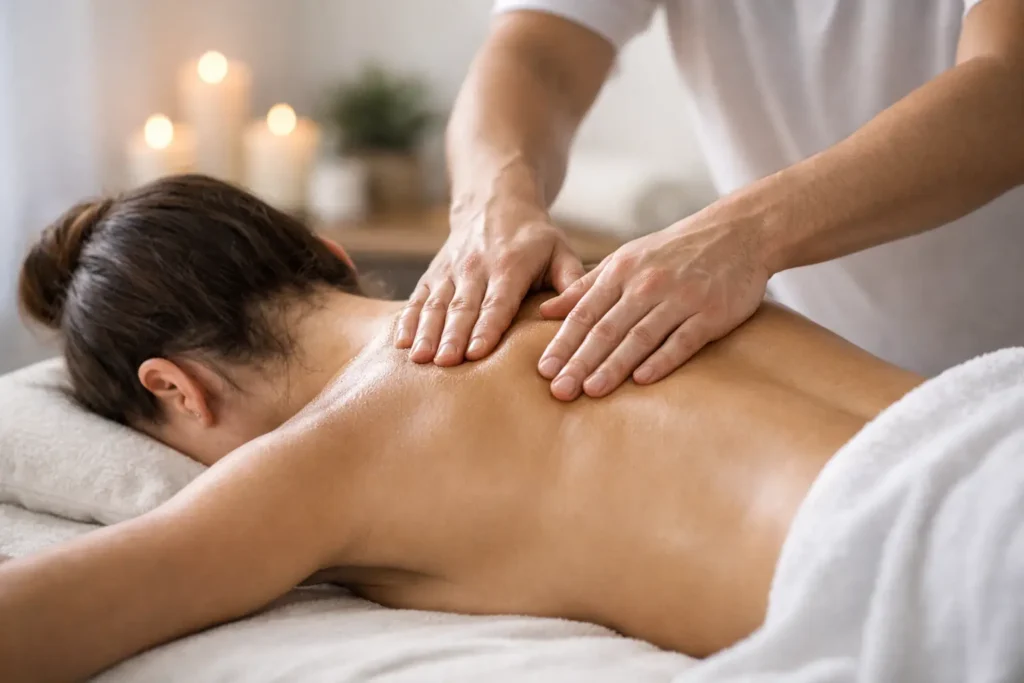
That band of tension between your shoulder blades rarely shows up without a reason. For many people, upper back tightness builds slowly – after hours at a desk, long commutes, stress that settles into the body, or repeated lifting and reaching that never quite gives the muscles time to recover. Massage for upper back tightness can help, but the most meaningful relief usually comes when the work is tailored to why your body is holding tension in the first place. If you’re in Portland and dealing with upper back tightness that keeps returning, this is a very common pattern I see.
Upper back discomfort is often described as stiffness, burning, dull aching, or a feeling that the shoulders are constantly being pulled upward. Sometimes the area feels rigid and overworked. Other times it feels strangely exhausted, as if the muscles are trying to brace all day long. In either case, the body is signaling that something is out of balance.
Why upper back tightness happens
The upper back is not an isolated area. It works in close relationship with the neck, shoulders, rib cage, and even the jaw and low back. When one region is overcompensating, the muscles around the upper spine often take on more than they should.
A common pattern is posture-related strain, but that phrase can be too simplistic. It is not just about sitting “wrong.” It is about spending long periods in one position, often with the arms reaching forward and the head subtly drifting ahead of the body. Over time, the muscles between the shoulder blades, along the tops of the shoulders, and around the base of the neck can become chronically guarded.
Stress also plays a major role. Emotional tension often has a physical signature, and for many people that signature appears in the upper back. Shallow breathing, jaw clenching, and unconscious shoulder lifting can keep the nervous system on alert. When that happens, the muscles may stay partially contracted even when there is no immediate physical demand.
Repetitive movement can create a different kind of tightness. Parenting, caregiving, manual work, exercise, and even regular phone or laptop use can overload the same tissues day after day. In those cases, the body may develop stubborn holding patterns that do not fully release with simple stretching alone.
How massage for upper back tightness helps
A well-planned massage session does more than press on sore spots. It can reduce muscle guarding, improve circulation, support healthier movement patterns, and help calm an overactive stress response. These effects matter because upper back tightness is often both muscular and nervous system driven.
When muscles have been bracing for days or weeks, they may not respond well to aggressive pressure right away. Skilled work often begins by inviting the tissue to soften, then gradually addressing areas of restriction. This can help the body shift out of protection mode instead of fighting against the treatment.
Massage may also improve awareness. Many people do not realize how much effort they are holding in their shoulders until that effort begins to release. That awareness becomes part of the healing process. Once you can feel the pattern, it becomes easier to notice when it returns and respond earlier.
There is also a deeper benefit that is sometimes overlooked. Relief in the upper back can make breathing feel easier, sleep more comfortable, and daily movement less draining. When the body is not constantly managing tension, energy can return in a more balanced way.
Not all upper back tension needs the same approach
This is where individualized care matters. Two people can both say, “My upper back feels tight,” while needing very different work.
If the area feels dense, knotted, and restricted after physical strain, deeper therapeutic techniques may be appropriate. If the tightness is tied to stress, poor sleep, or a highly reactive nervous system, slower and more grounding work may be more effective. If the pain radiates into the neck or shoulders, the treatment often needs to include those regions rather than focusing on the upper back alone.
At times, a combination approach works best. Swedish massage can calm the system and improve circulation. Deep tissue techniques may address more stubborn restrictions when used thoughtfully. Shiatsu can support the body in a way that feels both therapeutic and regulating, especially when tension has a broader mind-body component. The best treatment is rarely about choosing the strongest pressure. It is about choosing the right methods for your body on that day.
What a skilled therapist looks for
A thoughtful session begins with observation. How are the shoulders resting? Is one side working harder than the other? Does the neck move freely, or is the upper back compensating for limited range elsewhere? Is the rib cage moving fully with the breath?
These details matter because the sorest area is not always the source of the problem. Tightness between the shoulder blades may be connected to chest tension, shoulder restriction, stress-related guarding, or fatigue from poor ergonomic habits. Treating only the obvious spot may bring temporary relief, but treating the pattern tends to create longer-lasting change.
What to expect from massage for upper back tightness
A restorative therapeutic massage should leave you feeling more supported in your body, not beaten up. Some tenderness can be normal, especially if the area has been tight for a long time, but productive bodywork does not need to feel punishing to be effective.
During the session, attention may be given to the upper trapezius, rhomboids, levator scapulae, and the muscles along the thoracic spine. Depending on your pattern, the therapist may also work with the neck, shoulders, chest, scalp, or even the arms. This broader approach often helps because upper back tension is rarely acting alone.
You may notice immediate changes such as easier turning of the head, less pulling across the shoulders, or a fuller breath. In more chronic cases, relief often builds over several sessions as the body learns it no longer needs to hold the same protective pattern.
That said, massage is not magic, and it is not identical for every condition. If upper back tightness is related to an acute injury, nerve symptoms, or an underlying medical issue, massage may need to be adapted or coordinated with other care. Numbness, tingling, sharp radiating pain, or unexplained weakness should always be evaluated appropriately.
How to make the results last longer
The body responds best when massage is part of a larger pattern of support. You do not need an elaborate routine, but small shifts between sessions can help the work hold.
Gentle movement usually matters more than intense stretching. If a muscle has been guarding, forcing it may create more resistance. Simple shoulder rolls, chest opening, walking, and regular position changes during the day often do more good than aggressive self-treatment.
Breathing also helps. When the upper chest and shoulders are doing too much of the work, the upper back stays involved in every breath. Slowing down and allowing the rib cage to expand more fully can reduce some of that constant effort.
Heat can be comforting when the area feels stiff, while rest and lighter pressure may be better if the tissue feels irritated or inflamed. It depends on whether the body is asking for release, recovery, or both.
For people with recurring tension from desk work or stress, regular bodywork can be especially useful. Waiting until the discomfort becomes severe often means the body has been compensating for too long. Consistent care can interrupt that cycle earlier.
When personalized care makes the difference
A generic massage may feel pleasant, but persistent upper back tightness usually responds best to treatment that is attentive, specific, and grounded in how your body actually functions. In a private therapeutic setting, there is more room to listen to the pattern, adjust pressure and technique thoughtfully, and support both physical relief and nervous system regulation.
That is often what people are really looking for – not a quick fix, but a sense that someone understands how their pain developed and how to work with it skillfully. For clients in the Portland area dealing with chronic neck, shoulder, and upper back tension, that kind of individualized approach can make relief feel more sustainable and less temporary.
If your upper back has been asking for attention, it may not need harder effort from you. It may need the right kind of care, given with patience, precision, and enough space for your body to finally let go.
If you’re dealing with ongoing upper back tightness in Portland, a personalized massage session may help address the shoulder, neck, breathing, and stress patterns behind the discomfort.
You can book a session here.