
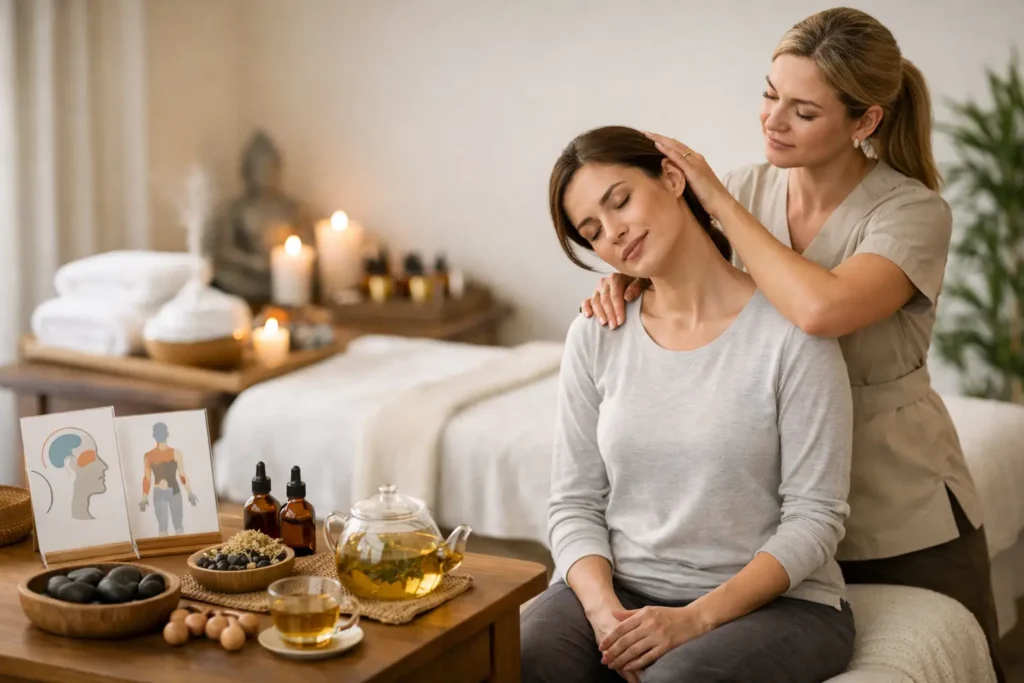
Stress does not always feel dramatic. More often, it shows up as a jaw that stays clenched through the afternoon, shoulders that never quite drop, a low back that feels tired before the day is over, or a knot between the shoulder blades that keeps returning. That is where stress relief massage techniques can be genuinely useful – not as a quick escape, but as practical bodywork that helps calm an overworked system and soften the muscular patterns stress tends to leave behind. If you’re in Portland and dealing with stress-related tension in your neck, shoulders, back, or jaw, this is a very common pattern I see.
In a therapeutic setting, stress relief is rarely about one single technique. People carry tension differently. One person holds it in the neck and scalp. Another feels it in the chest, upper back, and breathing muscles. Someone else notices it in the hips, low back, or forearms from long hours at a desk. The most effective session usually blends methods based on what your body is doing that day, how sensitive you are to pressure, and whether the goal is immediate easing, deeper work, or both.
How stress changes the way the body feels
When stress builds, muscles often start bracing in small, repetitive ways. The shoulders lift. The breath gets shallow. The hands tighten on a steering wheel or keyboard. Over time, that protective holding can start to feel normal, even when it is draining energy and limiting comfort.
This is why tension from stress can feel stubborn. It is not always about one injured area. It may be a pattern involving posture, workload, sleep, mental strain, and the body’s habit of staying slightly guarded. Massage cannot remove every source of stress from daily life, but it can help interrupt that pattern. Skilled touch gives tight tissue a chance to let go, and it gives the nervous system a quieter input than the one it has been getting all week.
Stress relief massage techniques in a therapeutic session
The phrase stress relief massage techniques can sound broad, but in practice it often refers to a thoughtful combination of approaches rather than a preset routine. The right blend depends on the person in front of the therapist.
Deep tissue work for persistent tightness
Deep tissue massage can be helpful when stress has created dense, stubborn tension in the neck, shoulders, upper back, or hips. This kind of work is not about forcing pressure. Done well, it is slow, specific, and responsive. The goal is to work through layers of holding without making the body fight back.
For some clients, deeper pressure brings the clearest sense of relief. For others, especially when stress has made the body extra guarded, lighter and more gradual work may be more effective at first. More pressure is not always better. The best pressure is the one your body can receive without tightening against it.
Trigger point work for recurring knots
Recurring knots often form in overused or overloaded muscles. Trigger point work focuses on those concentrated areas of tension and the patterns around them. This can be especially useful for people who feel the same trouble spot return between the shoulder blades, at the base of the neck, or around the shoulder girdle.
This work can feel precise and sometimes intense, but it should still be controlled and communicative. A short, focused release in the right area can sometimes help more than broad pressure over the entire back. It also helps explain why a personalized session often works better than a one-size-fits-all massage.
Shiatsu-informed and Japanese-informed bodywork
Stress does not only tighten isolated muscles. It can also create a general sense of compression through the body. Shiatsu-informed and Japanese-informed bodywork can bring a different quality to the session through grounded pressure, attentive pacing, and work that considers how tension connects across regions.
For some clients, this approach feels settling in a way that purely muscular work does not. It can be useful when someone feels wired, tired, and physically tight at the same time. Rather than chasing every knot separately, the session can help the body shift out of a held pattern more globally.
Calming techniques that support downshifting
When the nervous system is running hot, highly targeted work is not always the first step. Slower contact, gentler mobilization, craniosacral-informed techniques, and other calming approaches may help the body settle enough to receive more specific treatment.
This is one of the most overlooked parts of therapeutic massage. If a person comes in after a hard workweek, poor sleep, and constant mental load, the tissue may not respond well to aggressive work right away. A quieter beginning can make the rest of the session more productive.
Why personalization matters more than the technique list
Many people search for a single best method, but bodywork does not work that way. A useful session is less about checking off modalities and more about matching technique to the body’s current state.
If your shoulders are tight from desk posture and long meetings, the session may focus on the neck, upper traps, chest, and shoulder stabilizers. If stress is showing up as jaw tension and headaches, the work may be more precise and less forceful. If your low back feels compressed after weeks of sitting, treatment may need to include hips, glutes, and breathing-related tension through the front of the body.
Supporting techniques like cupping, reflexology, lymphatic-focused work, or visceral bodywork may be appropriate in some cases, but they are most useful when they serve the larger goal of the session. They are not there to make the massage feel complicated. They are there because different bodies respond to different inputs.
What to expect from a well-paced session
A good therapeutic massage for stress-related tension should feel attentive, not rushed. That includes communication about pressure, problem areas, sensitivity, and how your body has been feeling lately. It also includes adjusting as the session unfolds.
Sometimes the area that hurts most is not the only place that needs attention. Neck tension may be linked with overworked chest muscles and restricted upper back movement. A heavy low back can reflect strain in the hips and hamstrings. This does not mean every session has to address the entire body. It means effective work often follows patterns instead of chasing symptoms.
You should also expect realistic results. Some people feel noticeably lighter after one session. Others need a few sessions, especially if the tension has been building for months or years. Stress-related tightness often improves best with consistency, changes in daily habits, and bodywork that respects what your system can absorb.
Getting more from massage between appointments
Massage works best when it is part of a broader approach to body care. That does not mean you need an elaborate routine. Small changes often matter more than ambitious ones that are hard to maintain.
If you spend long hours at a desk, changing positions more often can help keep the same muscles from gripping all day. If stress tends to make you breathe shallowly, even a few slower breaths can reduce some of the chest and neck bracing that builds over time. Gentle movement, hydration, and realistic scheduling around workouts or demanding weeks can also make your sessions more effective.
The key is noticing patterns early. When stress first starts showing up in your body, it is usually easier to work with than when it has hardened into a familiar ache you have been ignoring for months.
When therapeutic massage makes the most sense
Massage can be especially useful when stress is showing up physically and not resolving on its own. That includes ongoing neck and shoulder tightness, upper back fatigue, clenched jaw patterns, desk-related stiffness, recurring knots, and the general heavy feeling that comes from carrying too much for too long.
For people in SW Portland and nearby areas who prefer quiet, one-on-one care, a private therapeutic practice can be a better fit than a more general relaxation setting. The difference is not just atmosphere. It is the ability to slow down, assess what your body is actually doing, and shape the work around that instead of following a routine.
At Senju Holistic Healing, that individualized approach is central. The work is not built around forcing one method onto every client. It is built around listening to the body, adjusting thoughtfully, and helping each person move toward more ease, better mobility, and a steadier sense of comfort.
Stress may be part of modern life, but constant physical tension does not have to be your baseline. Sometimes relief starts with giving your body one clear signal that it no longer has to hold everything so tightly.
If you’re dealing with stress-related muscle tension in Portland, a personalized massage session may help calm the nervous system and address the holding patterns behind the discomfort.
You can book a session here.