
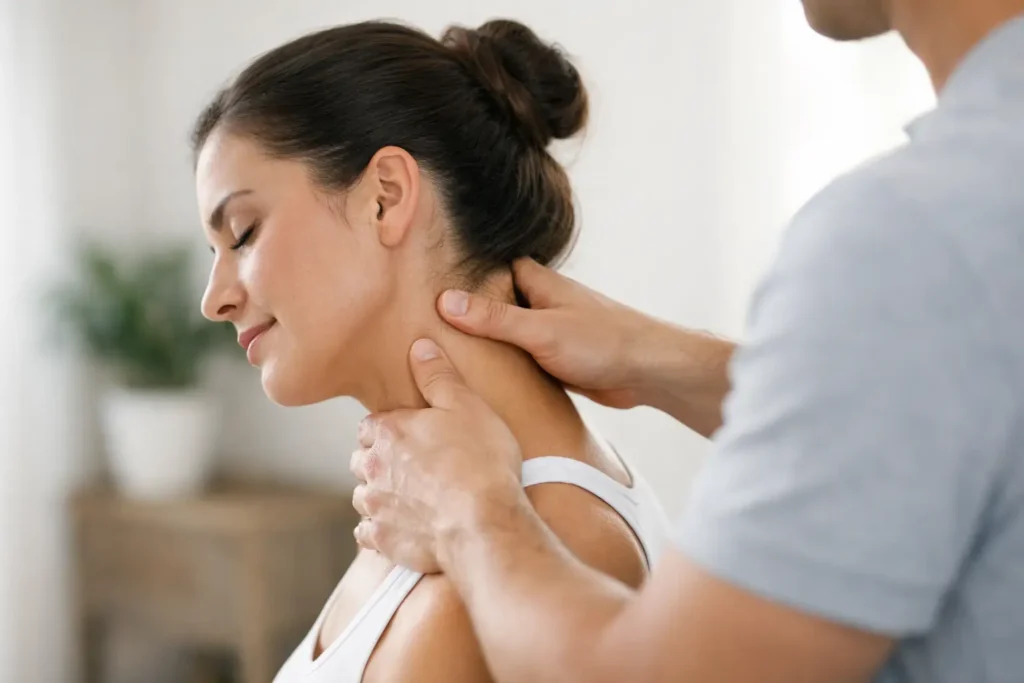
By the time neck tension becomes impossible to ignore, it usually has been building for a while. Hours at a desk, stress held in the shoulders, poor sleep posture, old injuries, and repetitive strain can all lead to the same result – aching, stiffness, headaches, and limited movement. A thoughtful neck pain massage can help, but the most meaningful relief usually comes when the work is tailored to why your neck is hurting in the first place. If you’re in Portland and dealing with neck pain that keeps returning, this is a very common pattern I see.
Neck pain is rarely just about one tight muscle. For many people, the discomfort involves the upper trapezius, levator scapulae, scalenes, jaw, upper back, and even the chest. That is one reason quick, generalized massage may feel good in the moment but not last very long. When care is more individualized, the session can address both the immediate tension and the patterns that keep pulling the body back into discomfort.
Why neck pain happens in the first place
The neck is asked to do a lot. It supports the head, responds to constant visual and postural demands, and adapts to stress faster than most people realize. When posture shifts forward for long periods, the muscles in the back of the neck and shoulders often work overtime. When stress rises, many people unconsciously tighten the jaw, lift the shoulders, and brace through the upper chest.
That means neck pain can have more than one driver. Sometimes it is largely mechanical, such as strain from screens, driving, or sleeping awkwardly. Sometimes it is tied to overuse from workouts, childcare, or physically repetitive jobs. Sometimes emotional stress is a major factor, especially when tension becomes chronic and the nervous system stays in a guarded state.
This is where massage therapy can be especially supportive. It does not simply press on a sore area. In skilled hands, it can help soften overworked tissues, improve circulation, calm protective holding patterns, and give the nervous system a chance to shift out of constant alertness.
What a neck pain massage can actually do
A good neck pain massage is not about forcing the body to release. It is about working with the tissue carefully, reading how it responds, and choosing techniques that fit the person on the table.
For some clients, the main goal is to reduce acute tightness and restore easier movement. For others, the priority is calming headaches that begin at the base of the skull or spread from the shoulders upward. Some people need deeper work in specific muscle bands, while others respond better to slower, more regulating pressure that lets the body stop bracing.
Massage can help reduce pain intensity, improve range of motion, and create a sense of spaciousness through the neck and shoulders. It may also improve awareness. Many clients do not notice how much effort they carry in the upper body until that tension begins to ease. Once the body feels a different baseline, it becomes easier to recognize the habits that contribute to flare-ups.
Still, it helps to be realistic. One session can provide significant relief, but chronic neck tension often develops over months or years. If pain is longstanding, the body may need consistent care and a treatment approach that adapts over time.
The best massage approach depends on your body
There is no single best technique for every neck issue. A person with stress-related tightness and shallow breathing may benefit from a slower, more calming session that includes the neck, shoulders, scalp, jaw, and upper chest. Someone with dense muscular tension from repetitive strain may need more focused therapeutic work through the upper back and shoulder girdle.
Swedish massage can be helpful when the nervous system is overloaded and the body needs to relax before deeper patterns will shift. Deep tissue massage may be appropriate when there are specific areas of persistent restriction, though deeper does not always mean better. If pressure is too intense, the body can tighten defensively, which works against lasting relief.
Shiatsu and other holistic methods can also be valuable, especially for clients whose neck pain is connected to overall stress, fatigue, or a sense of imbalance in the body. These approaches often support both muscular release and nervous system regulation. In practice, the most effective sessions often combine methods rather than relying on one style alone.
Why the neck should not be treated in isolation
One of the most common reasons neck pain returns quickly is that the surrounding areas are overlooked. Tightness in the chest can pull the shoulders forward. Restriction in the upper back can limit how the neck moves. Jaw clenching can create a chain of tension that radiates into the temples, base of the skull, and shoulders.
That is why effective treatment often includes more than the neck itself. Work around the shoulder blades, pectoral muscles, scalp, arms, and mid-back can make a noticeable difference. When the broader pattern is addressed, the neck no longer has to compensate as much.
This whole-body perspective matters even more for people who sit for long hours, carry stress physically, or have recurring headaches. The source of pain may not be where the sensation is strongest. Treating root causes takes more attention, but it usually leads to better results than chasing symptoms alone.
What to expect during a therapeutic session
A personalized massage session should begin with listening. Not just where it hurts, but when it hurts, what makes it worse, how long it has been going on, and what else may be contributing. That information shapes the treatment.
If your pain is sharp, radiating, or associated with numbness, tingling, dizziness, or recent injury, massage may need to be approached cautiously or postponed until a medical provider has evaluated the issue. Massage therapy can be highly beneficial, but it is not the right tool for every condition at every stage.
During the session, a skilled therapist will typically adjust pressure, positioning, and technique based on your comfort and your tissue response. Some areas may need direct work. Others may improve more through indirect release and supportive treatment of nearby muscles. The goal is not to chase pain aggressively, but to create change the body can actually keep.
At Senju Holistic Healing, this kind of individualized approach is central to the work. Rather than offering a one-size-fits-all routine, treatment is shaped around each client’s tension patterns, pain history, and overall stress load.
How to make neck pain massage last longer
Massage works best when it is part of a larger pattern of care. That does not mean you need an elaborate wellness routine. Small changes often matter most.
If your work keeps you at a computer, simple postural resets throughout the day can reduce the amount of strain accumulating in the neck and shoulders. If stress is a major trigger, breathing practices, better sleep support, and awareness of jaw clenching may help extend the benefits of treatment. If exercise or physical labor contributes to symptoms, recovery and pacing become important.
Hydration and rest after massage can also help, though they are not magic fixes. More important is paying attention to what your body notices after a session. Does your head turn more easily? Are your shoulders dropping naturally? Do headaches decrease? Those shifts can point toward what your body has been missing.
For chronic pain, a series of sessions is often more effective than waiting until symptoms become severe. When the body receives consistent support, it is easier to unwind established patterns before they build back to the same intensity.
When massage is especially helpful – and when it may not be enough
Massage is often a strong option for muscular neck pain, stress-related tension, postural strain, and many forms of stiffness linked to daily habits. It can also complement other care for people recovering from overuse or managing recurring discomfort.
But there are times when massage should be part of a broader plan rather than the only approach. If neck pain follows a car accident, comes with arm weakness, causes persistent numbness, or is paired with severe headaches or balance changes, medical evaluation matters. The same is true if the pain is sudden, intense, or clearly worsening.
There is no conflict between holistic care and appropriate medical care. In many cases, the most supportive path is a thoughtful combination of both.
Relief in the neck often begins when the body feels safe enough to stop bracing. That process cannot be rushed, but it can be supported with skilled touch, careful attention, and treatment that respects the full picture of what you carry each day.
If you’re dealing with ongoing neck pain in Portland, a personalized massage session may help address the underlying patterns, not just the symptoms.
You can book a session here.