
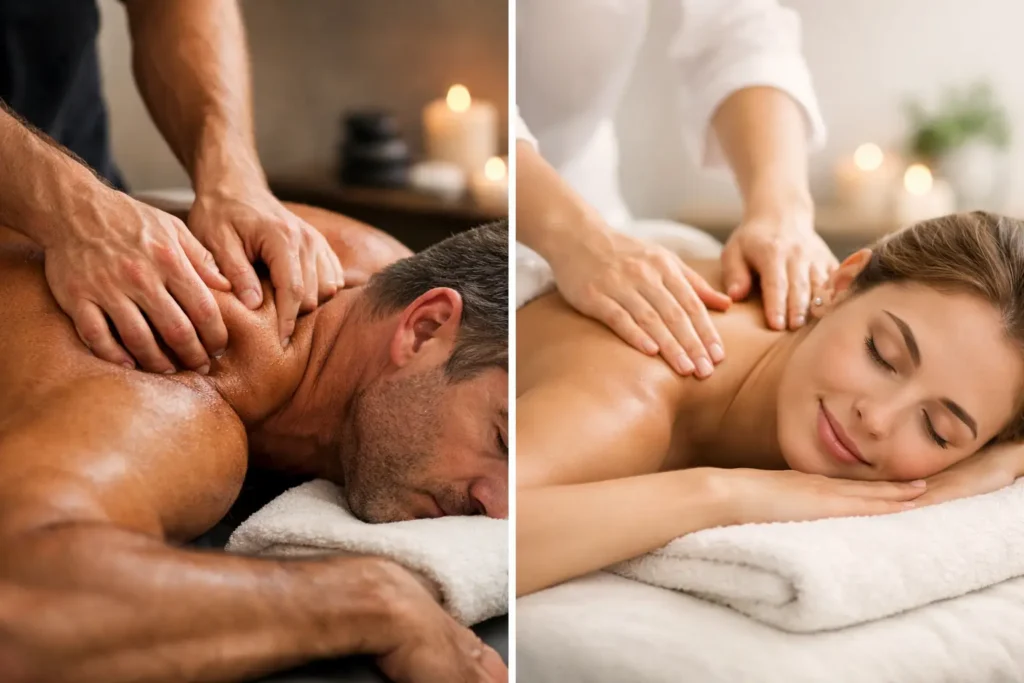
If your shoulders feel like they live somewhere near your ears by midweek, the question of deep tissue vs relaxation massage is not just academic. The right choice can shape how your body feels after the session, later that evening, and over the next several weeks.
Many people assume the difference is simple: deep tissue is intense, relaxation massage is gentle. That is partly true, but it leaves out the part that matters most – what your body actually needs. Pressure alone does not define a good session. The real distinction is the goal of the work, how the session is paced, and whether the techniques are matched to your tension patterns, sensitivity, and daily demands.
Deep tissue vs relaxation massage: the main difference
A relaxation massage is generally designed to calm the nervous system, ease general muscle tension, and help the body settle. The pressure is often lighter to moderate, the pace is smoother, and the focus is broad rather than highly specific. For someone who feels mentally overloaded, run down, or physically tense in a general way, this kind of session can be very supportive.
Deep tissue massage is more targeted. It is often used when certain areas keep tightening up, movement feels restricted, or familiar spots in the neck, shoulders, back, or hips never seem to fully let go. The work may involve slower pressure, more focused contact, and attention to deeper layers of muscle and connective tissue. It can also include trigger point work and careful treatment of stubborn holding patterns.
That said, deep tissue should not feel like a test of endurance. Skilled therapeutic work is not about forcing the body. Too much intensity can make muscles guard rather than release. The best deep tissue sessions are thoughtful, responsive, and specific.
What relaxation massage tends to do best
Relaxation-focused massage is often a good match when your body feels tired, stressed, or generally tight, but not necessarily bound up in one stubborn area. If your tension feels widespread rather than concentrated, a gentler session may help your system shift out of its braced state.
This can be especially useful during stressful periods, after long workweeks, or when sleep has been poor and everything feels a little more sensitive. Some people come in wanting deep work because they are uncomfortable, but what their body really needs first is to settle down. When the nervous system is constantly on alert, even moderate pressure can feel like too much.
A relaxation-oriented approach can support easier breathing, reduced overall tension, and a greater sense of physical ease. For some clients, that alone is enough to create meaningful change. For others, it is the first step before more focused therapeutic work feels comfortable and productive.
When deep tissue massage makes more sense
Deep tissue massage tends to fit better when the problem is not just stress, but recurring patterns. Maybe your upper traps tighten every afternoon at the computer. Maybe one shoulder always feels pulled forward. Maybe your low back gets stiff after driving, training, or carrying kids. These are the kinds of patterns that often benefit from more specific hands-on work.
In a therapeutic setting, deep tissue is less about using maximum force and more about reading the tissue carefully. A practitioner may work gradually into restricted areas, spend more time on a few key regions, and blend techniques rather than repeating the same strokes everywhere. Depending on the session, that might include trigger point work, shiatsu-informed pressure, mobility-focused work, or other supportive techniques based on what the body is presenting that day.
This is why many people with desk-work posture strain, recurring knots, or chronic shoulder and back tightness often respond better to individualized therapeutic massage than to a purely relaxation-based session. They are not looking only to feel calm for an hour. They want the body to move and feel better afterward too.
Deep tissue vs relaxation massage is not always either-or
This is where people often get stuck. They think they have to choose one lane and stay in it. In practice, many effective sessions include both.
A body that is heavily guarded may need a slower, calming start before deeper work becomes useful. On the other hand, someone who comes in asking for a relaxing massage may still benefit from focused work on the neck or shoulders if those areas are clearly driving most of the discomfort. A personalized session can shift between broad soothing work and targeted therapeutic work without becoming formulaic.
At Senju Holistic Healing, this kind of blended approach often makes the most sense. Sessions are shaped around the person rather than around a rigid category. Deep tissue techniques may be combined with trigger point work, shiatsu-informed bodywork, cupping when appropriate, or other supportive methods depending on the tension pattern, pressure tolerance, and goals for the session.
How each massage feels during and after
A relaxation massage usually feels smoother and more even throughout. Most people leave feeling quieter, looser, and more rested. There may be some mild soreness if an area was tight, but that is typically not the main feature of the session.
Deep tissue massage can feel more focused and, at times, more intense. Certain spots may be tender while they are being worked, especially if they have been holding tension for a long time. Afterward, some people feel immediate relief and more freedom of movement. Others notice mild soreness for a day or two, similar to what you might feel after using neglected muscles.
Neither response is automatically better. If your goal is to unwind and reset, a deeply calming session may be exactly right. If your goal is to address that same knot between the shoulder blade and spine that keeps returning, deeper and more specific work may be worth a little temporary tenderness.
How to choose the right approach for your body
A good starting point is to ask what you want to be different after the session. If the answer is, “I want to feel calmer, sleep better, and let my whole body settle,” relaxation-focused work is often a strong fit. If the answer is, “I want help with this stubborn tension in my neck, shoulders, or back,” deep tissue may be more appropriate.
It also helps to consider your current sensitivity level. If you are exhausted, anxious, or feeling physically run down, jumping straight into very focused work may not be ideal. If you are active, generally tolerate pressure well, and have one or two clear problem areas, targeted deep tissue work may be more useful.
Communication matters here. The best sessions are not based on a label alone. They are based on what you tell your therapist about pressure, past experiences, daily habits, and how your body responds. A skilled practitioner will adjust rather than push through.
Common misunderstandings about deep tissue massage
One of the biggest misconceptions is that deeper always means better. It does not. Effective bodywork depends on timing, sensitivity, and precision. Too much pressure can make it harder for tissue to soften, especially in the neck, jaw, or upper shoulders.
Another misunderstanding is that relaxation massage is somehow less valuable. That also misses the point. General stress and muscular bracing can affect how the whole body feels and functions. A session that helps your system downshift may be exactly what allows longer-term tension patterns to ease.
There is also the idea that you have to choose based on personality. People sometimes say, “I like deep tissue,” as if it were a badge of toughness. But massage should not be about proving how much pressure you can tolerate. It should be about receiving the kind of work that your body will actually respond to.
For chronic tension, the best answer is often personalized care
For adults dealing with recurring neck, shoulder, and back tension, the most helpful question is usually not whether deep tissue or relaxation massage is better in general. It is which approach fits your body today.
Some days your muscles need focused attention. Some days they need your whole system to stop bracing first. Often, the most effective therapeutic massage includes both – enough calming work to help the body receive treatment, and enough specificity to address the patterns that keep returning.
If you are choosing between the two, think less about labels and more about outcomes. Notice whether your tension is broad or localized, whether you feel depleted or resilient, and whether your body tends to soften with gentler work or needs more targeted attention. The right session should leave you feeling cared for, not overworked, and more at home in your body than when you walked in.
That is usually the clearest sign you chose well.