
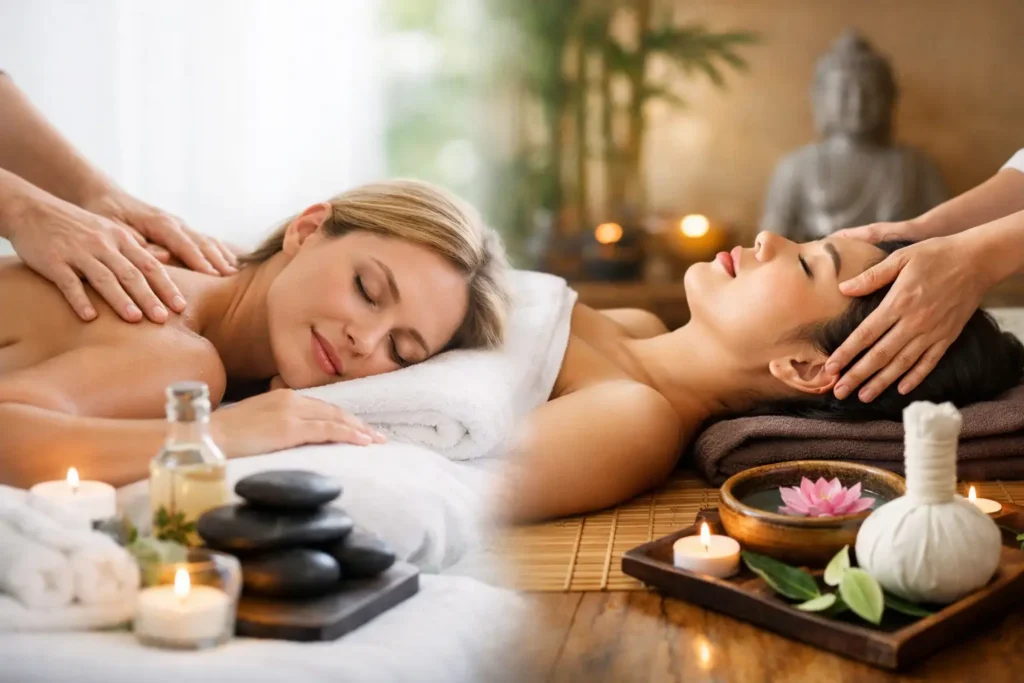
A tight neck from video calls, a shoulder that stays elevated after a stressful week, or a low back that feels guarded after training rarely responds best to a one-size-fits-all session. An eastern western massage approach offers a more responsive way to work: it combines close attention to how the whole body feels and moves with practical, anatomy-informed techniques for specific areas of tension.
For many people, the value is not in choosing one tradition over another. It is in receiving thoughtful, skilled touch that can adapt to the day they are having. Some sessions may call for focused work around the shoulders and upper back. Others may benefit from slower, broader contact, gentle joint movement, or attention to the legs and hips that may be contributing to a sense of strain elsewhere.
What Does an Eastern Western Massage Approach Mean?
The phrase can be useful, but it deserves some care. “Eastern” and “Western” are broad labels that contain many distinct traditions, training methods, and ways of understanding the body. They should not be treated as two fixed, opposing styles.
In therapeutic massage, a Western-informed perspective often emphasizes anatomy, muscle function, movement patterns, and the relationship between daily activity and discomfort. A practitioner may consider how desk posture, repetitive lifting, exercise, sleep position, or stress-related bracing can affect the neck, shoulders, back, hips, and legs. This perspective helps guide targeted work for tender, overworked, or restricted-feeling areas.
Japanese-informed and shiatsu-informed bodywork often bring a different quality of attention to the session. The work may use steady pressure, palms, forearms, and careful pacing. Rather than isolating every area immediately, the practitioner may first notice patterns across the body: a guarded rib cage, a tense jaw, an upper back that is doing too much work, or legs that feel heavy after long hours of sitting. The goal is not to force the body to release, but to work with enough presence and precision that it can settle.
Blending these perspectives allows treatment to be both focused and broad. A recurring knot near the shoulder blade may deserve direct attention, but the surrounding neck, chest, arm, and breathing pattern may also influence how quickly that area tightens again.
How the Eastern Western Massage Approach Is Applied
A useful session begins with listening, not assumptions. Before hands-on work starts, a therapist can ask what has been bothering you, what activities affect it, what kind of pressure feels productive, and what would make the session feel safe and worthwhile. That conversation matters because similar complaints can feel very different from person to person.
Anatomy-Informed Work for Specific Tension
When a client describes a familiar ache between the shoulder blades or stiffness after computer work, focused therapeutic techniques may be appropriate. Deep tissue massage and trigger point work can be used gradually to address areas that feel dense, tender, or persistently tight. “Deep” should not mean painful. Effective pressure is usually specific, measured, and adjusted as the body responds.
This approach can also include work around commonly overused areas such as the upper trapezius, muscles along the spine, hips, forearms, and calves. The intention is to improve comfort and ease of movement, not to chase every sensation with more pressure. Sometimes a lighter approach produces a better result, particularly when a person is already stressed, sensitive, or sore from recent activity.
Whole-Body Attention and Deliberate Pace
Japanese-informed techniques can support a different rhythm. Steady compression, supported stretching, and slower contact may help a client notice where they are holding tension without feeling rushed through a routine. This can be particularly welcome for people whose bodies feel constantly “on,” whether from work demands, caregiving, training, or a long period of poor sleep.
A calm pace does not make the work less therapeutic. It creates room to assess how tissues respond and whether the nervous system seems to be settling or becoming more protective. For a client with a tight, reactive neck, for example, beginning with the upper back, shoulders, arms, or scalp may be more comfortable than immediately applying firm pressure at the most sensitive point.
Supporting Techniques Chosen for the Day
A blended session may also include therapeutic cupping, gentle craniosacral techniques, lymphatic drainage methods, visceral bodywork, reflexology, or careful range-of-motion work when appropriate. These are not automatic additions or separate formulas. They are supporting techniques selected according to the client’s goals, comfort level, sensitivity, and tension patterns.
Cupping, for instance, may be considered when broad areas of the back or shoulders feel restricted and the client is comfortable with it. It is not necessary for everyone, and it can leave temporary marks. Gentle techniques may be a better choice after intense exercise, during a period of heightened sensitivity, or when someone simply needs a less demanding session.
What a Personalized Session Can Feel Like
The eastern western massage approach is less about a recognizable sequence and more about informed adjustment. One visit may center on the low back, glutes, and hips after a long drive or an active weekend. Another may spend more time on the neck, chest, upper back, and forearms for someone who spends most of the day at a keyboard.
A therapist may begin with broad contact to understand the general tone of the body, then narrow the focus as patterns become clearer. Pressure can change throughout the session. Slower, lighter work may prepare an area for more focused techniques, while gentle integration afterward can keep the work from feeling abrupt.
At Senju Holistic Healing, this individualized approach is central to private therapeutic massage sessions. Rather than fitting a client into a preset modality, the work is shaped around the person on the table: what is tight, what feels sensitive, what has been demanding of their body, and what kind of care feels sustainable that day.
The Trade-Offs: Why More Intensity Is Not Always Better
People often associate therapeutic massage with very firm pressure. While deeper work can be helpful for some tension patterns, intensity alone is not a measure of quality. Too much pressure can cause a person to brace, hold their breath, or leave feeling more irritated than relieved.
The right level depends on several factors: your sensitivity, recent activity, stress level, previous massage experience, and the location being treated. The muscles at the side of the neck, for example, usually need a different approach than the glutes or upper back. Clear feedback helps the therapist make useful adjustments before discomfort becomes counterproductive.
There is also a practical difference between feeling better after one session and changing a recurring pattern over time. If long workdays, heavy training, repetitive movements, or stress continue to load the same areas, tension may return. Regular bodywork can support maintenance, but small changes in movement breaks, workstation setup, hydration, sleep, and recovery habits often matter too.
Who May Appreciate This Blended Style?
This approach can be especially helpful for adults who want more than general relaxation but do not want an aggressive, impersonal treatment. It suits people with recurring neck and shoulder tightness, back discomfort, postural stress, muscle fatigue from work or exercise, and the familiar feeling that one area keeps tightening despite stretching it at home.
It is also a good fit for clients who value communication. A session can be adapted for someone who prefers focused deep tissue work, someone who needs a gentler pace, or someone whose comfort changes from visit to visit. You do not need to know the name of a technique before booking. Describing what you feel and what you hope to improve is enough to begin.
A More Useful Way to Think About Bodywork
The best massage approach is not defined by whether it is labeled Eastern or Western. It is defined by whether the practitioner pays close attention, works within your comfort, and uses techniques with a clear purpose. For ongoing tension, that kind of individualized care can make each session feel less like a routine and more like practical support for living and moving with greater ease.
When your body has been carrying too much for too long, the most helpful next step may simply be a quiet hour of skilled attention, honest communication, and care that meets you where you are.