
A tight upper back after long hours at a desk does not always need the same kind of pressure as a stubborn knot near the shoulder blade. When deciding between shiatsu or deep tissue massage, the most helpful question is not which method is better. It is which approach best fits your body, your comfort level, and the way your tension is showing up right now.
Both can be useful for people dealing with recurring neck, shoulder, and back tightness. They differ in how the work is delivered, how the session feels, and what may be most useful for a particular pattern of discomfort. In a personalized therapeutic massage session, the answer may even be a thoughtful blend rather than a strict choice.
Shiatsu or Deep Tissue Massage: The Main Difference
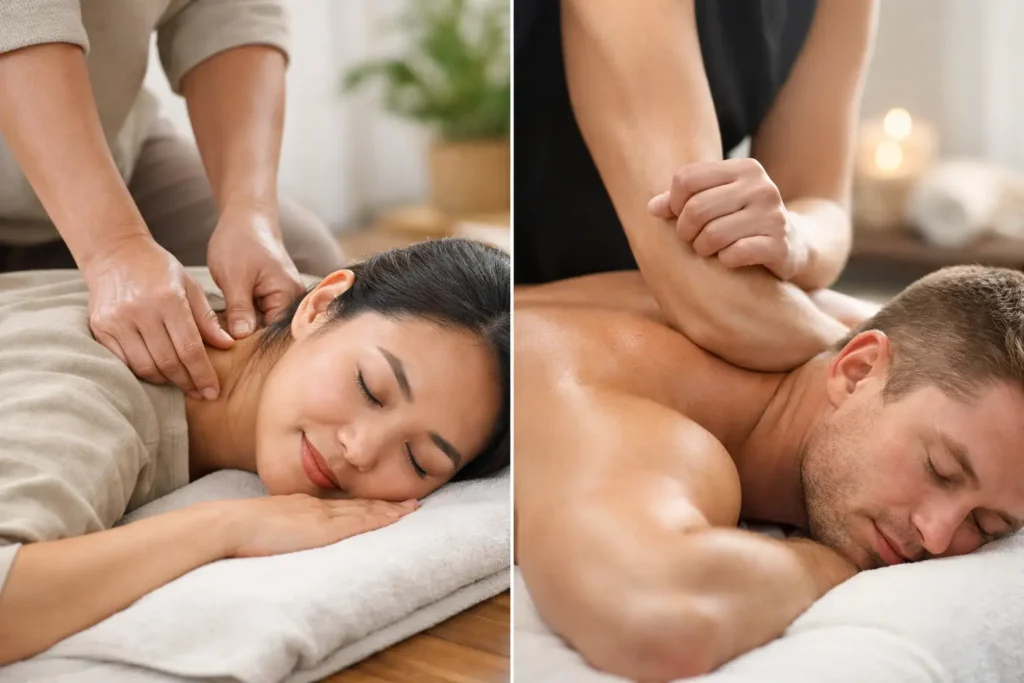
Shiatsu is a Japanese-informed form of bodywork that uses steady, focused pressure, often with the thumbs, palms, forearms, and hands. It is commonly performed through comfortable clothing and may include assisted stretches, gentle joint movement, and attention to how different areas of the body relate to one another. Rather than repeatedly working one small spot, shiatsu often takes a broader, whole-body view of tension.
Deep tissue massage generally uses slower strokes and sustained pressure to address areas of chronic muscle tightness and restricted-feeling tissue. It is often performed on a massage table with oil or lotion, allowing the practitioner to work gradually through superficial layers and focus more directly on specific muscles or recurring knots.
Neither approach needs to feel punishing to be effective. Therapeutic pressure should be purposeful and adjustable, not something you simply endure. Some people prefer the grounded, clothed approach of shiatsu. Others appreciate the direct, targeted nature of deep tissue work. Many benefit from both at different times.
When Shiatsu May Be the Better Fit
Shiatsu can be especially appealing when stress and physical tension seem closely connected. You may notice that your shoulders rise through the workday, your jaw stays clenched, or your whole back feels guarded even when there is no single painful spot. In these cases, broad, steady pressure and gentle movement can help the body settle without concentrating intensely on one area.
It may also suit people who prefer to remain clothed, feel sensitive to oil-based massage, or do not enjoy very focused work on a tender muscle. The session can still be therapeutic and specific. A practitioner may spend meaningful time around the neck, shoulders, hips, feet, or low back while using a pace that feels less invasive than direct deep tissue techniques.
Shiatsu-informed work can be useful for desk-work posture strain because it does not treat the shoulders in isolation. Tightness at the base of the neck may be influenced by how the chest, upper back, arms, hips, and breathing patterns are holding tension throughout the day. That does not mean every session needs to address every area. It means the work can be adapted when a narrow focus is not giving lasting comfort.
When Deep Tissue Massage May Be More Helpful
Deep tissue massage is often a strong choice when you can identify a more localized issue: a recurring knot between the shoulder blade and spine, a dense band through the upper trapezius, lingering tightness in the low back, or muscles that feel restricted after training. The slower pace gives the practitioner time to assess how the tissue responds and to work with precision rather than simply adding more pressure.
For active adults, deep tissue techniques can be helpful when repetitive movement has left certain areas overworked. A runner may feel persistent tightness through the calves or hips. Someone who strength trains may notice tension around the chest, shoulders, or upper back. A parent lifting children or carrying bags may develop one-sided neck and shoulder fatigue. These patterns are common, but the appropriate approach still depends on sensitivity, workload, sleep, stress, and how the body feels that day.
Deep tissue work is not synonymous with intense pain. Too much pressure can cause a person to brace, hold their breath, or tense against the work. A skilled session uses enough pressure to engage the area while allowing the body to respond. Communication matters throughout, particularly when working around tender points or long-standing tightness.
Deep Tissue Is Not Always the First Step
If an area is highly sensitive, recently aggravated, or already feeling protective, beginning with forceful localized pressure may not be the most comfortable or productive option. Slower warming techniques, gentle compression, movement, or work in related areas may be a better starting point.
This is one reason a good therapeutic massage session is not formulaic. The same person may need more focused deep tissue work one month and a gentler, broader approach the next. Your body is not static, and your massage should not be either.
Choosing Based on Your Goal and Comfort Level
If your main goal is to feel more settled while easing widespread stress-related tightness, shiatsu may feel like the natural starting point. If you want focused attention on a familiar knot or a specific area that consistently limits comfort or movement, deep tissue massage may be more appropriate.
Still, labels only tell part of the story. Two deep tissue sessions can feel very different depending on the practitioner’s pace, pressure, and assessment. Shiatsu can range from deeply calming to quite focused. What matters most is whether the session is tailored to your needs rather than following a fixed routine.
Before your appointment, it helps to think beyond “my back hurts.” Consider when the discomfort is most noticeable, whether it is linked to work, exercise, sleep, or stress, and what has felt helpful or unhelpful in past massages. You do not need perfect language or a detailed body map. Even simple observations give your massage therapist useful direction.
For example, you might say that your shoulders feel heavy after computer work, but direct pressure near one shoulder blade has been too intense in the past. Or you may explain that your low back feels tight after gardening, while your hips and legs feel fine. Clear feedback allows the work to be adjusted in real time.
Why a Blended Session Often Makes Sense
For many people, shiatsu and deep tissue are not competing choices. They are complementary tools. A session might begin with broad compression and movement to help the body relax and assess where tension is most present. From there, focused deep tissue or trigger point work may be used selectively around a recurring knot. Gentle stretching, cupping, craniosacral techniques, or other supportive approaches may be appropriate depending on your goals and response.
This does not mean adding techniques for the sake of variety. Each method should have a reason. A therapist may use a lighter approach around an irritated area, more sustained pressure where tissue feels dense, or movement when stiffness seems connected to limited range of motion. The goal is practical: help you leave feeling more comfortable, more aware of your body, and better supported in daily movement.
At Senju Holistic Healing in SW Portland, sessions are shaped around the individual rather than restricted to one modality. That can be particularly valuable for clients whose tension changes with demanding workweeks, family responsibilities, training schedules, or periods of high stress.
What to Expect After Either Approach
After shiatsu or deep tissue massage, many people notice a sense of ease, reduced muscle guarding, or freer movement in areas that felt tight. Others may feel temporarily tender, especially after focused work on long-standing tension. Hydration, regular meals, gentle movement, and giving yourself a little time before strenuous activity can be sensible ways to support your comfort afterward.
The response is personal. A single session may offer welcome relief, but recurring tension often benefits from noticing the habits and demands that keep bringing it back. That may include workstation setup, repetitive lifting, exercise recovery, sleep position, stress load, or simply going too long without pausing to move. Massage can be a valuable part of ongoing body care, alongside the practical adjustments that fit your life.
If you have a recent injury, unexplained symptoms, fever, significant swelling, or a health concern that could affect massage, check with an appropriate health professional before scheduling. During the session, speak up about pressure, comfort, and any area you would rather avoid. Good bodywork is collaborative.
The best choice is the one that meets your body with enough skill, attention, and flexibility for the day you arrive. Whether that means grounded shiatsu pressure, focused deep tissue work, or a careful combination of both, the aim is not to push through discomfort. It is to create room for your body to move and feel more at ease.