
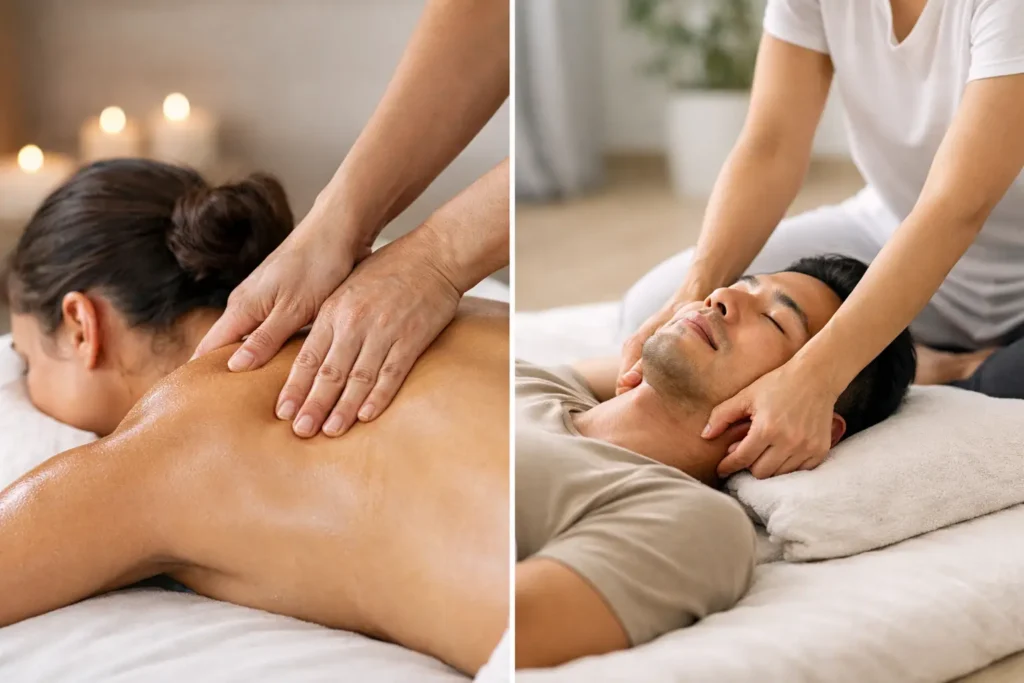
A stubborn knot between the shoulder blades does not always need more pressure. Sometimes it responds best to slow, focused work on the surrounding muscles. Other times, a broader approach that addresses how the whole body is holding tension feels more useful. That distinction is at the heart of deep tissue vs shiatsu massage.
Both approaches can support people dealing with recurring neck, shoulder, and back tightness. Yet they feel different, use different forms of contact, and may suit different preferences on a given day. Knowing the difference can help you ask for bodywork that feels productive rather than simply intense.
Deep Tissue vs Shiatsu Massage: The Core Difference
Deep tissue massage is a therapeutic approach that generally uses slower strokes, sustained pressure, and focused work in deeper layers of muscle and connective tissue. The goal is not to push through discomfort for its own sake. It is to work thoughtfully with areas that feel chronically tight, restricted, overworked, or sensitive from posture, repetitive activity, training, or stress.
Shiatsu is a Japanese-informed form of bodywork traditionally performed through clothing, often on a mat or firm surface. It uses comfortable, sustained pressure from thumbs, palms, hands, and sometimes elbows, along with gentle stretches and joint movement. Shiatsu tends to take a more whole-body view of tension and may move rhythmically from one area to another rather than staying in one small spot for an extended period.
In practice, the line is not always sharp. A skilled massage therapist may use elements informed by shiatsu, such as palm pressure or assisted movement, within a table-based therapeutic session. They may also use deep tissue techniques selectively instead of applying heavy pressure everywhere. The most useful session is usually guided by your body, your goals, and how you respond in the moment.
What Deep Tissue Massage Feels Like
Deep tissue massage is often associated with strong pressure, but strength alone does not define it. A therapist may begin with broader contact to warm and assess an area, then slow down over a specific band of tension in the upper back, hips, forearms, or neck and shoulders. The work can feel focused, deliberate, and at times intense, but it should remain within a tolerable range.
For many desk-based workers, deep tissue work can be helpful when the same areas repeatedly feel loaded: the muscles along the neck, the tops of the shoulders, the chest and front of the shoulders, or the middle back. Someone who trains regularly may appreciate focused work around overused muscle groups as part of a sensible recovery routine.
Still, deeper is not automatically better. Muscles often tighten further when pressure feels abrupt, overwhelming, or disconnected from the rest of the body. Clear communication matters. You should be able to tell your therapist when pressure needs to be adjusted, when an area feels too tender, or when a slower approach would help you settle into the work.
Deep Tissue May Be a Good Fit When
Deep tissue massage may suit you when you want concentrated attention on a recurring area of tightness, such as a stubborn upper-back knot or shoulders that feel compressed after long workdays. It can also fit people who prefer direct, structured work and appreciate feeling specific areas soften or move more freely after a session.
It may be less appealing when you are already feeling highly sensitive, depleted, or wary of focused pressure. That does not mean therapeutic massage is off the table. It may simply mean the session should begin more gently and use lighter, broader techniques before any deeper work is considered.
What Shiatsu-Informed Bodywork Feels Like
Shiatsu-informed bodywork often feels steady and grounding rather than sharply targeted. Pressure is usually applied and released in a measured rhythm, with the therapist using body weight and stable contact instead of forceful pressing. Gentle stretches, rocking, and movement may be included to help areas that feel guarded or stiff.
Because the approach considers how one part of the body influences another, someone who arrives with neck tension may also receive attention to the shoulders, arms, back, hips, or legs. This can be especially welcome when stress has created a general sense of bracing rather than one clearly defined knot.
Shiatsu is commonly received while clothed, although shiatsu-informed techniques can also be adapted into an oil-based table massage when appropriate. The setting and method matter less than the quality of attention. The aim is comfortable, responsive contact that helps the body feel less held and more at ease.
Shiatsu May Be a Good Fit When
Shiatsu-informed work may appeal to people who prefer a whole-body approach, rhythmic pressure, and stretching or movement alongside hands-on work. It can be a thoughtful choice for someone whose tension shifts from neck to shoulders to low back depending on workload, sleep, activity, or stress.
It can also be a good option for clients who do not want the session centered on heavy pressure. Shiatsu pressure can be substantial, but it is not meant to be a test of endurance. A calm pace and clear feedback can make the work feel both effective and manageable.
Pressure Is Only One Part of the Decision
When choosing between deep tissue and shiatsu, many people focus first on pressure. That is understandable, but pressure is only one variable. The pace of the session, the amount of movement involved, whether you prefer work through clothing or directly on the skin, and how localized your discomfort feels can all influence the best approach.
Consider the pattern you are bringing in. If one shoulder blade always feels stuck after computer work, focused deep tissue and trigger point work may make sense. If your entire body feels tight after a demanding month and you cannot identify one main trouble spot, shiatsu-informed pressure and movement may feel more restorative.
Your preference matters too. Some people relax when a therapist works slowly and specifically into an area. Others find they respond better when the session keeps moving and includes broader contact. Neither preference is more correct. It is useful information for personalizing care.
Why a Blended Session Often Makes Sense
Real bodies do not follow neat categories. A tight shoulder may be connected to how you sit, how you breathe under stress, how you use your arms, and how much recovery time you have had. A session limited to one technique can be useful, but it may not always be the most responsive option.
At Senju Holistic Healing, sessions are tailored rather than formulaic. For example, a therapist might use slower therapeutic deep tissue work for a persistent upper-back area, shiatsu-informed palm pressure to create broader ease through the shoulders, and gentle movement to check how the area responds. Trigger point work, cupping, craniosacral techniques, or other supportive methods may be considered when appropriate to the client’s goals and comfort.
This does not mean doing more simply to do more. It means choosing techniques with a purpose and adjusting as the session unfolds. A private therapeutic setting gives clients room to communicate, ask questions, and receive care that is not rushed into a preset routine.
How to Decide Before Your Appointment
Start with a simple description of what you notice. Is your discomfort concentrated or widespread? Do you want focused work on a particular area, or do you feel generally tense and compressed? Have you enjoyed firm, specific pressure in the past, or do you tend to brace against it?
It is also helpful to share what changes from week to week. Perhaps your neck is worse after deadline-heavy work periods, your low back feels tight after driving, or your shoulders become sensitive after strength training. These observations are not a diagnosis. They give your massage therapist practical context for selecting a pace and approach.
If you are unsure, you do not need to arrive with the perfect answer. You can ask for a session that begins conservatively and adapts based on your feedback. Therapeutic massage should feel collaborative. The right approach may include deep tissue, shiatsu-informed work, or a thoughtful combination of both.
A good session is not measured by how much pressure you tolerated. It is measured by whether the work felt appropriate for your body that day and left you with a clearer sense of comfort, ease, and support for the routines you need to return to.