
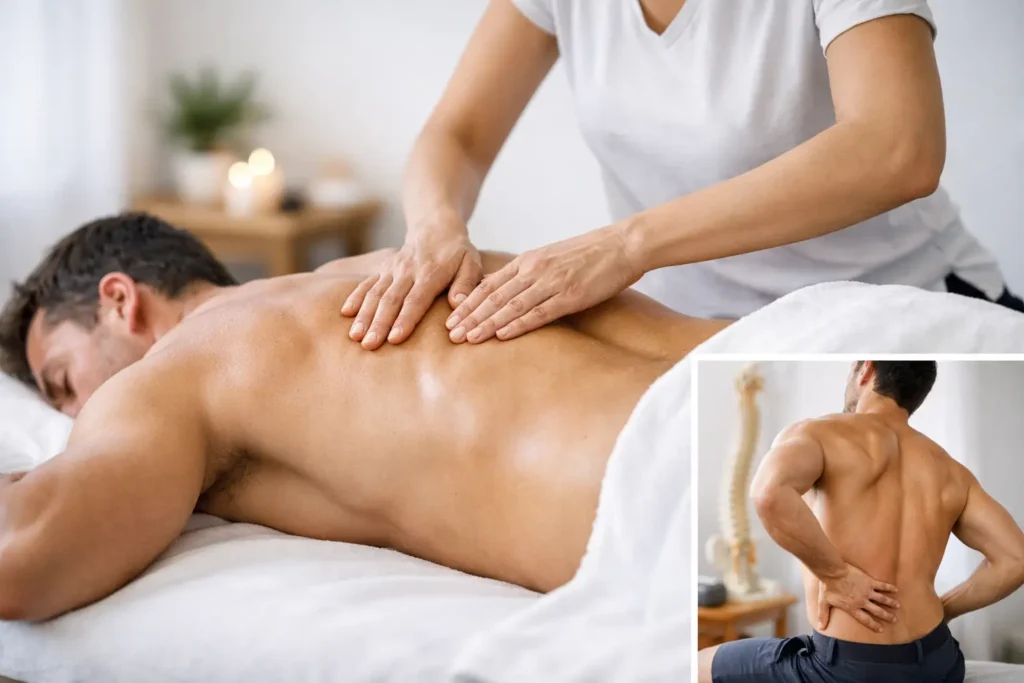
Back stiffness rarely stays in one place. It can make getting out of a desk chair awkward, turning to check traffic uncomfortable, or bending to pick up a child feel more effortful than it should. Massage for back stiffness offers a practical way to address the muscle tightness and protective holding patterns that often build up through work, stress, training, and daily routines.
A helpful session is not about forcing a stiff back to loosen. It is about paying attention to where your body feels restricted, how sensitive the area is, and what kind of pressure helps you feel more comfortable. For many people, thoughtful therapeutic massage can support easier movement, a calmer nervous system, and a more manageable relationship with recurring tension.
Why backs become stiff in the first place
Back stiffness is often less about one single muscle and more about a pattern. Hours of sitting can leave the hips and low back feeling compressed. Long drives may create tension through the mid-back and shoulders. Repetitive lifting, gardening, strength training, or carrying bags on one side can ask the body to compensate in ways that eventually feel tight and limited.
Stress matters, too. When deadlines, caregiving, poor sleep, or persistent worry are part of the picture, many people unconsciously brace through the shoulders, ribs, jaw, and back. That bracing may be subtle at first. Over time, it can contribute to the familiar feeling of a back that never quite settles.
Stiffness can also change from day to day. A back that feels fine after a walk may become tight after sitting through several meetings. Someone else may wake up stiff but feel better once they begin moving. These details are useful because they help guide the pace and focus of a massage session.
How massage for back stiffness can help
Therapeutic massage works with soft tissue through skilled, responsive touch. Depending on the person, that may include focused work in the low back, hips, glutes, mid-back, shoulders, or neck. These areas often influence one another. For example, a person who feels stiffness across the low back may also be carrying significant tension around the hips or along the sides of the torso.
The goal is not simply intensity. Deep pressure can be useful for some longstanding tension patterns, but more pressure is not always better. If muscles are highly sensitive or actively guarding, a slower approach may be more productive. Gentle broad contact, gradual pressure, movement-based techniques, and clear communication can help the body tolerate the work rather than brace against it.
A personalized session may blend therapeutic deep tissue massage with trigger point work, shiatsu-informed bodywork, or carefully selected techniques that support comfort and mobility. Cupping, craniosacral work, lymphatic drainage techniques, visceral bodywork, or reflexology may also be incorporated when appropriate to the client’s goals and presentation. These are supporting tools, not a fixed routine. The work should fit the person on the table that day.
Many clients notice that their back feels less compressed or easier to move after a session. Others experience a quieter, more grounded feeling because they have had time to stop bracing. Results vary, especially when stiffness has been present for months or is connected to demanding work or activity patterns. Massage is often most useful as part of ongoing body care rather than a one-time answer to every source of discomfort.
What a thoughtful back-focused session looks like
A good therapeutic massage begins before hands-on work. Your massage therapist should ask what you are feeling, where the stiffness is most noticeable, what activities make it worse or better, and what kind of pressure feels workable. Mentioning an old injury, a recent change in exercise, pregnancy, medications, or other relevant health information helps shape a safer, more comfortable session.
The treatment itself does not need to focus only on the exact spot that feels stiff. Tightness between the shoulder blades, for instance, may be affected by the chest, neck, shoulders, breathing pattern, and prolonged computer work. Low-back tension may be influenced by the hips, glutes, and the way you move through your day. Working with related areas can create a more complete sense of relief without treating the body like a collection of isolated parts.
Communication is especially important when a back feels tender or guarded. Productive work may feel intense at times, but it should not require you to hold your breath, grit your teeth, or push through sharp pain. Let your therapist know if pressure is too much, if an area feels unusually sensitive, or if you would like an adjustment in positioning. A session is collaborative, and comfort is part of effective care.
Supporting the benefits between appointments
The hours after massage are a useful opportunity to notice what your body needs. Some people want a quiet evening and a warm shower. Others feel ready for a gentle walk. There is no single correct routine, but abrupt heavy activity immediately after a session may not be ideal if your muscles feel tender.
Small, repeatable habits usually matter more than a dramatic reset. Consider changing positions during long work blocks, taking a few relaxed walks, adjusting your workstation, or adding comfortable mobility work that does not aggravate symptoms. If your stiffness is connected to training, recovery days and gradual progressions can be just as important as the workout itself.
You do not need to stretch aggressively to care for a stiff back. In some cases, forcing a range of motion can increase guarding. Slow movement, steady breathing, and attention to how your back responds are often more helpful. If one position consistently causes discomfort, treat that as useful information rather than something to ignore.
When stiffness needs medical attention first
Massage can be a supportive option for common muscle tension and everyday stiffness, but some symptoms call for prompt evaluation by a qualified medical professional. Seek medical guidance for severe or worsening pain, pain after a significant fall or accident, new weakness, numbness that persists or spreads, loss of bladder or bowel control, fever, unexplained weight changes, or discomfort that is not responding as expected.
It is also wise to check with your health care provider when you have a new or unexplained back concern, are recovering from surgery, have a condition that affects circulation or bone health, or are unsure whether massage is appropriate. A licensed massage therapist can adapt a session within scope, but massage does not replace medical assessment when warning signs are present.
Choosing a massage approach that fits your body
A formulaic back massage can feel pleasant, but it may not address the reasons your stiffness keeps returning. The most useful approach considers your daily demands, your preferences, your sensitivity, and the areas that may be contributing to the pattern. Someone who sits at a computer all day may need a different session from someone whose back tightens after running, lifting, or caring for young children.
For adults in SW Portland and the surrounding area, a private therapeutic setting can offer the space to slow down and be specific about what is happening in the body. At Senju Holistic Healing, sessions are tailored to each client rather than limited to one technique or a preset sequence. That individualized attention can be particularly valuable when stiffness is recurring, changes with stress, or seems connected to several areas at once.
Back stiffness does not always disappear on command, and it does not need to be ignored until it becomes overwhelming. Paying attention early, moving with care, and choosing bodywork that respects your comfort level can make everyday tasks feel less demanding. A well-matched massage session can be a steady part of that process: time set aside to listen to your body and give it skilled, practical support.