
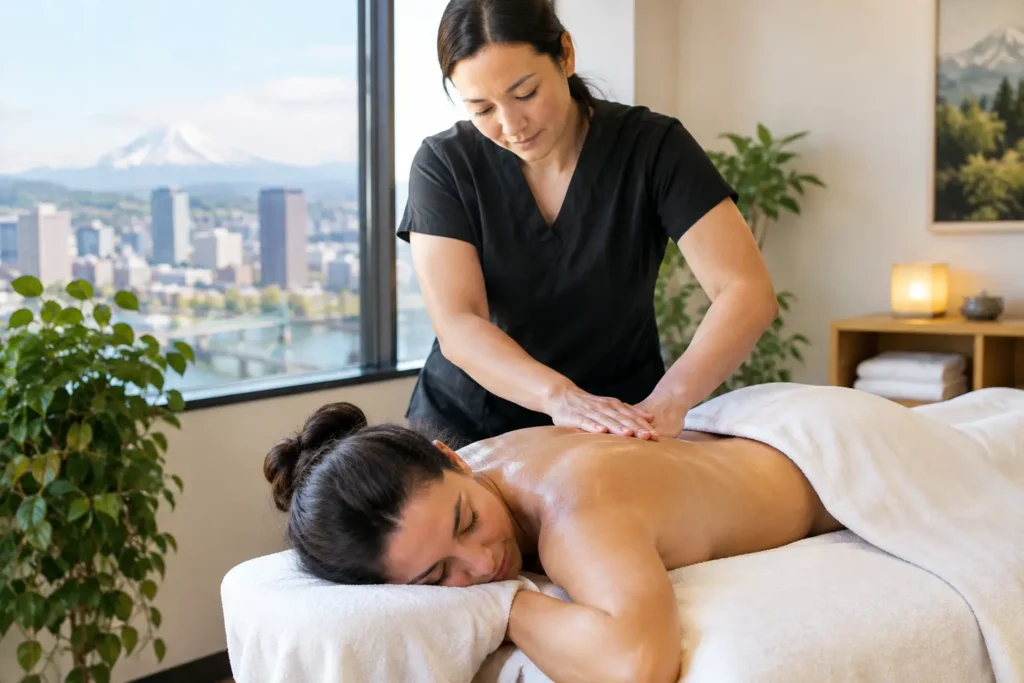
A stiff neck after a full day at the computer is rarely only about the neck. Shoulders may be working overtime, the upper back may feel held and heavy, and even a familiar low-back ache can make ordinary movement feel less comfortable. Portland therapeutic massage offers a practical way to address these patterns with focused, one-on-one care that responds to what your body is carrying now.
For many people, the goal is not simply to feel relaxed for an hour. It is to feel more comfortable turning the head while driving, reaching overhead, sitting through a meeting, exercising, or settling into sleep. Therapeutic massage can support those goals by working with areas of tension thoughtfully, at a pace that respects your comfort and sensitivity.
What Makes Therapeutic Massage Different?
Therapeutic massage is guided by your reasons for coming in. A session may focus on recurring shoulder tightness, an achy back after long workdays, muscle fatigue from training, or the general strain that builds when stress has nowhere to go. Rather than following a fixed sequence, the practitioner observes how tension is presenting and adjusts the work accordingly.
This does not necessarily mean every session needs intense pressure. Deep tissue work can be useful for some areas and some clients, but pressure is only one part of effective bodywork. Slow, attentive contact, precise work around a persistent knot, and time spent helping an area settle can be just as valuable as firm pressure.
The right approach depends on your history, current comfort, and what your body can receive that day. Someone who has been guarding an irritated shoulder may benefit from a gentler session than someone managing familiar, non-acute tightness through the upper back. Clear communication throughout the session helps keep the work useful rather than overwhelming.
Common Reasons People Seek Portland Therapeutic Massage
Desk work often creates a recognizable pattern: the head drifts forward, the shoulders round, and the upper back stays active for hours without much variation. The result may be tension near the base of the skull, a pulling sensation through the shoulders, or a back that feels tired before the day is over. Massage cannot change every part of a work setup, but it can offer hands-on support for the muscular strain that accumulates around it.
Stress can show up physically as well. Some people notice that their jaw, neck, chest, or shoulders feel persistently braced during demanding periods. Others feel as though they cannot fully let their back rest, even when they finally stop moving. A quiet session can create space to notice those patterns and ease some of the holding that has become habitual.
Active adults may seek bodywork for a different reason. Training, gardening, long walks, travel, and physically demanding work can all leave particular areas feeling overused. Massage can be part of a sensible maintenance routine, especially when the goal is to support comfortable movement and recover a sense of balance between demanding days.
A Personalized Session Can Use More Than One Technique
Bodies do not follow neat categories, and neither should every massage session. At Senju Holistic Healing, work is tailored to the client’s needs rather than limited to a single style. Therapeutic deep tissue massage and trigger point work may be used to address concentrated areas of muscular tightness, while shiatsu-informed and Japanese-informed bodywork can bring a broader, connected approach to the session.
When appropriate, supportive techniques such as therapeutic cupping, craniosacral work, lymphatic drainage techniques, visceral bodywork, or reflexology may also be incorporated. These are not automatic additions or separate routines. They are considered tools within personalized care, chosen only when they fit the client’s goals, comfort level, and presenting tension patterns.
For example, a client with a guarded upper back may benefit from focused work through the shoulders and surrounding tissues, followed by quieter, less direct techniques that help the area feel less defended. Another client may need more attention on the hips and low back because that is where their daily sitting or activity patterns are most noticeable. The value is in the assessment and adjustment, not in using the longest possible list of methods.
Firm Pressure Is Not the Same as Effective Work
Many people associate therapeutic massage with very deep pressure. While firm work can be appropriate, more pressure is not automatically better. If the body responds by tightening further, holding the breath, or feeling sore for days afterward, the intensity may not be serving the intended purpose.
A skilled therapeutic session works within a useful range. You should be able to communicate, breathe normally, and give feedback if something feels too sharp, too sensitive, or simply not right. Productive work may feel intense at times, but it should remain measured and responsive.
What to Expect in a Private Treatment Setting
A private practice can be especially appealing when you prefer uninterrupted one-on-one attention. The session begins with a conversation about what has been bothering you, what activities seem connected to it, and what you would like to get from the visit. You may also discuss pressure preferences, sensitive areas, past massage experiences, and anything that would make the session feel more comfortable.
During the massage, the plan can change as new information appears. A shoulder that felt like the main issue may be connected to tension elsewhere. Or an area that seemed ready for deeper work may need a slower approach. This flexibility is one of the benefits of individualized therapeutic care.
Afterward, it is common to feel calmer, looser, or more aware of how the body has been holding tension. Some people notice change right away, while others notice it more gradually over the following day or two. Responses vary, particularly when tightness has been present for a long time or is connected to repetitive work and daily habits.
Getting More From Your Massage Over Time
Massage is often most useful when it is viewed as part of ongoing body care rather than a one-time fix. The ideal rhythm depends on the person. A demanding stretch at work, a return to training, or a period of persistent discomfort may call for closer attention, while maintenance visits may be spaced farther apart once things feel more manageable.
Small choices between sessions can also make a difference. Changing position during long periods of sitting, taking a brief walk, using comfortable range-of-motion movements, and noticing when the shoulders begin to creep upward can all support the work done on the table. These habits do not need to be complicated to be worthwhile.
It also helps to arrive with a clear but realistic goal. “I want my upper back to feel less tight by the end of the week” is more useful than expecting years of tension to disappear in one visit. Therapeutic massage can support relief, mobility, and restoration, but lasting comfort often develops through attention over time.
When to Choose a More Cautious Approach
Massage is not appropriate for every situation. If you have a new or severe injury, unexplained symptoms, fever, active infection, or a medical condition that may affect massage, it is wise to consult an appropriate healthcare professional first. Let your massage therapist know about relevant health changes, recent procedures, medications, or areas you do not want worked on.
Being open about your comfort is equally important. You never need to tolerate a technique because you think it is supposed to help. Good therapeutic care includes consent, conversation, and the freedom to ask for a change in pressure, positioning, or focus at any point.
The best Portland therapeutic massage is not defined by a particular technique or by how intense the session feels. It is defined by careful attention to your body, skilled professional touch, and a plan that makes sense for the way you live. When tension has become part of the background of daily life, giving it thoughtful attention can be a steady, practical step toward feeling more at home in your body.