
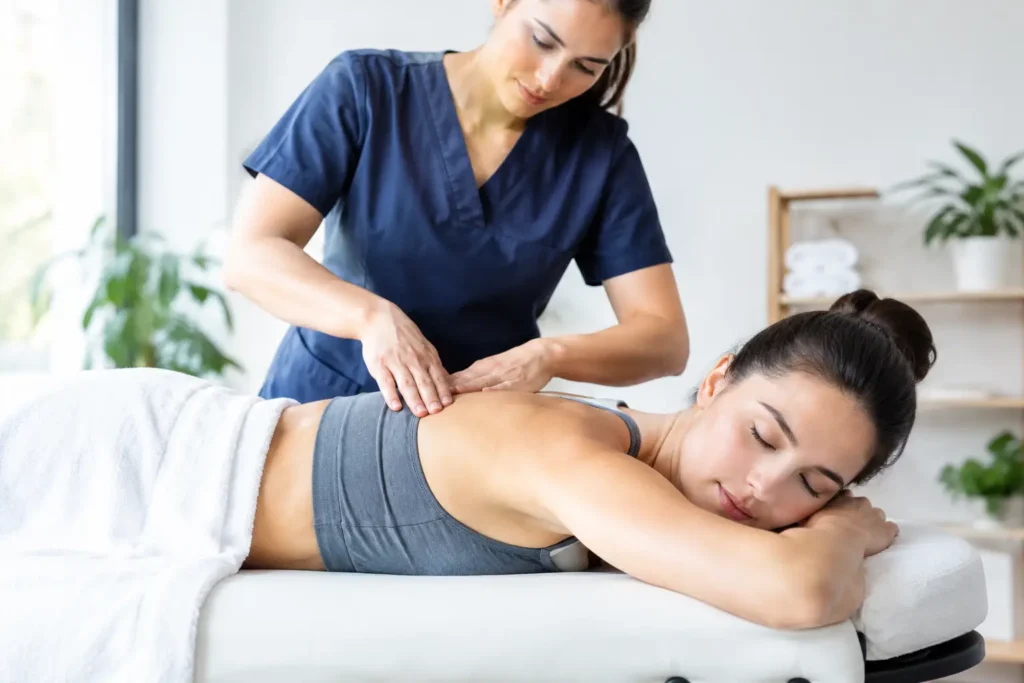
A stiff neck after a day at the computer is rarely just a neck problem. Shoulders may be working overtime, the upper back may feel braced, and the low back or hips may be carrying the effects of hours spent in one position. The best massage for posture issues is usually not one named technique or a session built around maximum pressure. It is thoughtful, personalized bodywork that responds to the way your particular tension pattern shows up.
Posture is not a pose you can force yourself to hold all day. It changes with your workstation, stress level, movement habits, old injuries, training, sleep, and how long you remain still. Therapeutic massage can help reduce the muscular strain that makes certain positions feel rigid or uncomfortable, while giving you a clearer sense of where your body is holding effort.
What Makes Posture-Related Tension So Persistent?
Many people picture poor posture as slumping. In practice, posture strain can also come from sitting very upright and tense, lifting one shoulder while using a mouse, craning toward a second monitor, driving for long stretches, or looking down at a phone. Even an active person can develop persistent tightness when work, workouts, and recovery all ask the same areas to do too much.
The body often adapts by recruiting familiar muscles for support. The muscles along the neck and upper shoulders may stay switched on long after the workday ends. The chest and front of the shoulders can feel restricted, while the muscles between the shoulder blades become tired from trying to stabilize. Some people notice low-back tightness, hip discomfort, headaches associated with neck tension, or a recurring knot near one shoulder blade.
Massage cannot permanently “correct” posture in a single appointment, and it should not be presented as a substitute for medical evaluation when symptoms are concerning. What it can do is help calm overworked tissues, improve comfort with movement, and make it easier to practice the movement and work habits that support you between sessions.
The Best Massage for Posture Issues Is Individualized
For desk-work posture stress, a therapeutic massage often begins with a brief conversation rather than a predetermined routine. Where does discomfort start? What does a normal workday look like? Does pressure feel helpful or does it cause you to guard? Are you training, caregiving, commuting, or recovering from a particularly demanding period?
Those details matter because the best approach for someone with broad upper-back fatigue may be different from the right approach for a person with a sensitive, persistent knot at the base of the neck. Effective work is not measured by how intense it feels. When pressure is too aggressive, muscles can tense against it, leaving the session feeling more like a battle than useful care.
At Senju Holistic Healing, sessions are shaped around the client’s goals, sensitivity, and patterns of tension. Therapeutic deep tissue work may be useful for dense, longstanding tightness, but it is applied with care and communication. Trigger point work can be used to address specific tender areas that refer discomfort into nearby regions. Shiatsu-informed and Japanese-informed techniques may offer a more gradual way to work through connected areas of the body.
The session may also include supportive approaches when appropriate. Gentle craniosacral work can be useful when the neck and head feel especially guarded. Therapeutic cupping may be considered for certain areas of restricted upper-back or shoulder tissue. These are not automatic add-ons or one-size-fits-all methods. They are tools a skilled practitioner can blend into a session when they fit the person on the table.
Why the Neck Is Not Always the Only Place to Work
If your neck feels tight, direct neck work can certainly be helpful. But the source of its workload may include the upper chest, shoulders, jaw, arms, upper back, or even the way the ribcage moves with breathing. A focused therapeutic session can spend time where tension is felt while also considering the areas that may be contributing to it.
This broader approach does not mean treating every part of the body in every appointment. It means avoiding the common mistake of working one sore spot repeatedly without considering why it keeps getting overloaded. Sometimes concentrated work is exactly what is needed. Other times, a calmer, more connected approach creates better comfort and less post-session soreness.
Choosing Pressure: Deep Enough, Not Just Deep
Deep tissue massage is often associated with posture problems because chronic tightness can feel dense and stubborn. It can be valuable, especially when pressure is gradual, specific, and adjusted in real time. Yet deep tissue is not synonymous with painful tissue work.
The right pressure should allow you to breathe normally and stay present. You may notice productive tenderness or a sense of release, but sharp pain, bracing, numbness, or the urge to hold your breath are signals to speak up. Clear feedback helps the practitioner work more effectively and makes the session safer and more comfortable.
There are days when a deeper approach makes sense, and days when your system is already overloaded from stress, poor sleep, or intense activity. On those days, slower therapeutic work may be more useful than trying to force a knot to release. The goal is not to win against your muscles. It is to give them a chance to stop working so hard.
What to Expect From a Posture-Focused Session
A posture-focused massage should feel collaborative. Before beginning, your therapist can learn about your main areas of discomfort, daily demands, prior experiences with massage, and preferred pressure. During the session, they may work through the upper back, shoulders, neck, chest, arms, low back, hips, or legs according to what your body needs that day.
You do not need to arrive with a perfect explanation of your posture. Simple observations are useful: “My right shoulder rises by the afternoon,” “I wake up with a tight neck,” or “My low back feels tired after standing.” These patterns give context without requiring you to self-diagnose.
Afterward, many people notice easier breathing, less pulling through the shoulders, or more freedom to turn the head and move comfortably. Results vary based on the duration of the tension, daily workload, stress, and how the body responds. Recurring issues often benefit more from consistent care and small adjustments over time than from treating massage as a rare emergency measure.
Making Massage Last Beyond the Appointment
Massage works best as part of practical body care. You do not need an elaborate routine to support the benefits of a session. Brief movement breaks, changing positions before discomfort builds, and setting up your screen or chair more thoughtfully can reduce the amount of repeated strain your body manages each day.
A few simple habits are often more realistic than a perfect ergonomic setup. Stand up during a call. Let your arms rest instead of hovering over the keyboard. Take a short walk after a long drive. If you train, consider whether your recovery time matches your workload. These choices do not need to be rigid rules. They are opportunities to give your body more variety.
If you experience new or severe pain, significant weakness, numbness, tingling, dizziness, symptoms after an accident, or pain that does not seem connected to ordinary muscle tension, seek guidance from an appropriate healthcare professional. Massage is most helpful when its role is clear and suited to what your body is experiencing.
For Portland-area adults who spend their days working, parenting, commuting, or training, posture strain can become so familiar that it feels normal. It does not have to be ignored. A quiet, one-on-one therapeutic massage session can be a practical place to pause, address the tension your body has been carrying, and leave with a little more room to move through the week.