
A shoulder that always feels pulled toward the ear, a back that stiffens after a day at the desk, or legs that stay heavy after training can make ordinary movement feel like work. Understanding how cupping supports tight muscles can help you decide whether this technique may be a useful part of a personalized therapeutic massage session.
Cupping is not a replacement for skilled hands-on massage, movement, or everyday adjustments that support your body over time. It is one tool that can be used thoughtfully when an area feels restricted, overworked, or difficult to address with pressure alone. At its best, cupping gives the practitioner another way to work with tight tissue while keeping your comfort and goals in view.
How Cupping Supports Tight Muscles
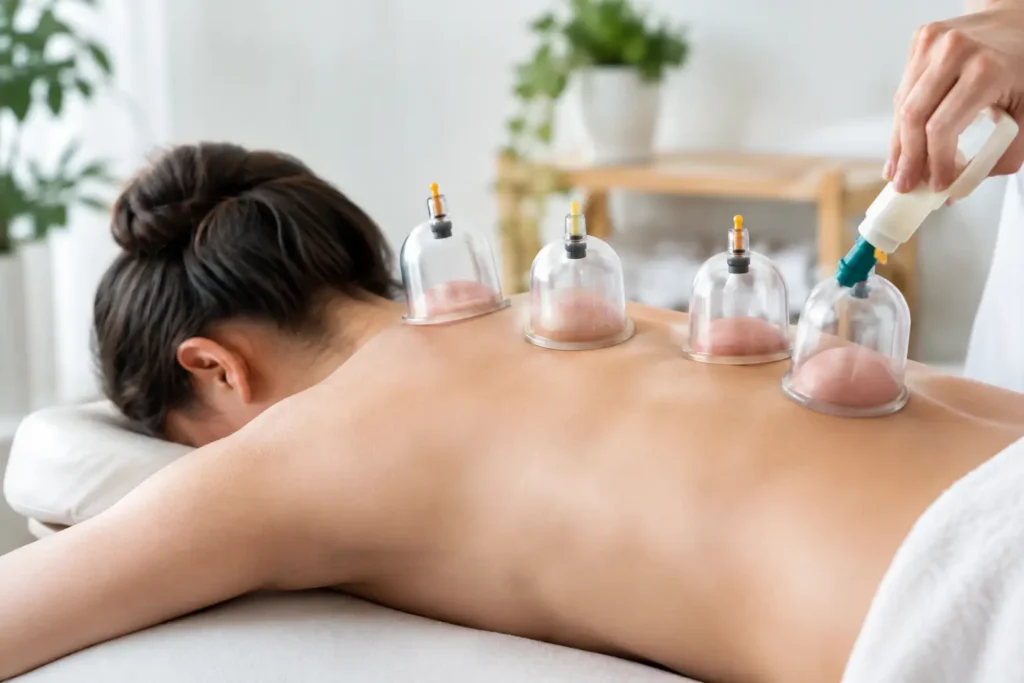
Therapeutic cupping uses smooth cups to create gentle suction on the skin and underlying soft tissue. Unlike deep pressure, which compresses tissue, suction gently lifts it. That change in direction can feel especially helpful in areas that are sensitive to direct pressure, such as a guarded upper back, a tight hip area, or shoulders that have been holding stress for weeks.
When muscles and surrounding connective tissue feel stiff, they often do not move as freely against one another. This can happen after long periods of sitting, repetitive work, demanding exercise, or simply holding a tense posture day after day. Cupping may help create a sense of space and glide in these areas. Many clients describe the feeling as a strong but relieving pull rather than the focused pressure of trigger point work.
The practical goal is not to force a muscle to release. Muscles tighten for reasons, including workload, stress, habits, and the body’s effort to protect an uncomfortable area. A careful session respects that response. Cupping may be used to gently encourage movement in restricted tissue, reduce the feeling of congestion or heaviness, and make follow-up massage work more comfortable.
Research on cupping is still developing, and individual responses vary. Some people notice that a tight area feels easier to move after a session. Others find that the most useful result is a temporary reduction in discomfort that allows them to stretch, rest, or return to daily activity more comfortably. It is best understood as supportive bodywork, not a guaranteed fix for every ache or persistent pain pattern.
Why suction can feel different from deep pressure
A deep tissue technique may be appropriate when a specific knot or band of tension responds well to gradual, directed pressure. But not every tight area benefits from more pressure. If the tissue is already reactive, tender, or guarded, pressing harder can make the body brace further.
Cupping offers a different sensory input. The lifting sensation can allow the practitioner to address a broad area without leaning heavily into it. This is often useful around the upper trapezius, shoulder blades, mid-back, low back, hips, and legs, depending on the person’s needs and tolerance.
In a therapeutic massage session, cups may be left in place briefly or moved slowly over the skin with massage lotion. Moving cups can create a stretching sensation across the tissue and may be paired with gentle movement, breathing, or follow-up massage. The approach should always be adjusted. A technique that feels relieving for one person may feel too intense for another.
Common Tightness Patterns That May Respond Well
Cupping is often considered when tension is broad, stubborn, or linked to repetitive demands. For desk workers, that may look like a tight chest and front-of-shoulder area combined with fatigue between the shoulder blades. For active adults, it may be a heavy feeling through the calves, hamstrings, hips, or upper back after training.
It can also be useful when one area seems to be doing too much work for another. For example, someone with recurring neck and shoulder tension may be holding stress through the upper back, chest, and shoulder blade muscles as well. Rather than concentrating only on the painful spot, a personalized session can consider the surrounding pattern and choose techniques accordingly.
That does not mean every tight muscle needs cupping. Sometimes focused massage, trigger point work, shiatsu-informed bodywork, or slower, lighter touch is the better choice. Cupping is most effective when it fits the overall session rather than being treated as a standard add-on.
What the marks mean and what they do not mean
One of the most visible effects of cupping is temporary circular discoloration. These marks can range from light pink to dark red or purple, depending on the amount of suction, the location, your skin, and how your body responds. They are not evidence that toxins have been released, and darker marks do not mean the treatment worked better.
The marks are generally not painful bruises in the usual sense, though the area can feel tender afterward. They often fade over several days to about two weeks. If you have an event, photos, or clothing that exposes the treated area, tell your massage therapist before the session so cupping can be avoided or modified.
A responsible practitioner uses only the amount of suction needed for the intended effect. Stronger is not automatically better. Gentle cupping can be very effective, particularly for clients who are new to the technique or who prefer a more gradual approach.
What a Personalized Session Can Look Like
At Senju Holistic Healing, therapeutic cupping may be integrated into a one-on-one massage session when it suits the client’s tension pattern, comfort level, and goals. The session begins with communication about what has been bothering you, what activities may be contributing, and what kind of pressure feels workable.
If cupping is appropriate, it may be used for a short period before or between hands-on techniques. For instance, gentle moving cups may be used across the upper back before more specific work around the shoulder blades. A tight hip or low back may benefit from a combination of cupping, therapeutic massage, and careful attention to the surrounding muscles rather than intense work in one spot.
The point is not to use as many techniques as possible. It is to choose what gives your body the best chance to settle, move more freely, and feel supported after the session. Your feedback matters throughout. You should be able to say if the sensation is too strong, if an area feels unexpectedly sensitive, or if you would rather skip cups altogether.
When Cupping May Not Be the Right Choice
Cupping is not suitable for every person or every area. It should not be applied over open skin, a rash, sunburn, an active skin irritation, or areas with significant swelling. People who take blood-thinning medication, have a bleeding condition, have certain circulation concerns, are pregnant, or have a history of skin sensitivity should discuss this before treatment. A massage therapist may recommend another approach or ask you to check with an appropriate health professional when needed.
Timing also matters. If your body is already very sore after an unfamiliar workout, aggressive cupping may add more tenderness than benefit. In that case, a gentler session focused on calming overworked tissue may make more sense. Likewise, persistent, severe, or unexplained pain deserves appropriate medical evaluation rather than being worked around with massage alone.
Supporting the Benefits Between Sessions
After cupping, keep the rest of the day simple when possible. Gentle walking, comfortable movement, regular hydration, and adequate rest can help you notice how the area responds. You do not need an elaborate recovery routine.
Pay attention to what changes over the next day or two. Can you turn your head more comfortably? Does your upper back feel less compressed at the computer? Do your legs feel easier during a walk? These small, practical shifts are more useful than chasing an intense sensation during the appointment.
If tension returns quickly, it may be helpful to look at the pattern with curiosity. Your workstation setup, training load, sleep position, stress level, and recovery time can all influence how your muscles feel. Therapeutic massage can support ongoing body care, but the best plan is usually one that fits realistically into your daily life.
Cupping works best when it is approached as a measured tool, not a dramatic one. For the right person at the right time, its gentle lifting effect can make a tight area feel more available for movement, massage, and rest – a useful step toward greater day-to-day comfort.