
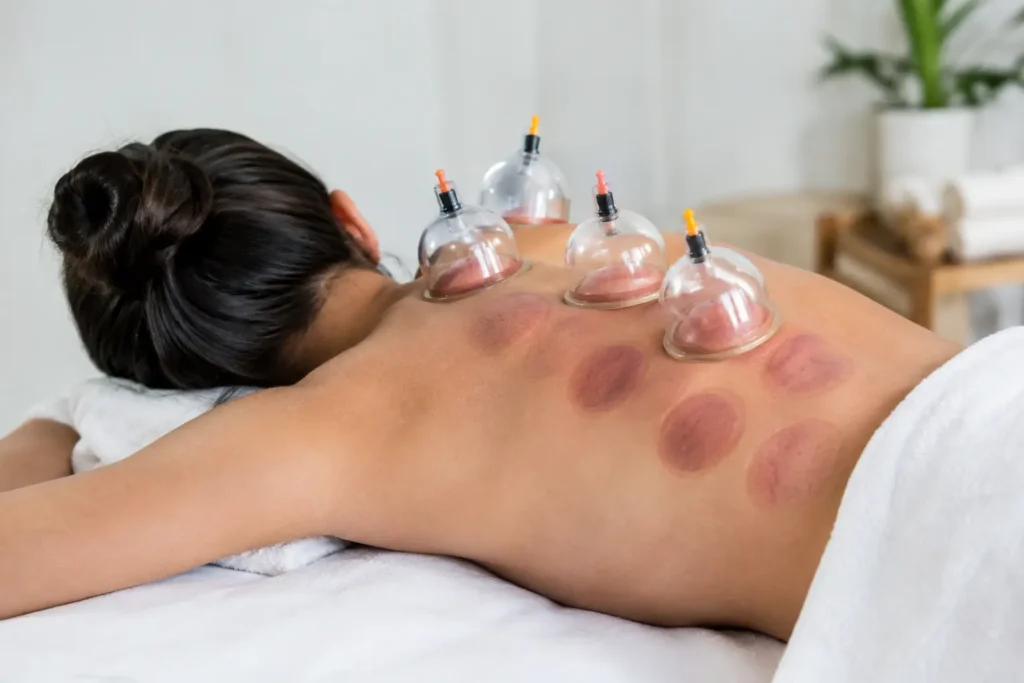
A cup is placed on the skin, gentle suction is created, and a round red or purple area appears afterward. It is understandable to pause and ask: does cupping leave marks? Often, yes. The appearance can be surprising if it is your first experience with therapeutic cupping, but marks are a common and usually temporary response to stationary cupping.
At Senju Holistic Healing, cupping is not treated as a one-size-fits-all add-on. It may be used within a personalized therapeutic massage session when it suits your comfort level, sensitivity, and the areas of persistent tightness being addressed. Just as importantly, it can be adjusted or left out entirely.
Why cupping can leave visible marks
Therapeutic cupping uses a cup to create negative pressure at the surface of the body. Unlike techniques that press downward into tissue, suction gently lifts the skin and superficial tissue. This may increase local circulation and can create temporary color changes, especially when cups remain in one place for several minutes.
Those circular areas can range from faint pink to deeper red, purple, or brown depending on your skin tone, the amount of suction used, how long the cups stay in place, and your individual tendency to mark. Areas that feel especially tight or sensitive may also show more color, though the appearance of a mark is not a reliable measure of how much tension someone has or how effective a session was.
The marks are sometimes casually called bruises because they can look similar. However, the goal of skilled therapeutic cupping is not to create dark marks. A practitioner can use lighter suction, shorter placement times, or moving cupping techniques to make the experience gentler and reduce visible marking.
How long do cupping marks last?
For many people, cupping marks fade within a few days to about a week. Deeper discoloration may take longer, sometimes up to two weeks. The timeline varies from person to person and can also differ from one area of the body to another.
A light pink mark may be gone quickly. A darker purple mark may remain visible longer as the color gradually changes and fades. It should not become increasingly painful, hot, swollen, or unusually tender. If you experience concerning symptoms, or if you have a mark that does not improve as expected, seek guidance from an appropriate health care professional.
If you have an event, vacation, photoshoot, or other situation where visible marks would be inconvenient, mention it before your session. Your massage therapist can avoid stationary cupping on exposed areas, use a lighter approach, choose moving cups, or focus on other hands-on techniques instead.
Do cupping marks hurt?
They do not have to. During treatment, you may feel a firm pulling or stretching sensation beneath the cup. It can feel unusual at first, particularly across the upper back, shoulders, or other areas that hold a great deal of day-to-day tension. It should not feel sharp, pinching, or intolerably intense.
Afterward, the area may feel temporarily tender, much like it can after focused massage work on a recurring knot or tight muscle group. Communication makes a meaningful difference here. If the suction feels too strong, say so in the moment. A thoughtful session is responsive, not something you are expected to endure.
For people with desk-related shoulder tension or a back that always seems to feel guarded, stronger is not automatically better. The most useful approach depends on your current sensitivity, activity level, stress load, and how your body has responded to bodywork in the past.
Stationary versus moving cupping
Not all cupping creates the same visible response. With stationary cupping, cups are placed in specific locations and left for a short period. This method is more likely to leave defined circular marks.
Moving cupping involves applying a small amount of lotion or oil and gliding the cup across a broader area. It may feel similar to slow, broad massage strokes with suction. It can still cause temporary redness, but it often produces less distinct circular marking than stationary cups.
A therapist may also use brief, light suction in combination with deep tissue massage, trigger point work, or shiatsu-informed techniques. In a personalized session, the cup is simply one tool among several. It is not necessary to use it everywhere, and it is not necessary to leave marks for it to have a place in the work.
Who should be cautious about cupping?
Cupping is not appropriate in every circumstance. Before a session, share relevant health history, current injuries, skin concerns, medications, and recent changes in your well-being. This allows your therapist to make informed, comfort-focused choices.
Extra caution may be appropriate for people who bruise easily, take blood-thinning medication, have certain bleeding or clotting concerns, have fragile or irritated skin, or have an active skin infection or open wound in the proposed treatment area. Cupping should also be avoided over areas with sunburn, rashes, or significant inflammation.
Pregnancy, recent surgery, and ongoing medical care do not automatically rule out massage or bodywork, but they do call for an individualized conversation. When there is uncertainty, checking with your medical provider is a sensible step. A professional massage therapist should welcome these questions and adapt the session rather than pushing a preferred technique.
How to care for skin after cupping
You do not need a complicated aftercare routine. Give the area a little time and avoid treating it as though nothing happened. If the skin feels tender, choose comfortable clothing that does not rub heavily over the marks.
For the rest of the day, many people feel best with moderate activity, adequate water, and a little extra rest if they can manage it. A warm shower may feel pleasant, but avoid very hot water if the area is sensitive. It is also wise to protect marked skin from direct sun exposure, since discoloration can be more noticeable on sun-exposed areas.
Avoid aggressive self-massage or heavy pressure directly over the marks while they are tender. If you are planning strenuous training, ask how to time your session around it. Some active clients prefer bodywork after a demanding event, while others benefit from scheduling with enough recovery time before their next training day. There is no universal rule.
What to discuss before a therapeutic cupping session
The best time to talk about marks is before the cups come out. Tell your therapist whether you have tried cupping before, whether you tend to bruise or mark easily, and whether you have any concerns about visible discoloration. Be direct about your goals, too. You may want help with persistent shoulder tightness but prefer not to have marks on your upper back before a weekend wedding. That is useful information, not an inconvenience.
You can also ask what type of cupping is being considered and why. A clear answer should connect the technique to your session goals, such as addressing a restricted-feeling area around the shoulders or complementing focused work for a tight back, rather than presenting cupping as something every body needs.
In a quiet, private therapeutic setting, the pace can be adjusted as your body responds. Sometimes a few light passes with a moving cup are appropriate. Other times, sustained hands-on work, gentle mobility, or another supportive technique may be the better choice.
Visible marks can be part of cupping, but they do not need to be a surprise and they are never the point. The most helpful bodywork respects both your comfort today and the practical realities of your life after you leave the treatment room.