
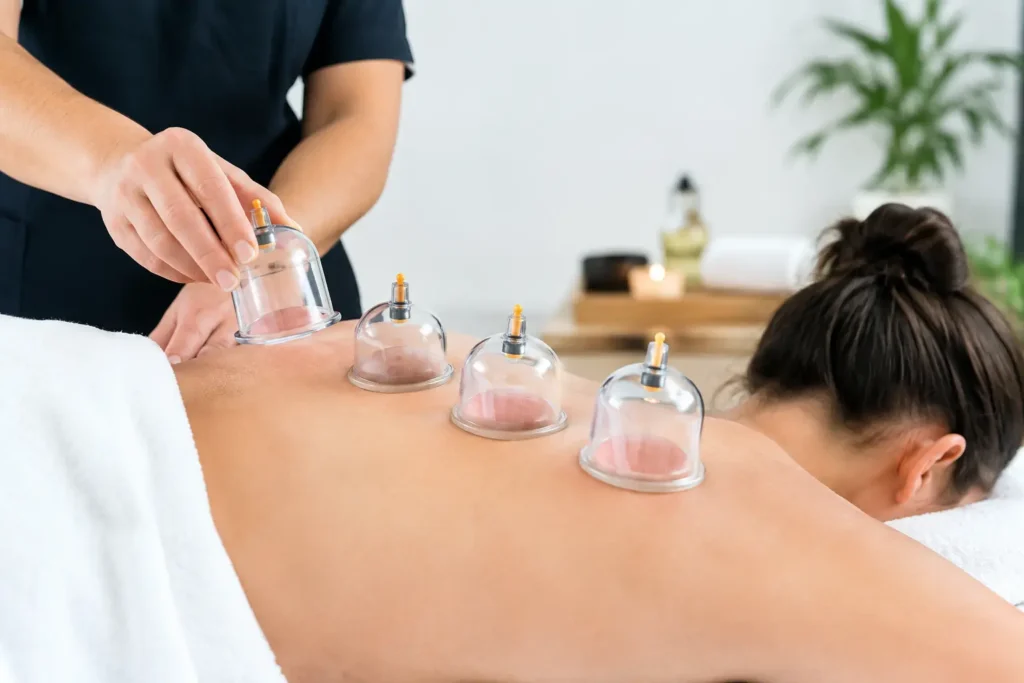
A guide to therapeutic cupping support begins with a simple idea: the cups are not the whole session. When used thoughtfully, cupping can be one helpful tool within personalized therapeutic massage for areas that feel persistently tight, guarded, or difficult to address with pressure alone. For someone whose upper back has felt dense after months at a desk, or whose shoulders stay tense despite stretching, the right approach is less about intensity and more about matching the work to the body in front of you.
At Senju Holistic Healing in SW Portland, therapeutic cupping may be blended with deep tissue massage, trigger point work, shiatsu-informed techniques, or gentler hands-on work depending on your comfort, sensitivity, and goals. It is not a formula, and it is not necessary in every session. Clear communication and a measured pace matter as much as the technique itself.
What Therapeutic Cupping Support Is
Therapeutic cupping uses cups placed on the skin to create gentle suction. Unlike massage pressure, which presses into tissue, a cup creates a lifting effect on the surface layers of the body. A practitioner may leave cups in one area briefly or glide them carefully with lotion or oil. The experience is often described as a steady pulling or stretching sensation rather than the direct pressure of deep tissue work.
In a therapeutic massage setting, cupping support is generally used to complement, not replace, skilled manual work. It can give the practitioner another way to work around common tension patterns in the upper back, shoulders, neck, hips, or legs. Some people find that it helps an area feel more open and comfortable afterward, particularly when stiffness has made direct pressure feel like too much.
Results vary. A person with desk-related upper-back tightness may respond differently from a runner with leg fatigue or a parent carrying a child on one hip. The useful question is not whether cupping is universally better than massage, but whether it is appropriate for your current presentation and preferences.
When Cupping May Fit Into a Session
Cupping is often considered when muscle tension feels broad rather than limited to one small knot. For example, the muscles around the shoulder blades can become overworked when the head drifts forward during computer use. Direct work may still be useful, but a cup can sometimes offer a different sensation across the larger area before more focused massage begins.
It may also be a reasonable option for people who enjoy deeper therapeutic work but find sustained pressure in a sensitive area uncomfortable. The cup’s pull is distinct from compression, and some clients prefer that difference. Others do not enjoy the feeling at all. Both responses are valid, and neither means your body is doing anything wrong.
Cupping is not always the best choice for a session. If the skin is irritated, if an area is especially tender, or if you simply prefer hands-on massage, another approach may make more sense. A personalized session can include slower warming strokes, targeted trigger point work, positional techniques, or a lighter approach to help the body settle without forcing intensity.
Common goals for supportive cupping
People often ask for cupping support because they want practical help with recurring shoulder tightness, a stiff-feeling upper back, post-workout soreness, or the general heaviness that comes from long hours sitting or standing. The aim is not to chase a dramatic sensation. It is to support more ease in the areas that have been working hard.
For chronic patterns, regular attention to habits outside the massage room can matter too. An adjusted workstation, breaks from repetitive tasks, more varied movement, adequate recovery after training, and realistic stress management can all influence how quickly tension returns. Massage and cupping can be meaningful parts of body care, but they work best alongside daily routines that give the body a chance to change.
What a Therapeutic Cupping Session Feels Like
Before using cups, a thoughtful practitioner should ask about the concern that brought you in, your recent activity, areas of sensitivity, and what type of pressure feels manageable. This conversation helps establish whether cupping belongs in the session at all and where it might be most useful.
During placement, you may feel a firm but controlled pull. With moving cupping, the skin may feel as though it is being gently drawn along with the cup. The sensation should remain communicative rather than something you have to endure. Speak up if there is pinching, sharp discomfort, numbness, or a level of intensity that makes you brace. Therapeutic work does not need to be punishing to be effective.
Cups can leave temporary circular marks that range from light pink to darker purple-red. These are a response to suction and can last several days, sometimes longer depending on your skin and the level of suction used. They are not bruises caused by blunt impact, and they should not be interpreted as evidence that “toxins” have been released. A responsible practitioner will explain the possibility beforehand, choose conservative suction when appropriate, and avoid visible marking when it does not fit your needs.
Afterward, many people feel pleasantly loose, warm, or more aware of the treated area. Others may feel temporarily tender, much like they would after focused massage or an unfamiliar workout. Gentle movement, hydration according to your usual needs, and avoiding an aggressive workout immediately afterward can be sensible choices if the area feels worked. Your practitioner can offer guidance based on what was done during your session.
Who Should Pause and Ask First
Cupping is not appropriate for every body or every day. Tell your massage therapist about current skin concerns, recent injuries, unusual swelling, a history of easy bruising, medications that affect bleeding or clotting, pregnancy, or any significant health changes. This is not about creating unnecessary barriers. It helps the practitioner adapt the session responsibly and determine whether another technique would be more suitable.
Cups should not be used over broken skin, rashes, sunburn, or areas with active irritation. If you are uncertain whether a recent symptom or health change affects massage, checking with an appropriate medical professional first can provide clarity. Massage therapists do not diagnose conditions, but they can listen carefully, work within their scope, and modify care when caution is warranted.
It is equally useful to mention if you have an event, photos, or clothing that would make temporary marks inconvenient. Cupping can be adjusted, but it is easier to plan around your schedule before the session begins.
Making Cupping Part of Long-Term Body Care
The most helpful therapeutic sessions are built around patterns, not trends. If your neck and shoulders tighten after every demanding week, the answer may involve focused bodywork, but also noticing how you work, sleep, train, carry bags, and recover. Cupping may help create a different starting point for that conversation by reducing the sense of pull in an overworked area, but the value comes from how it fits the larger plan.
You do not need to request cupping simply because it is popular or because someone else found it helpful. Bring your goals to the session: less shoulder tension during the workday, more comfortable movement after training, or support for a back that feels persistently overworked. From there, the practitioner can explain the options and adjust in real time.
A calm, private therapeutic setting should leave room for that kind of decision-making. The best technique is the one that respects your comfort, addresses what your body is asking for that day, and supports a steadier relationship with movement and recovery over time.