
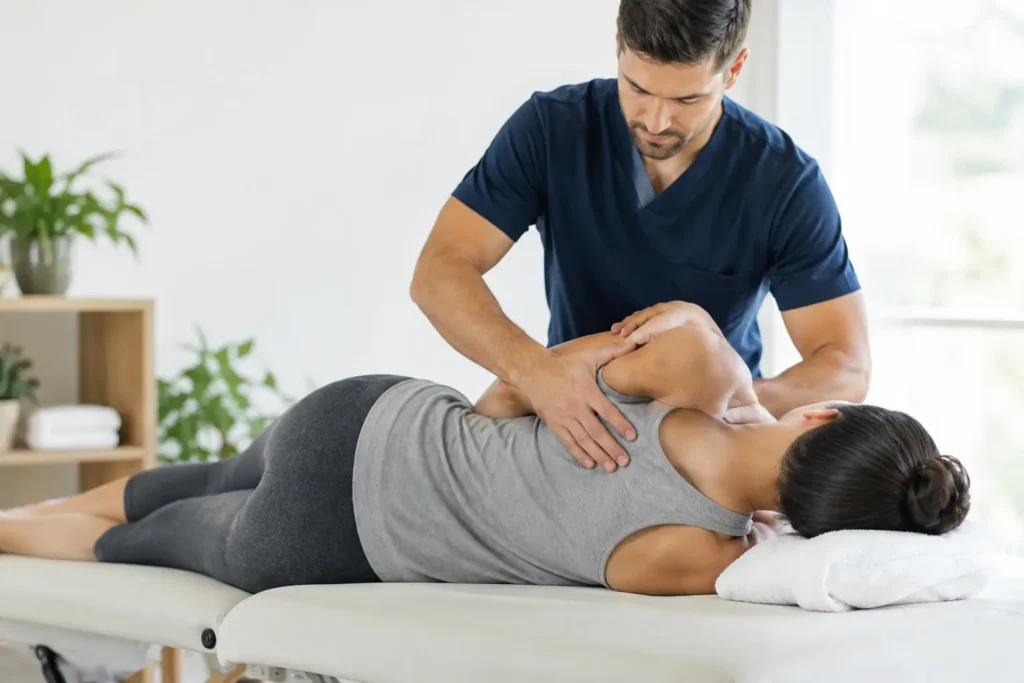
A stiff turn when backing out of the driveway, shoulders that refuse to settle after a workday, or hips that feel restricted on a familiar walk can make everyday movement feel harder than it should. Can massage support mobility? For many people, personalized therapeutic massage can be a useful part of feeling more comfortable and capable in daily movement – especially when tight muscles, recurring knots, stress, or repetitive work positions are involved.
Massage is not a replacement for medical evaluation, physical therapy, strength training, or rest when those are needed. It can, however, help create a better starting point for movement by addressing tension patterns that make the body feel guarded, stiff, or limited.
How can massage support mobility?
Mobility is more than flexibility. It is the ability to move a joint or body region with enough range, control, and comfort for the task at hand. Reaching a high shelf, looking over a shoulder while driving, getting up from the floor, carrying a child, or returning to a favorite workout all draw on mobility in practical ways.
Muscles and connective tissues can feel less willing to move freely when they have been held in one position for hours, repeatedly loaded during training, or tightened by stress. The body may compensate by asking other areas to work harder. For example, a person with persistent upper-back and shoulder tension may begin turning through the whole torso rather than comfortably rotating the neck. Someone with tight hips may notice that bending, walking uphill, or sitting cross-legged feels more effortful.
Therapeutic massage may help reduce the sensation of muscular tightness and support a temporary increase in comfortable range of motion. That change can make it easier to practice the movements, stretches, strengthening exercises, or posture adjustments that help maintain progress between sessions. The value is often in this combination, not in trying to force one treatment to solve every movement concern.
Why tension can affect the way you move
The body adapts to what it does repeatedly. Desk work can leave the chest, front of the shoulders, upper back, forearms, and hip flexors feeling overworked or held in a narrow range of positions. Physical jobs can create a different pattern, with recurring load through the low back, hips, hands, and shoulders. Training can be productive, but it also asks a great deal of the body when recovery is limited.
Stress adds another layer. Many people unconsciously brace their jaw, lift their shoulders, grip through the hands, or hold tension around the ribs and abdomen. This does not mean stress is the only cause of discomfort. It does mean that a calm, skilled hands-on session can give the nervous system and muscles an opportunity to settle.
When an area feels guarded, pushing hard into a stretch is not always helpful. A more measured approach can be more useful: first reduce some of the surrounding tension, then explore movement within a comfortable range. The goal is not to chase maximum flexibility. It is to support movement that feels more available and less strained.
What individualized bodywork may include
There is no single massage technique that is best for mobility. The right approach depends on where the restriction is felt, what daily demands may be contributing, how sensitive the area is, and what the client hopes to do more comfortably.
A session may include therapeutic deep tissue work or trigger point techniques for areas of persistent muscular holding. Shiatsu-informed and Japanese-informed approaches may be useful when broader patterns of tension need patient, attentive work rather than concentrated pressure in one spot. Gentle work may be the better choice for a body that is already reactive, fatigued, or sore.
At Senju Holistic Healing, sessions are tailored rather than formulaic. Depending on the situation, supporting techniques such as therapeutic cupping, craniosacral work, lymphatic drainage techniques, visceral bodywork, or reflexology may be incorporated thoughtfully. These are not automatic add-ons or separate fixes. They are considered in the context of the whole session, the client’s comfort, and the movement goal at hand.
Pressure is only one variable. Slow pacing, clear communication, positioning, breathing room, and attention to adjacent areas can matter just as much. Working only on the place that hurts may overlook the tension pattern influencing it. At the same time, broader work should still have a clear purpose. Personalized care means staying responsive rather than following a preset routine.
Areas where people often notice a difference
Neck and shoulder mobility is a common concern for people who spend long hours at a computer, drive frequently, or carry stress high in the body. Careful work through the upper back, chest, shoulders, neck, and sometimes the forearms can help the area feel less compressed. This may make it more comfortable to rotate the head, reach overhead, or sit with less effort.
The low back and hips also work closely together. Tightness through the glutes, hip flexors, thighs, and muscles around the pelvis can influence how bending, standing, climbing stairs, and walking feel. Massage may help these tissues feel less restricted, but durable change often also depends on daily movement, adequate recovery, and appropriate strength.
Mobility through the chest and ribs is easy to overlook. When the upper body is held forward for much of the day, taking a full, easy breath or extending through the upper back can feel unfamiliar. Gentle, targeted bodywork may support a more comfortable sense of expansion, particularly when paired with simple changes in workstation setup and regular movement breaks.
Make the benefits easier to keep
A massage session can be an excellent reset, but what happens afterward influences how long the change feels meaningful. It is common to feel looser immediately after bodywork, then gradually return to familiar patterns when the same work setup, training load, sleep position, or stress level remains unchanged. That is not a failure of massage. It is useful information about what the body is being asked to manage.
After a session, choose a small movement practice that feels realistic. A short walk, a few gentle neck turns, easy shoulder circles, or standing up regularly during computer work may be more sustainable than an ambitious routine that is hard to repeat. If a healthcare or movement professional has already given you exercises, massage may make those exercises feel more approachable by reducing discomfort from surrounding tension.
Hydration, regular meals, rest, and sensible training progression also matter. There is no need for elaborate post-massage rules or cleansing routines. Pay attention to how your body feels, avoid immediately overloading a sore area, and give yourself a little time to integrate the session.
When massage is not the first step
Massage is best approached as supportive care, not as a way to work through every kind of pain or limitation. New or severe pain, numbness, weakness, significant swelling, unexplained symptoms, pain following an accident, fever, or a sudden major loss of movement should be evaluated by an appropriate healthcare professional before massage.
It is also helpful to communicate about previous injuries, surgeries, medications, pregnancy, skin sensitivity, blood-clotting concerns, and any current treatment plan. These details allow a licensed massage therapist to adapt the session or suggest waiting when hands-on work may not be appropriate.
For chronic tightness without red-flag symptoms, regular therapeutic massage can be a thoughtful part of long-term body care. The ideal frequency varies. Some people benefit from a short series of sessions while addressing an active tension pattern, while others prefer occasional maintenance around demanding work periods, travel, training, or recurring stress.
Mobility rarely comes from one dramatic intervention. It tends to improve through consistent attention: skilled bodywork when it is useful, movement the body can tolerate, and daily habits that give tense areas fewer reasons to stay on guard. If your body has been asking for more ease in ordinary movement, a quiet, individualized therapeutic massage session can be a practical place to begin.