
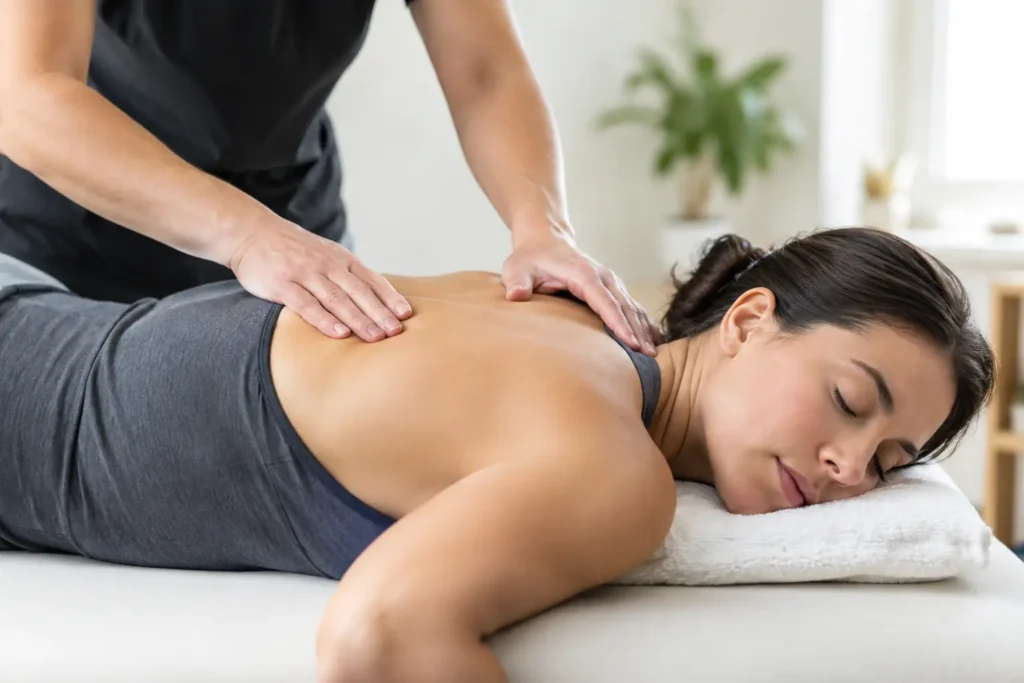
A shoulder that stays lifted long after a stressful meeting, a low back that tightens before bending, or a neck that never quite settles can feel like a muscle problem. Often, the pattern is more protective than simple tightness. Understanding how bodywork helps muscle guarding can make persistent tension feel less mysterious and give you a more practical way to respond to it.
Muscle guarding is the body’s tendency to hold an area with extra tension when it senses strain, irritation, fatigue, stress, or a need for protection. It is not a sign that your body is failing. In many cases, it is an understandable short-term response that becomes unhelpful when it continues after the original demand has passed.
What Muscle Guarding Can Feel Like
Guarding does not always look dramatic. It may feel like a familiar knot near the shoulder blade, a hip that resists stretching, jaw tension during busy weeks, or a back that feels braced when you get out of bed. Some people notice that the area becomes more sensitive to pressure. Others feel stiff, restricted, or as if they cannot fully relax even when they are resting.
Daily habits can reinforce this response. Hours at a computer, long drives, repetitive lifting, demanding training, poor sleep, and ongoing stress can all ask the body to stay ready for longer than it needs to. A muscle may remain active not because it is weak or damaged, but because the nervous system has learned to keep that region on alert.
This is why forcing a guarded muscle to relax rarely works well. Aggressive stretching, hard pressure, or trying to push through discomfort can sometimes cause the body to brace further. The more useful goal is to create enough comfort and safety for the area to reduce its effort gradually.
How Bodywork Helps Muscle Guarding
Thoughtful therapeutic massage and bodywork can support this process through skilled, responsive touch. Rather than treating every tight area with the same amount of pressure, a practitioner observes how the tissues respond and adjusts the pace, depth, and technique accordingly. The work is collaborative: you communicate what you feel, and the session is shaped around your comfort and goals.
It Gives the Area a Different Sensory Message
Guarding is influenced by the nervous system, so the quality of touch matters. Slow, steady contact can help an overworked area register that it does not need to work quite as hard in that moment. This does not mean a session simply tells a muscle to switch off. It means the body is offered calmer input, which may make softening more possible.
For someone whose upper traps stay tense at a desk, that may involve gradual work around the neck, shoulders, chest, and shoulder blades rather than immediately pressing into the most tender spot. When the surrounding tissues have room to settle, the guarded area may become more receptive.
It Addresses Patterns, Not Just the Loudest Knot
The place that hurts or feels tight is not always the only place contributing to the pattern. A painful knot between the shoulder blade and spine may be affected by limited movement through the chest, fatigue in the upper back, or sustained tension at the base of the neck. Similarly, low-back guarding can be related to how the hips, glutes, abdomen, and breathing patterns are sharing the work of daily movement.
Personalized bodywork considers these relationships without trying to make a diagnosis. Deep tissue massage and trigger point work may be useful when tissues can comfortably receive more focused pressure. Shiatsu-informed techniques, gentle stretching, craniosacral approaches, or careful work with the breath may be a better fit when the system feels highly sensitive. The right approach depends on the person and the day.
It Can Improve Comfortable Movement
Guarding often narrows the range of movement a person is willing or able to use. After bodywork, some clients notice that turning their head, reaching overhead, standing upright, or taking a fuller breath feels easier. That change may be subtle, but it can matter. When everyday movement feels less threatening or effortful, the body has more opportunities to build confidence outside the treatment room.
The goal is not maximum flexibility. A flexible joint without control or comfort is not necessarily useful. Better bodywork aims for movement that feels more available, supported, and appropriate to your real life – whether that includes computer work, parenting, gardening, running, or lifting at the gym.
It Creates Space to Notice Habits
Many tension patterns happen on autopilot. You may grip the steering wheel, hold your breath while answering email, clench your jaw while concentrating, or keep one shoulder elevated while carrying a bag. A quiet one-on-one session can make these habits easier to notice without judgment.
That awareness can be part of lasting change. If you recognize the early feeling of bracing, you may be able to shift position, take a short walk, change your workstation setup, or use a few slower breaths before the tension becomes more established. Bodywork is not a replacement for these adjustments, but it can make them easier to feel and use.
Why More Pressure Is Not Always Better
It is common to assume that a deeply guarded muscle needs intense pressure. Sometimes focused deep work is helpful, particularly for longstanding tension that is not overly reactive. But pressure that exceeds your comfort can encourage more bracing, leave you sore for days, or make it harder to tell whether the work was productive.
Effective therapeutic massage is not defined by how much discomfort you can tolerate. It is defined by whether the session is responsive, purposeful, and appropriate for your current condition. A skilled practitioner may use firm pressure in one area, then switch to slower or gentler contact somewhere else. This is not backing away from the problem. It is working with the body’s response instead of against it.
What Helps the Benefits Last Between Sessions
Bodywork can offer relief and a reset, but recurring guarding usually reflects recurring demands. The most practical next step is often modest rather than elaborate. A short walk after prolonged sitting, a change in screen height, regular strength work suited to your capacity, a more supportive sleep position, or brief movement breaks can help reduce the conditions that keep a muscle on alert.
Pay attention to how you feel in the 24 to 48 hours after a session. Some mild tenderness can occur after focused work, especially in areas that have been holding tension for a long time. You may also feel calmer, warmer, or more aware of movement. If an approach leaves you feeling significantly worse or unusually sensitive, share that feedback at your next appointment so the session can be adapted.
Consistency may help more than occasional intensity. For some people, a few sessions closer together help interrupt a persistent pattern. Others do well with periodic maintenance once their symptoms are more manageable. Your schedule, activity level, stress load, and sensitivity all influence what makes sense.
When to Seek Additional Support
Massage therapy can be a valuable part of caring for common tension and movement discomfort, but it is not the right response to every symptom. New severe pain, numbness or tingling, sudden weakness, unexplained swelling, fever, pain after a significant injury, or symptoms that steadily worsen deserve prompt evaluation from an appropriate medical professional.
For chronic or recurring discomfort, bodywork can often complement guidance from your healthcare team. Clear communication about your history, current concerns, and what feels better or worse helps create a safer, more useful plan.
At Senju Holistic Healing in SW Portland, each therapeutic massage session is adapted to the tension patterns, sensitivity, and goals you bring in that day. The most helpful work is rarely about forcing release. It is about giving your body a calm, skilled opportunity to reduce unnecessary effort and return to more comfortable movement, one session and one daily habit at a time.