
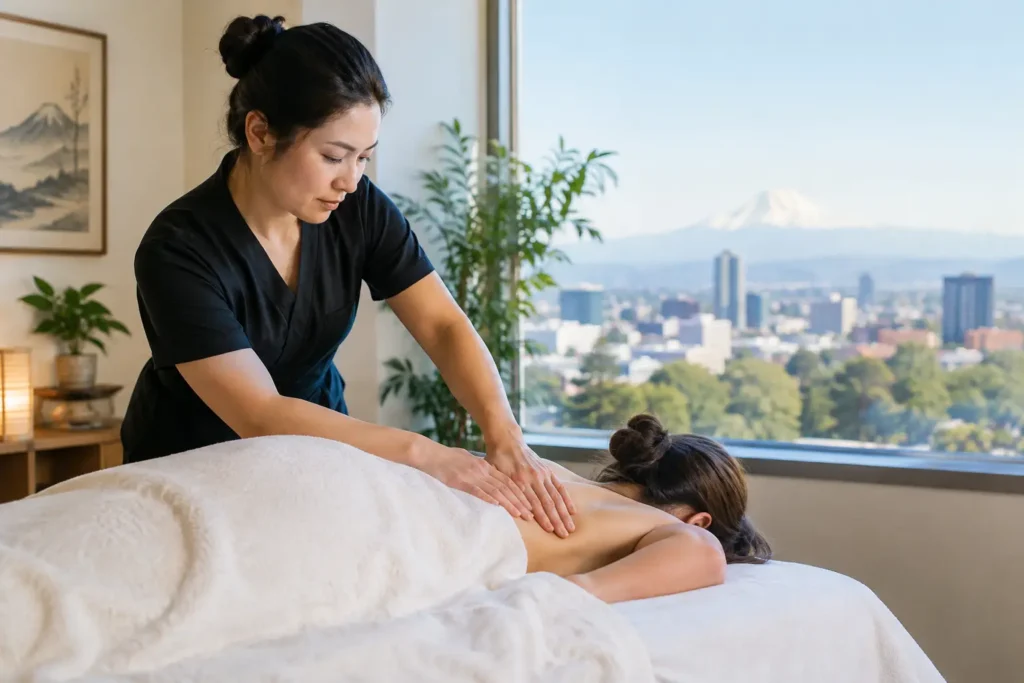
A shoulder that keeps creeping toward your ear during the workday is rarely asking for a one-size-fits-all massage. It may come with jaw tension, a guarded neck, an old low-back pattern, or the fatigue that follows weeks of sitting, driving, training, or carrying too much. Japanese informed bodywork Portland clients seek often begins with that practical reality: careful attention to how tension is showing up in one individual body.
At Senju Holistic Healing, bodywork is not built around a fixed sequence or a single technique. The goal is to provide skilled, personalized therapeutic massage in a calm private setting, with pressure and methods adjusted to what feels useful, comfortable, and appropriate on that day.
What Japanese-Informed Bodywork Means
Japanese-informed bodywork is a broad description, not a promise that every session follows one traditional protocol. It refers to an approach shaped by Japanese massage traditions, including shiatsu-informed principles, attentive hands-on assessment, and a respect for the body’s overall patterns rather than treating one sore spot in isolation.
In practice, this can mean working deliberately rather than rushing from area to area. A practitioner may spend time with the shoulders before asking the neck to release, or address the hips and low back when upper-body tension seems connected to long hours at a desk. The work can include sustained pressure, measured compression, and thoughtful movement, blended with therapeutic deep tissue massage, trigger point work, or gentler techniques when needed.
The experience should not feel like a performance of a particular style. It should feel responsive. Some people arrive wanting more focused pressure through recurring knots; others need a slower approach because their muscles are sensitive, their stress level is high, or forceful work has left them sore in the past. Both needs are valid, and neither requires an all-or-nothing choice between deep pressure and light touch.
Why a Personalized Session Matters for Persistent Tension
Neck, shoulder, and back discomfort often does not stay neatly contained. A tight upper back can contribute to a feeling of restricted neck movement. Long stretches of computer work can leave the chest, forearms, shoulders, and mid-back all feeling involved. Training can create a different kind of fatigue than parenting, standing at work, or commuting, even when the complaint is simply, “My back feels tight.”
That is why a personalized session starts with communication. Before hands-on work begins, it helps to discuss where you feel tension, what activities seem to aggravate it, what type of pressure you prefer, and what has or has not worked well in past massage sessions. This is not about assigning a diagnosis. It is about giving the session useful context.
During the work, feedback remains important. Pressure that feels productive for one area may be too much for another. A therapist can adjust depth, pace, positioning, and technique as the body responds. Clear communication also helps prevent the common mistake of assuming that more intensity always produces a better result. Sometimes it does not. Muscles that are already bracing may respond better to steady, patient contact than to aggressive pressure.
Japanese Informed Bodywork Portland Clients Can Expect
A session may combine several supporting techniques based on your goals and comfort. Therapeutic deep tissue work can be useful when layers of muscle tension need more focused attention. Trigger point work may be incorporated when a particular area feels persistently knotted or refers discomfort nearby. Shiatsu-informed compression can offer a grounded, measured way to work through broader tension patterns.
Other approaches may support the session when appropriate. Gentle craniosacral work may be considered when a quieter, less forceful pace is preferred. Therapeutic cupping can be used selectively for some clients, while lymphatic drainage techniques, visceral bodywork, or reflexology may be incorporated when they fit the overall plan. These are not separate, interchangeable menus. They are tools that can be used thoughtfully within individualized therapeutic massage.
The most useful technique is the one that matches the moment. If a client comes in after a demanding week with a sensitive neck and a guarded upper back, concentrated deep tissue work may not be the best starting point. If someone is dealing with recurring tightness around the shoulder blades and is comfortable with firmer pressure, more focused work may be appropriate. The session can change course as needed rather than following a script.
What This Approach Can Support
Many people choose therapeutic bodywork because they want practical support for everyday discomfort. They may be looking for relief from the heavy feeling across the shoulders, easier movement after prolonged sitting, less frequent muscle tightness, or a chance to step out of a stress pattern that has settled into the body.
Massage cannot guarantee a particular outcome, and persistent or severe symptoms deserve appropriate evaluation from a qualified health professional. Still, regular, well-matched bodywork can be a valuable part of caring for tension related to work, activity, posture habits, and daily demands. Clients often appreciate the immediate sense of calm that comes from focused touch as well as the longer-term value of noticing patterns before they become more disruptive.
The benefit is not only physical intensity or relaxation. It is often the experience of being listened to and receiving care that is specific rather than generic. A good session leaves room for both: addressing a stubborn area while helping the rest of the body settle out of unnecessary guarding.
A Private Setting for Focused Care
For many clients in SW Portland and nearby communities, a private therapeutic massage practice offers a different experience from a busy, high-turnover environment. There is time to discuss your needs without feeling hurried, and the treatment can remain centered on your body rather than a preset service format.
Licensed massage therapist Yuichi Fukada brings this individualized perspective to Senju Holistic Healing. The work is grounded in professional touch, careful pacing, and techniques selected for the client’s present condition. That may mean focusing most of a session on the neck, shoulders, and upper back, or it may mean making room for the hips, legs, arms, or breathing patterns that are contributing to overall tension.
Privacy also matters when body discomfort has become part of daily life. Whether you are a working professional managing screen-time strain, a parent carrying stress in your shoulders, or an active adult recovering from a demanding routine, it can be easier to communicate honestly when the setting is calm and one-on-one.
How to Prepare for Your First Session
You do not need to arrive with perfect posture, a detailed body map, or a polished explanation of what hurts. A simple description is enough: when you notice the tension, where it tends to collect, and what you hope will feel different afterward. Mention past injuries, sensitivities, relevant health considerations, and any areas you would prefer not to have worked.
It also helps to avoid treating discomfort as a test of endurance. If pressure feels sharp, overwhelming, or simply wrong, say so. Therapeutic massage works best as a collaboration. Your feedback gives the practitioner the information needed to refine the session in real time.
Afterward, notice how your body responds over the next day or two. Some people feel lighter and more mobile right away; others notice changes more gradually. Gentle movement, hydration, adequate rest, and small adjustments to work or activity habits can help you carry the benefits of a session into ordinary life. If a particular pattern keeps returning, consistent bodywork and an ongoing conversation about your goals may be more useful than waiting until tension feels unbearable.
The right bodywork does not need to be dramatic to be meaningful. Sometimes the most helpful change is simply leaving with your shoulders lower, your breathing easier, and a clearer sense of what your body has been asking for.