
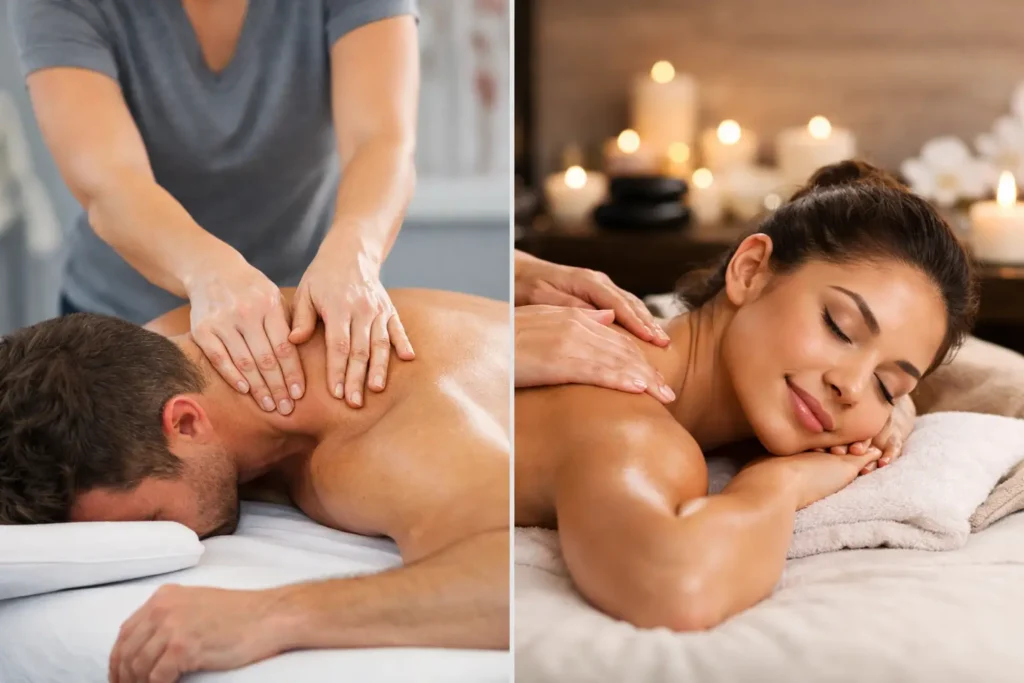
A quiet room, a padded table, calming music – from the outside, many massage sessions can look similar. But when people compare therapeutic massage vs spa massage, the real difference is not the setting. It is the purpose of the session, the level of personalization, and what you hope to feel when you get up from the table. If you’re in Portland and trying to decide whether therapeutic massage or spa massage is the better fit, this is a very common question.
If your body feels overworked, your shoulders stay raised no matter how often you stretch, or your low back keeps reminding you that stress lives in your muscles, the type of massage you choose matters. One session may leave you pleasantly relaxed for the evening. Another may help address the patterns behind your pain and tension.
Therapeutic massage vs spa massage: the core difference
The simplest way to understand therapeutic massage vs spa massage is this: spa massage is usually centered on relaxation, while therapeutic massage is centered on treatment.
That does not mean a spa massage cannot help you feel better. It often does. Gentle, calming bodywork can lower stress, soften mild tension, and give your nervous system a needed pause. For many people, that alone is valuable.
Therapeutic massage, though, starts from a different question. Instead of asking, “How can this session feel soothing?” it asks, “What is happening in your body, and what kind of work will help?” The goal is often to reduce pain, improve mobility, ease chronic tightness, and support more lasting change.
In practice, that difference shapes everything from intake to technique. A spa-style session may follow a familiar full-body flow with consistent pressure and a relaxation-first rhythm. A therapeutic session is more likely to focus extra time on a few key areas, adjust methods as your body responds, and work with a clear clinical intention.
What a spa massage is designed to do
Spa massage is often chosen when someone wants to decompress, reset, or enjoy a restorative break from daily demands. The pace is usually smooth and continuous. Pressure may be light to medium, and the session often aims to create an overall sense of ease rather than target one specific dysfunction.
That can be a very good fit when your main need is stress relief. If you have been running on empty, sleeping poorly, or carrying the kind of generalized tension that comes from a packed schedule, relaxation-focused massage can help shift your whole system into a calmer state.
There is also something meaningful about receiving care without needing to explain every ache in detail. Sometimes the body simply needs rest, warmth, quiet, and supportive touch.
Still, spa massage has limits. If you are dealing with recurring neck pain, stubborn shoulder restriction, headaches tied to muscle tension, or back pain that keeps returning after temporary relief, a general relaxation session may not be specific enough to address the cause.
What therapeutic massage is designed to do
Therapeutic massage is more individualized by nature. It is often used for chronic tension, repetitive strain, postural imbalances, stress-related tightness, or pain patterns that interfere with daily life.
A therapeutic therapist typically pays close attention to where pain begins, where it travels, how long it has been present, and what activities make it better or worse. That information matters because discomfort is not always located at its source. Tight shoulders may be connected to chest restriction, upper back fatigue, jaw tension, or the way you sit for hours at a desk.
This is why therapeutic work often feels more focused and intentional. A session may combine Swedish massage for circulation and nervous system regulation, deep tissue techniques for dense muscular tension, and modalities such as Shiatsu to support balance throughout the body. The exact mix depends on the person, not a fixed routine.
That personalized approach is especially important for people who want more than temporary relief. A thoughtful session can help your body unwind old holding patterns, move more freely, and respond better over time.
Pressure is not the whole story
Many people assume therapeutic massage simply means deeper pressure. Sometimes that is part of the session, but it is not the definition.
Effective therapeutic work is not about pushing as hard as possible. It is about using the right pressure, in the right place, at the right time. For some clients, deep tissue techniques help release long-held tension. For others, the nervous system is already overloaded, and slower, more moderate work creates better results.
Spa massage also should not be dismissed as “just light pressure.” Relaxation work can have profound effects on stress, breathing, and muscle guarding. When the body finally feels safe enough to soften, pain can decrease as well.
The question is not whether deep pressure is better. The question is whether the session is matched to your condition, your goals, and how your body responds.
The client experience often feels different
Another important part of therapeutic massage vs spa massage is the overall experience before and during the session.
In a spa environment, the experience is often built around comfort, ambiance, and a sense of escape. That can feel lovely, especially if you are craving peace and stillness.
In a therapeutic setting, calm still matters, but the session usually begins with more conversation and assessment. You may discuss your pain history, stress patterns, posture, recent activity, or areas that feel restricted. During the massage, your therapist may check in about referral pain, range of motion, or whether a certain technique is helping.
That does not make the session less restorative. In fact, many people find it more reassuring because they feel seen as an individual rather than placed into a standard service.
For clients who value privacy, trust, and one-on-one care, this can make a major difference. A personalized therapeutic practice such as Senju Holistic Healing is built around that kind of focused attention, where the work is shaped around your body rather than a generic routine.
Which one is right for you?
The right choice depends on what you need most right now.
If you want to relax, disconnect from a busy week, and enjoy a soothing full-body massage, a spa massage may be exactly right. It can be supportive, calming, and deeply refreshing.
If you are dealing with recurring neck, shoulder, or back discomfort, limited mobility, muscular fatigue from desk work, or stress that has settled into persistent physical tension, therapeutic massage is often the better fit. It is designed to work with patterns, not just symptoms.
There is also a middle ground. Some people need both treatment and relaxation. They do not want a session that feels overly clinical, but they do want real progress. In those cases, a holistic therapeutic approach can be especially effective because it supports pain relief and nervous system regulation at the same time.
Therapeutic massage vs spa massage for stress
Stress sits at the center of this comparison more often than people realize. Spa massage usually addresses stress by helping you slow down and feel cared for in the moment. Therapeutic massage addresses stress not only through relaxation, but also through how stress shows up in the body – clenched shoulders, a guarded jaw, shallow breathing, a tight low back, and fatigue that never quite lets go.
For someone whose stress is mostly mental overload, a relaxation-focused session may be enough. For someone whose stress has become chronic physical pain, therapeutic care is often more useful.
This is where the body and mind are not separate. When tension patterns begin to change, many clients notice they sleep better, breathe more fully, and feel more emotionally settled too.
What to look for when choosing a massage therapist
If you are unsure which type of massage to book, pay attention to how the practice describes its work. Look for signs of individualized care, clear therapeutic focus, professional credentials, and a willingness to adapt techniques to your needs.
It also helps to ask practical questions. Will the therapist take time to understand your pain or tension patterns? Do they offer different modalities? Is the session designed around your goals, or is it mainly a standard relaxation service?
A good massage should feel supportive, not confusing. You should come away with a sense that the therapist understood what your body needed and responded with care and skill.
Sometimes the best choice is the one that meets you honestly where you are. If you need rest, choose rest. If you need relief, choose treatment. And if you need both, seek a practitioner who can hold space for calm while still working with purpose.
If you’re looking for therapeutic massage in Portland that combines personalized care with a calm, restorative experience, a one-on-one session may be a good fit.
You can book a session here.