
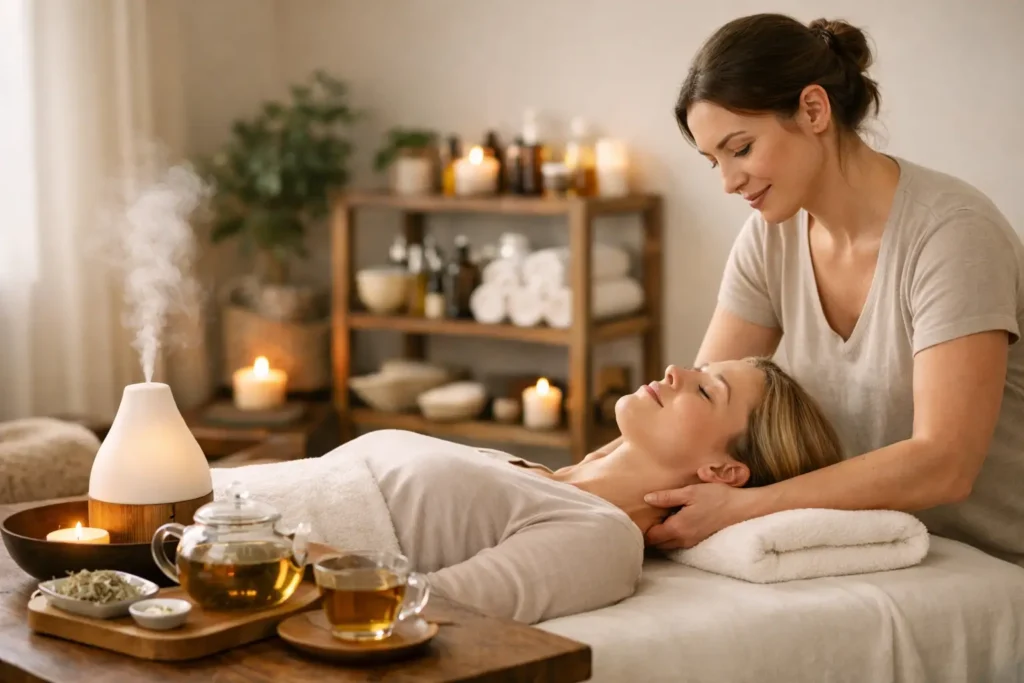
Stress often shows up in the body before people have words for it. A tight jaw during meetings, shoulders that stay lifted on the drive home, a low back that never fully relaxes, or a feeling that deep breathing takes effort – these are common ways stress accumulates. Understanding how massage supports stress recovery starts there, with the physical patterns that build quietly through work, parenting, training, poor sleep, and long hours at a desk.
Stress recovery is not only about feeling calm for an hour. It is about helping the body shift out of a guarded state so muscles can soften, breathing can deepen, and tension does not keep recycling through the same areas. Therapeutic massage can support that process in a practical way, especially when sessions are tailored to where you hold stress and how your body responds to touch. If you’re in Portland and dealing with stress that shows up as neck, shoulder, back, jaw, or breathing tension, this is a very common pattern I see.
How massage supports stress recovery in the body
When stress stays high for days or weeks, the body often braces without asking permission. Neck muscles tighten. Shoulders round forward. The upper back works harder to support posture. Hips and low back may join in, especially if you sit for long periods or carry tension while standing. Over time, that protective holding pattern can start to feel normal.
Massage helps interrupt that pattern. Skilled hands-on work can reduce the sense of effort in overworked muscles and encourage the body to let go of unnecessary gripping. This does not mean every session needs heavy pressure. In fact, stress-related tension often responds better when pressure is adjusted carefully to the tissue, the area involved, and the person on the table.
For some people, deeper work around the shoulders, back, or hips is useful because those tissues have been loaded for a long time. For others, a slower and more moderate approach helps the nervous system settle enough for deeper change to happen. The best sessions are rarely formulaic. They respond to the person, not just the symptom.
Stress is not just mental – it is muscular and neurological
People often think of stress as a mental state, but the body experiences it more broadly. When you are under pressure, your breathing may get shallower, your jaw may clench, and your muscles may stay slightly contracted for hours. Even after the stressful event passes, the body can remain on alert.
This is one reason massage can feel meaningful during stressful periods. Thoughtful bodywork gives the nervous system a different kind of input – steady, predictable, non-rushed touch. That can help shift the body from constant vigilance toward a more restful state. The result is not simply relaxation in the general sense. It can be a real sense of physical downshifting, where the shoulders drop, the breath moves more freely, and the mind no longer has to work so hard to manage discomfort.
That said, results vary. If someone is severely overtired, under unusual pressure, or dealing with tension that has been building for years, one session may bring relief without fully resetting the pattern. Stress recovery usually works better as a process than a one-time fix.
Where stress tends to collect
Most adults do not hold stress evenly throughout the body. It usually collects in familiar places. For desk workers, the neck, upper traps, chest, and mid-back are common trouble spots. Busy parents may notice low back fatigue, hip tightness, and shoulder strain from lifting and carrying. Active adults may carry stress into already hard-working tissues, which can make recovery from exercise feel slower.
Recurring knots often develop where muscular effort and emotional stress overlap. A person may stretch regularly and still feel the same band of tightness near the shoulder blade. Another may wake up with jaw tension after a demanding week. These patterns are not always about one isolated muscle. They often reflect how the body has adapted to stress over time.
That is why personalized work matters. A session focused only on the area that hurts may miss the larger pattern. Sometimes the neck improves when the chest and upper back are addressed. Sometimes low back discomfort eases when hips, glutes, and abdominal tension are included thoughtfully. Sometimes the body needs a quieter approach first, so deeper work does not feel like one more stressor.
The value of an individualized session
In a private therapeutic setting, massage for stress recovery should not feel generic. The pressure, pace, and techniques need to match the client in front of the practitioner. One person may benefit from deep tissue and trigger point work to address long-held shoulder tension. Another may need a blend that includes shiatsu-informed bodywork, gentle craniosacral techniques, or slower work that helps guarded tissues settle.
Supportive techniques can also be woven in where appropriate. Therapeutic cupping may help certain areas of stubborn tightness. Lymphatic-style techniques may be useful when the body feels congested or puffy. Reflexology or visceral bodywork may support the overall session when they fit the client’s needs and comfort. These methods are not used for novelty. They are part of a tailored treatment approach built around how stress is showing up in that person’s body.
Clear communication matters here. Some people assume stress relief requires intense pressure, but that is not always true. If the body tenses against the work, the session may not help the way it should. Skilled massage often means knowing when to work more deeply and when to ease back so the tissue can respond.
How massage supports stress recovery over time
The effects of massage are often most noticeable after the session, not just during it. People may realize later that their jaw is softer, their breathing is easier, or they are no longer shifting constantly in their chair. They may sleep more comfortably that night or notice less pulling through the neck while working the next day.
With repeated sessions, the body can begin to recognize a different baseline. Instead of returning immediately to the same braced pattern, muscles may stay looser longer. Clients often become more aware of early signs of stress, which makes it easier to respond before tension becomes severe.
This does not mean massage removes all stress from life. Work deadlines, family responsibilities, travel, and physical demands still exist. What massage can do is support how the body recovers from those demands. It can create space for better movement, less guarding, and a calmer internal state that feels more sustainable.
For many people, consistency matters more than intensity. An occasional session can be helpful, especially during a difficult week. But when stress-related tension is chronic, regular bodywork often provides more lasting support than waiting until the body is already overwhelmed.
When massage may help most
Massage can be especially useful when stress has a clear physical footprint. If you notice recurring neck and shoulder tightness, tension headaches connected to muscle strain, back discomfort from long workdays, restless sleep linked to body tension, or a general sense that your body never fully powers down, therapeutic massage may be a practical part of your recovery routine.
It can also help people who are doing all the right things but still feel stuck. Stretching, hydration, exercise, and better ergonomics all matter, but they do not always resolve accumulated tension on their own. Hands-on care can add something different by addressing the tissue directly and giving the nervous system a chance to reset.
At a practice like Senju Holistic Healing in SW Portland, that support is most effective when it is quiet, one-on-one, and adapted to the person rather than delivered as a routine. Stress recovery is personal. The body tells its own story, and good massage listens before it responds.
If stress has been living in your shoulders, back, jaw, or breath for longer than you would like, it may help to think less about pampering and more about recovery. Sometimes the next step is simply giving your body skilled, thoughtful support so it can stop working so hard to hold everything together.
If you’re dealing with stress-related tension in Portland, a personalized massage session may help support recovery by calming the nervous system and addressing the physical holding patterns behind the discomfort.
You can book a session here.