
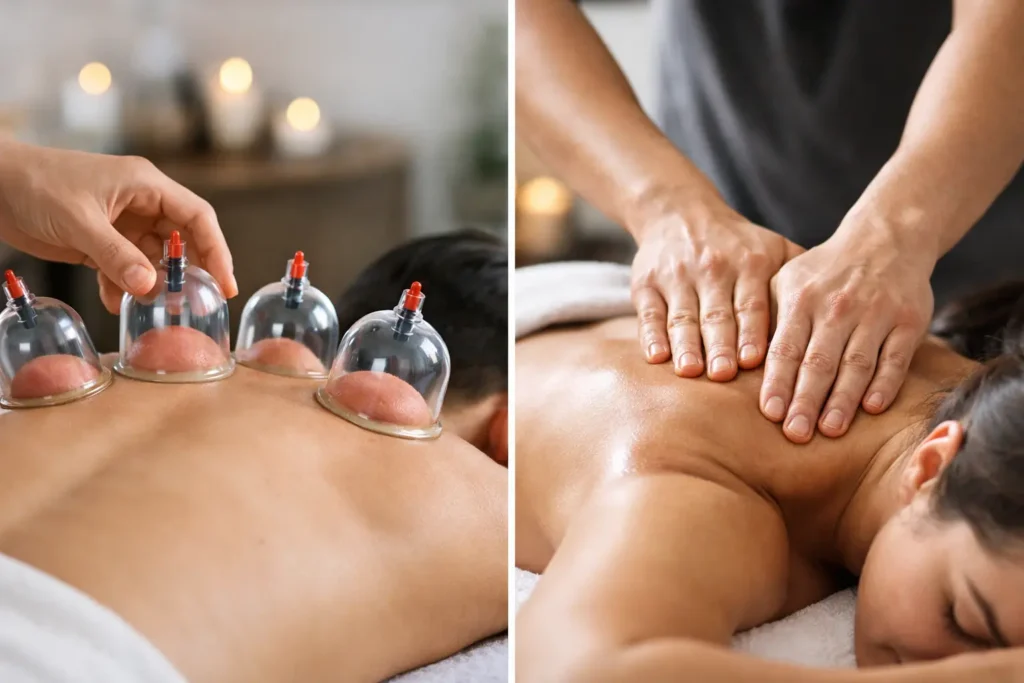
A shoulder that always seems to creep toward your ear, a low back that feels guarded after sitting, or a knot that returns between workouts can make one question feel especially practical: cupping vs massage for tightness – which is the better choice? The honest answer is that they are not interchangeable, and neither is automatically best. The right approach depends on where you feel tightness, how your body responds to touch, whether the area is sensitive, and what you hope to feel after the session.
For many people, therapeutic massage and cupping work well together rather than competing with each other. Skilled bodywork is less about applying a predetermined technique and more about paying attention to the pattern your body is presenting that day.
Cupping vs Massage for Tightness: The Core Difference
Massage uses hands-on pressure, movement, and contact to work with muscles and surrounding soft tissue. Depending on the area and your comfort level, a therapist may use slower deep-tissue strokes, focused trigger point work, broad compression, or more soothing techniques to help an area settle. The pressure can be adjusted moment by moment, which makes massage especially useful when tightness is specific, tender, or connected to a familiar pattern in the neck, shoulders, back, or hips.
Therapeutic cupping uses cups placed on the skin to create gentle suction. The cups may remain still for a short time or be moved carefully across an area with oil or lotion. Rather than pressing downward as massage does, cupping lifts and draws the tissue upward. Some people describe the sensation as a strong stretch, pull, or decompression-like feeling.
That difference in sensation matters. A person who finds direct pressure on their upper traps too intense may tolerate gentle cupping well. Another person may prefer the steady, grounded contact of massage and find the pulling sensation of cups unfamiliar or uncomfortable. Neither response is wrong.
When Massage May Be the Better Starting Point
Massage is often a practical first choice when you want individualized attention to a complex tension pattern. A therapist can feel for differences from one side of the body to the other, adjust pressure around a sensitive spot, and work gradually across connected areas. For example, persistent neck tightness may be influenced by the shoulders, upper back, chest, jaw, or the way you sit at a desk. Hands-on work allows for a more responsive approach to that broader picture.
It can also be a better fit when you are unsure what is causing the discomfort. A session does not need to begin with heavy pressure to be therapeutic. In fact, pushing too hard into a guarded or irritated area can cause the body to brace more. Thoughtful pacing, clear communication, and pressure that you can breathe through are usually more useful than trying to force a knot to release.
Massage may be especially helpful when your goal is to feel both physical relief and a calmer overall state. Stress-related tension is not always located in one obvious spot. It may show up as a clenched jaw, shallow breathing, a rigid upper back, or shoulders that never fully drop. Therapeutic touch can address the areas that feel restricted while giving the nervous system a quieter signal to slow down.
When Cupping Can Be a Useful Addition
Cupping can be helpful for broad areas that feel dense, restricted, or overworked, particularly through the upper back, shoulders, and larger back muscles. It can offer a different kind of input when an area has received plenty of direct pressure but still feels like it needs more space or movement.
It is also useful when a therapist wants to work across an area without repeatedly pressing into the same tender point. Moving cups can create a sliding sensation over the tissue, while stationary cups can give an area time to respond without constant hands-on pressure. Some clients appreciate this approach after long periods of desk work, travel, training, or repetitive movement.
Still, cupping is not automatically gentler than massage. The suction can feel quite strong, especially near bony areas or in tissue that is already sensitive. It also commonly leaves temporary circular marks that can range from light pink to darker red or purple. These marks are not bruises in the usual sense, but they can be noticeable and may last several days or longer depending on the person and the intensity used.
If you have an event, photos, swimming plans, or clothing that leaves your upper back exposed, it is worth mentioning that before the session. A good practitioner can adjust the technique, use lighter suction, choose a different area, or skip cupping altogether.
Cupping is not about “releasing toxins”
You may hear dramatic explanations for cupping marks, but a practical explanation is enough: the suction changes how the skin and superficial tissue are pulled and can leave visible discoloration. The value of cupping, when it is appropriate, is in its sensory and tissue-focused effect within a personalized bodywork session, not in detox claims.
The Trade-Offs to Consider
The most useful choice often comes down to comfort, timing, and the nature of your tightness. Massage provides detailed, adaptable contact. It can be focused on a precise spot or broadened into a full pattern of tension. Cupping offers a distinct pulling sensation and may feel effective across a wider area, but it is more likely to leave marks and is not ideal for every skin type or situation.
Your history matters as well. Cupping may need to be avoided or modified over irritated, broken, sunburned, or highly sensitive skin. It may also not be appropriate for people with certain health considerations, including some bleeding-related concerns or medications that affect bruising. Share relevant information with your therapist before the session, and check with your medical provider when you are uncertain about whether a technique is suitable for you.
Massage also benefits from clear communication. Tell your therapist if pressure feels sharp, creates numbness or tingling, makes you hold your breath, or simply feels like too much. More intensity is not a measure of a better session. The aim is work your body can receive, not a test of endurance.
Why a Blended Session Often Makes Sense
For recurring tightness, the better question may not be “cupping or massage?” but “what combination would serve this pattern today?” A session might begin with massage to warm and assess the upper back, include a few cups across a dense shoulder area, then return to focused hands-on work around the neck and shoulder blade. On another day, the same person may need only massage because they are already sensitive, fatigued, or dealing with a fresh flare-up.
This is where individualized care matters more than a fixed menu of techniques. Tightness can change with sleep, workload, exercise, stress, hydration, and how long you have been in one position. What felt helpful last month may not be the right choice this week.
At Senju Holistic Healing in SW Portland, therapeutic cupping may be incorporated when it supports the session goal, alongside massage, trigger point work, shiatsu-informed bodywork, and other appropriate techniques. The focus remains on listening to your body, respecting your comfort level, and working toward more ease in the way you move through daily life.
How to Decide Before Your Appointment
If you are curious about cupping but unsure, you do not need to commit to it in advance. Let your therapist know what feels tight, how long it has been bothering you, what tends to aggravate it, and whether you have had massage or cupping before. You can also mention practical preferences: avoiding visible marks, keeping pressure moderate, or focusing on a particular area.
Choose massage when you want adjustable, precise work or when you are new to therapeutic bodywork. Consider adding cupping when you are comfortable with the possibility of temporary marks and are interested in a different sensation across a broader, restricted area. In either case, leave room for the plan to change once the session begins.
The most helpful bodywork is rarely about choosing the trendiest technique. It is about finding a calm, attentive approach that meets your body where it is, gives it room to soften, and supports the routines that help you stay comfortable afterward.