
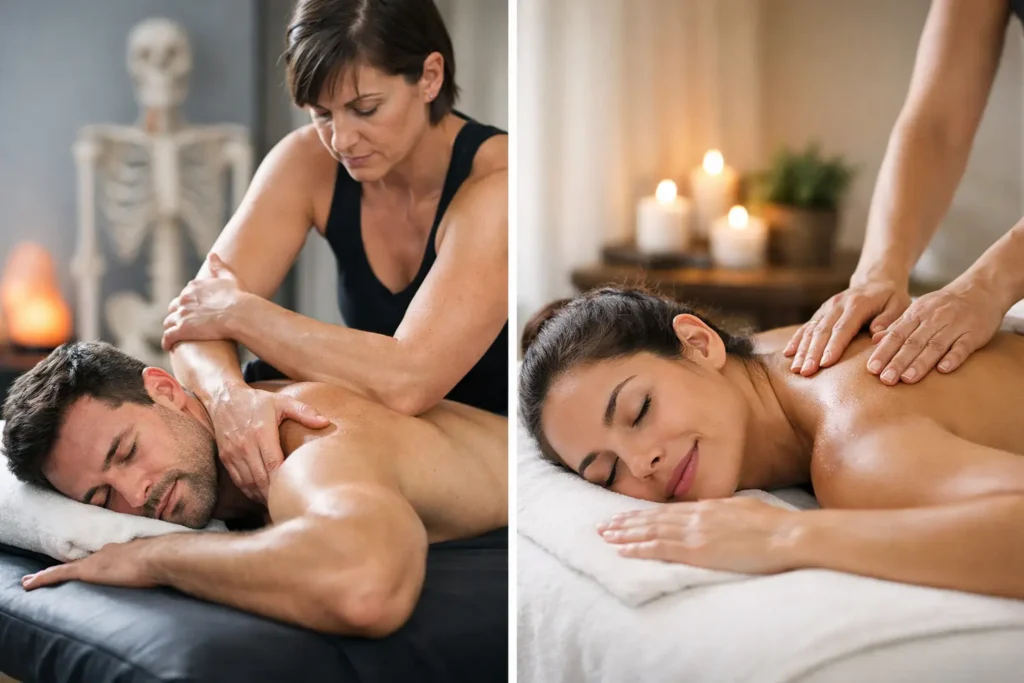
A neck that tightens by midafternoon, a shoulder blade that always feels stuck, or a low back that complains after a long drive rarely responds best to a one-size-fits-all session. When considering custom bodywork vs standard massage, the real difference is not whether one is better in every situation. It is whether the session can respond to what your body is doing on that particular day.
For many people, a familiar massage routine can feel comforting and helpful. But recurring tension often has a pattern: desk work affects the neck and chest, training loads the hips and calves, stress shows up in the jaw and shoulders, and an old area of sensitivity may change how the rest of the body moves. Personalized therapeutic bodywork makes room for those details rather than asking every body to fit the same sequence.
What Standard Massage Usually Means
Standard massage generally follows a consistent format. The therapist may use a familiar progression across the back, shoulders, arms, legs, and neck, with similar timing and pressure from one appointment to the next. This approach can be a good fit for someone who wants a predictable experience, has broad general muscle fatigue, or simply prefers a routine they already know.
Consistency has value. If your body feels generally well and you enjoy receiving the same style of care each visit, a standard session can provide a welcome pause from physical and mental stress. A set structure also works well when the main goal is broad maintenance rather than focused attention on a particular tension pattern.
The limitation is that a routine may not leave much room for change. If your right shoulder is unusually sensitive this week, your low back needs more support, or your legs are carrying more fatigue than usual, a preset sequence may not fully account for it. More pressure is not necessarily the answer, either. The most useful work is often work that is well placed, appropriately paced, and adjusted to how the tissue responds.
Custom Bodywork vs Standard Massage: The Key Difference
Custom bodywork starts with observation and communication. Rather than deciding in advance that every session will look the same, the practitioner considers your current discomfort, daily activities, prior response to massage, pressure preferences, and goals for the appointment.
That does not mean a session is random or overly complicated. It means the plan has a purpose. A client who spends long hours at a computer may benefit from focused work around the upper back, shoulders, chest, neck, forearms, and scalp, along with calmer techniques where the nervous system feels especially taxed. Someone who trains regularly may need attention that accounts for recovery, mobility, and areas that feel overworked without treating every sore muscle identically.
At Senju Holistic Healing, personalized sessions may draw from therapeutic deep tissue massage, trigger point work, shiatsu-informed bodywork, Japanese-informed massage therapy, or other supportive techniques based on the client’s needs. Therapeutic cupping, craniosacral work, lymphatic drainage techniques, visceral bodywork, and reflexology may also be incorporated when appropriate. These are not separate formulas to choose from. They are tools that can support thoughtful, individualized care.
The Session Can Follow Your Body’s Response
A customized session allows the pace, pressure, and focus to shift as needed. Sometimes an area that feels intensely tight responds best to gradual work around it before direct pressure is useful. Sometimes a sensitive shoulder needs lighter contact and more attention to the surrounding chest, upper back, or arm. Other times, a well-tolerated area may benefit from slower, more focused therapeutic pressure.
This flexibility matters because discomfort is not always located where the tension began. For example, the place you feel a knot may be working hard because another region has become restricted, fatigued, or overused. A skilled massage therapist does not need to make a medical diagnosis to notice these common compensation patterns and adjust the session accordingly.
Custom care also gives clients a clearer role in the appointment. Your feedback about pressure, tenderness, comfort, and changes since the last session helps guide the work. Good communication is not an interruption to the massage. It is part of how the session stays useful and respectful of your body.
When a Standard Massage May Be Enough
A standard approach is not inherently less valuable. It may be a sensible option when you feel generally good, have no particular area asking for extra attention, and want a familiar full-body routine. Some people find that consistency itself helps them maintain a regular body-care habit.
It can also be preferable if you do not want to spend much time discussing goals or changing the format of a session. There is comfort in knowing what to expect. For occasional maintenance, that may be exactly what you need.
The question changes when tension is recurring, uneven, or connected to the way you work, move, sleep, or manage stress. If you repeatedly leave massage feeling better for a day but notice the same area quickly taking over again, a more tailored approach may be worth considering. The goal is not to promise a permanent fix in one appointment. It is to give persistent patterns more informed attention over time.
Signs You May Benefit From Personalized Bodywork
Custom bodywork is often especially helpful when your needs vary from week to week or when broad massage has not felt specific enough. You may notice that one shoulder sits higher than the other, your neck feels tight after screen time, or your hips and back feel different after a demanding week. These changes offer useful information for a session plan.
It may also be a strong fit if you have a history of sensitivity to deep pressure. Therapeutic work does not need to be punishing to be effective. Pressure can be modified, techniques can be paced more slowly, and the practitioner can avoid turning an already guarded area into a more irritated one. Many clients are surprised by how much more comfortable focused work can feel when it is adapted rather than forced.
People in SW Portland and the surrounding area often balance sedentary work with active weekends, caregiving, commuting, and busy schedules. That mix can create tension patterns that do not fit neatly into one category. A private, one-on-one therapeutic setting allows time to consider what has changed and what would be most supportive that day.
What a Personalized Session Should Feel Like
Personalized does not have to mean intense, technical, or hard to understand. It should feel calm, professional, and centered on your stated needs. Before the session, you may discuss the areas that feel most uncomfortable, your relevant history, activities that seem to aggravate tension, and what has or has not worked well in prior massage.
During the session, the therapist may spend more time in a few meaningful areas instead of moving quickly through the entire body. They may combine deeper work with gentler techniques, depending on your sensitivity and the quality of the tension. You should never feel that you need to tolerate excessive discomfort to get value from the appointment.
Afterward, you may feel looser, calmer, or more aware of how you have been holding tension. Results vary, particularly with longstanding tightness or demanding daily routines. For some people, regular sessions and small changes in posture, movement, rest, or training habits work better together than relying on massage alone.
Choosing the Approach That Fits Your Goals
Consider what you want from massage right now. If you value a dependable routine and general relief from everyday muscle fatigue, standard massage may suit you well. If your body tends to bring a different complaint each visit, or if you want focused attention for chronic neck, shoulder, or back tension, custom bodywork may offer more practical support.
It is also reasonable to want both structure and flexibility. A skilled therapeutic massage therapist can provide a calm, familiar framework while changing the details that need to change. The best approach is the one that respects your comfort, makes sense for your current needs, and helps you stay more connected to the signals your body has been sending.
A session does not need to solve every source of tension to be worthwhile. Sometimes the most helpful next step is simply having your body met with careful attention, clear communication, and work designed for where you are now.