
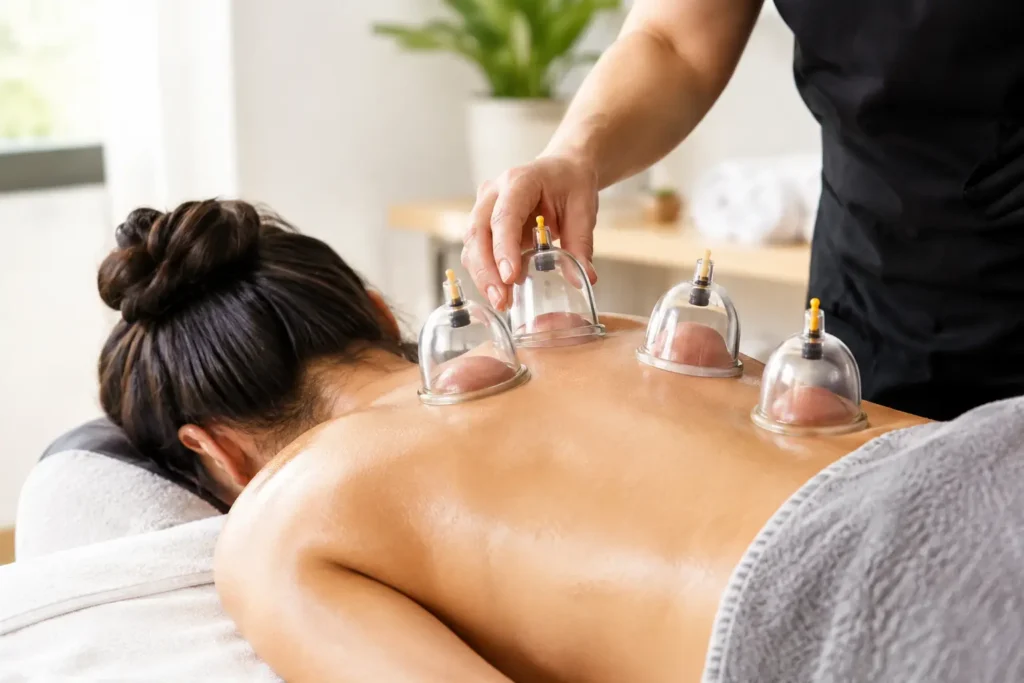
A tight spot between the shoulder blades can feel as though it has settled in for good. Sometimes steady hands-on work is the right approach; other times, changing the kind of pressure can help the area respond differently. Cupping during massage sessions is one option a massage therapist may use to address persistent tightness in the back, shoulders, hips, or other overworked areas while keeping the session centered on your comfort and goals.
Cupping is not a separate, one-size-fits-all treatment at Senju Holistic Healing. It is a supporting technique that may be blended into personalized therapeutic massage when it fits the way your body is feeling that day. For people dealing with desk-related shoulder tension, recurring knots, training soreness, or general muscle tightness, it can offer a useful change of pace from direct compression alone.
What Cupping During Massage Sessions Involves
Cupping uses specially designed cups, often made of silicone or other smooth materials, to create gentle suction on the skin. Rather than pressing down into tissue as massage does, the cup lifts and draws the superficial layers upward. This creates a distinct sensation of pulling or spaciousness that many people notice immediately.
A therapist may place cups in one area for a short time or glide them slowly over tissue with massage oil or lotion. Gliding cups can be especially useful across broad areas such as the upper back, low back, or the muscles around the shoulders. Static cups may be used more selectively when a particular area feels dense or restricted.
The method is not about using the strongest possible suction. More intensity is not automatically more helpful. A thoughtful session considers how sensitive you are, how much tension is present, whether the area is already irritated, and how your body responds as the work progresses.
Why a Therapist May Add Cupping
Therapeutic massage often involves a balance between addressing stubborn tension and avoiding the feeling that the body has been pushed too hard. When a muscle group is guarded or tender, repeated direct pressure can sometimes feel like too much. Cupping offers a different input, which may help a therapist work around an area before returning to more focused massage or trigger point techniques.
For example, someone who spends long hours at a computer may carry tension through the chest, front of the shoulders, upper back, and neck. A session may include hands-on work for the neck and shoulder muscles, gentle work through the chest and arms, and brief cupping over the upper back if it is appropriate. The goal is not to chase every tight point aggressively. It is to help the body feel more comfortable and move with less effort.
Cupping may also be useful for active adults whose backs, hips, or legs feel overworked after training, repetitive work, or a busy stretch of daily life. The response varies from person to person. Some clients appreciate the sensation and find it helps an area feel less held afterward. Others prefer traditional massage techniques, lighter work, or a combination of approaches. All of those preferences are valid.
Cupping Is Not a Replacement for Skilled Massage
The cup itself is a tool, not the treatment plan. Its value comes from how, where, and whether it is used. A personalized massage session may combine cupping with therapeutic deep tissue work, shiatsu-informed techniques, careful stretching, or quieter methods that support relaxation when the nervous system feels overloaded.
That individualized approach matters because the location of discomfort is not always the only area worth addressing. Tight shoulders, for instance, may be influenced by how the upper back, chest, arms, or breathing patterns are contributing to strain. Massage therapy does not diagnose the cause of pain, but a skilled therapist can observe tension patterns and adapt hands-on care accordingly.
What Cupping Feels Like
Most people describe cupping as a firm pulling sensation rather than the downward pressure of a deep tissue massage. It should feel noticeable, but it should not feel sharp, pinching, or alarming. When cups are moved, the sensation can feel warming and broad, particularly across larger muscles.
Communication is essential. Let your therapist know if the pressure feels too strong, if you feel discomfort that does not ease, or if a particular area is unusually sensitive. A good therapeutic session is collaborative. Your feedback helps guide choices about suction level, cup placement, duration, and whether to continue with the technique at all.
You may feel temporarily tender afterward, much as you might after focused massage work. Some people feel loose and relaxed right away, while others notice the effects more gradually over the next day or two. If you have an important event, intense workout, or long travel day ahead, mention it before the session so the work can be planned with that timing in mind.
Understanding Cupping Marks
Cupping can leave circular or oval marks that range from faint pink to deeper red or purple. These marks are a common response to suction and are not a measure of how effective the session was. Darker marks do not mean that more was “released,” that toxins were removed, or that the treatment was better.
The marks typically fade over several days, though timing varies with the person, the level of suction, and the area treated. They are usually not painful bruises, but they can look similar. If visible marks would be inconvenient because of clothing, photographs, sports, or personal preference, tell your therapist. Lighter suction, moving cups, different placement, or skipping cupping altogether may be the better choice.
When Cupping May Not Be Appropriate
Cupping is not necessary in every massage session, and there are times it should be avoided or postponed. It is generally not applied over broken or irritated skin, active rashes, sunburn, areas with significant swelling, or locations that are already bruised. Your therapist should also know about medications or health considerations that affect bleeding, bruising, skin sensitivity, circulation, or sensation.
If you are pregnant, recently had surgery, have a new or unexplained symptom, or are managing a medical condition, share that information before treatment. Your massage therapist can adjust the session within their scope of practice and, when appropriate, encourage you to check with your qualified health care provider. Clear intake information supports safer, more comfortable bodywork.
Cupping is also not the right fit simply because you dislike the sensation or do not want marks. There is no obligation to include a modality because it is popular. Therapeutic massage should feel respectful, informed, and suited to your needs rather than driven by a trend.
Making Cupping Part of Ongoing Body Care
For recurring neck, shoulder, or back tension, the most useful question is often not, “What technique fixes this?” It is, “What kind of care helps me stay more comfortable between the demands of work, movement, and daily life?” Cupping can be one part of that answer, alongside regular massage, changes in workstation habits, manageable movement, rest, and attention to patterns that repeatedly overload the body.
A private therapeutic massage setting allows time to discuss what has changed since your last visit. Perhaps your low back feels better but your shoulders are taking on more stress. Perhaps training has increased, sleep has been poor, or a work deadline has brought back old tension. Those details help shape the session far more than following the same routine each time.
For clients in SW Portland and nearby communities, cupping can be a practical addition to massage when it matches the moment. The best approach is always the one that respects your comfort, responds to your body, and leaves you feeling cared for rather than worked over. If a cup helps create that result, it has a place in the session. If another technique serves you better, that is the right choice instead.