
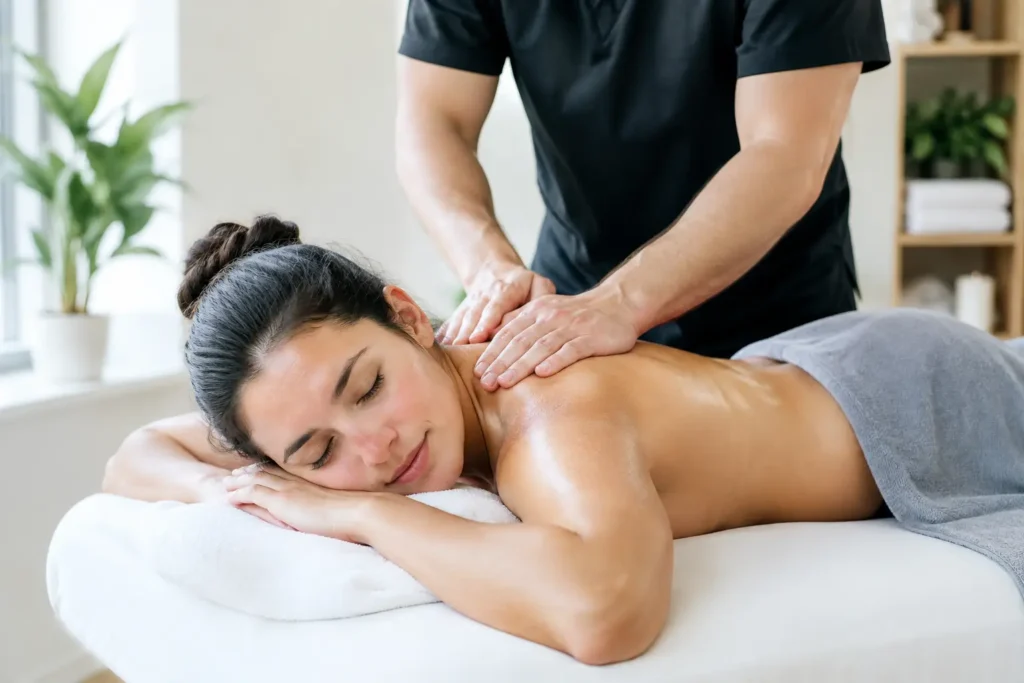
A hard workout can leave your legs tender for two days. A long week at the computer can create a different kind of soreness – the familiar ache between the shoulder blades, a tight neck, or a low back that feels tired by late afternoon. If you are wondering, can massage reduce soreness, the practical answer is often yes, but the timing, type of soreness, and amount of pressure all matter.
Therapeutic massage can help many people feel more comfortable, move more freely, and settle the protective muscle tension that tends to build around an irritated area. It is not a cure-all, and it should not be treated as a reason to push through a significant injury or unexplained pain. Thoughtful bodywork works best as one part of sensible recovery: rest when needed, gradual movement, hydration, sleep, and attention to the habits that keep the same tension returning.
Can Massage Reduce Soreness After Exercise or Work?
Soreness is not one single experience. After unfamiliar or demanding exercise, delayed onset muscle soreness often develops 12 to 24 hours later and may peak over the next day or two. The muscle can feel tender, stiff, and uncomfortable when you move or press on it. Massage may not erase that response completely, but it can make the area feel less tight and easier to use.
The same principle applies to soreness from daily life, although the cause is often less obvious. Sitting with the head forward, carrying a child on one hip, repetitive lifting, driving, or working through a stressful deadline can all lead the body to hold extra tension. The discomfort may spread beyond one muscle because the body compensates. A stiff upper back can change how the neck moves; tight hips can make the low back work harder.
Skilled massage helps by applying pressure and movement in a way that encourages guarded tissue to soften. It can also bring attention back to areas that have been ignored all day. Many clients notice that a sore area feels warmer, less restricted, or more comfortable after a session, particularly when the work is matched to their sensitivity rather than forced.
That does not mean deeper is always better. When tissue is already very tender, aggressive pressure can leave it feeling more aggravated. A good therapeutic session adjusts to what your body is communicating in the moment.
Why Soreness Sometimes Feels Better After Massage
Massage can influence soreness in several practical ways. Gentle to moderate work may help decrease the feeling of stiffness and improve short-term range of motion. Slower, more focused pressure can address persistent tight spots that contribute to a recurring ache. Calm, attentive touch can also help shift the nervous system out of the heightened state that often makes muscles brace and hold.
For desk-related neck, shoulder, and back discomfort, the goal is rarely to work only where it hurts. A sore neck may be connected to tension through the upper back, chest, jaw, or shoulders. Low back soreness may be affected by how the hips, glutes, and legs are moving. Looking at these patterns does not require a dramatic explanation. It simply allows treatment to be more useful than repeatedly pressing on one painful point.
At Senju Holistic Healing, sessions are personalized around the client’s goals, comfort level, and current tension patterns. Depending on what is appropriate, therapeutic deep tissue work, trigger point techniques, shiatsu-informed bodywork, gentle craniosacral approaches, or other supportive methods may be blended within the session. The purpose is not to chase intensity. It is to provide informed, responsive work that supports greater comfort.
The Right Pressure Depends on the Type of Soreness
There is a common belief that a massage must hurt to be effective. For persistent, dense muscle tension, firmer work can sometimes be useful. But productive pressure should feel manageable, not like something you have to endure. You should be able to breathe normally and give clear feedback.
When soreness is fresh after a demanding workout, a gentler approach is often more comfortable. Broad compression, slow gliding work, and careful movement can be preferable to direct, heavy pressure on a very tender muscle. If you have a recurring knot near the shoulder blade or chronic hip tightness, more focused work may be appropriate, especially when paired with attention to surrounding areas.
Sensitivity also changes from day to day. Poor sleep, stress, dehydration, a new exercise routine, and menstrual-cycle changes can affect how pressure feels. A private one-on-one massage setting makes it easier to communicate those changes and adapt the session rather than following a fixed routine.
What You May Feel After a Session
Many people feel looser, calmer, or more aware of how their body is moving after therapeutic massage. Mild tenderness can also happen, especially after work on long-standing tightness or after pressure that was deeper than usual. This should generally feel temporary and manageable, not sharp, severe, or progressively worse.
Plan for an easier evening when possible. Drink water because it is a basic part of feeling well, not because massage “releases toxins.” Gentle walking, normal movement, a warm shower, and a good night of sleep may help you settle into the benefits of the session. Avoid treating post-massage comfort as permission to immediately return to the same heavy activity that created the soreness.
When Massage Is Most Useful for Recurring Tension
Massage tends to be particularly helpful when soreness is part of a repeating pattern: shoulders rising toward the ears during stressful workdays, an upper back that tightens after computer time, or legs that stay heavy after training. In these cases, a session can offer both immediate relief and useful information about where your body tends to brace.
Long-term comfort usually comes from combining bodywork with small changes outside the treatment room. That may mean taking brief movement breaks, varying your workstation position, warming up before activity, easing into a new training plan, or recognizing when stress is showing up physically. You do not need a perfect routine. Consistent, realistic adjustments are more useful than an ambitious plan that disappears after a week.
Regular massage can be part of maintenance for people whose work, caregiving responsibilities, or activity level repeatedly asks a lot from their bodies. The right frequency varies. Some people benefit from closer sessions during a stressful period or after a change in training, while others prefer occasional care when tightness begins to return.
When to Pause and Seek Medical Guidance
Massage is not the right first step for every kind of soreness. Stop and seek medical guidance for severe pain, sudden swelling, significant bruising, numbness, weakness, fever, pain after a major fall or collision, or discomfort that continues to worsen. The same applies to unexplained pain, especially when it interrupts sleep or comes with other concerning symptoms.
It is also wise to tell your massage therapist about recent injuries, surgeries, medications, skin irritation, circulation concerns, or anything else that may affect how a session should be approached. Clear communication helps keep the work comfortable and appropriate.
A More Useful Question Than “Can Massage Reduce Soreness?”
Rather than asking only whether massage can reduce soreness, consider what kind of relief you need. Are you hoping to feel less stiff after a new workout? Is a recurring shoulder knot making it hard to focus at work? Are you carrying stress in your jaw, neck, and upper back without realizing it until the end of the day?
Those details shape the session. Effective therapeutic massage is not about applying the same pressure everywhere. It is about listening to the body, working within your comfort level, and choosing techniques that fit the day you are having.
Soreness is often the body’s request for attention, not a test to push through. Giving it skilled, measured care can help you return to work, movement, and daily life with a little more ease.