
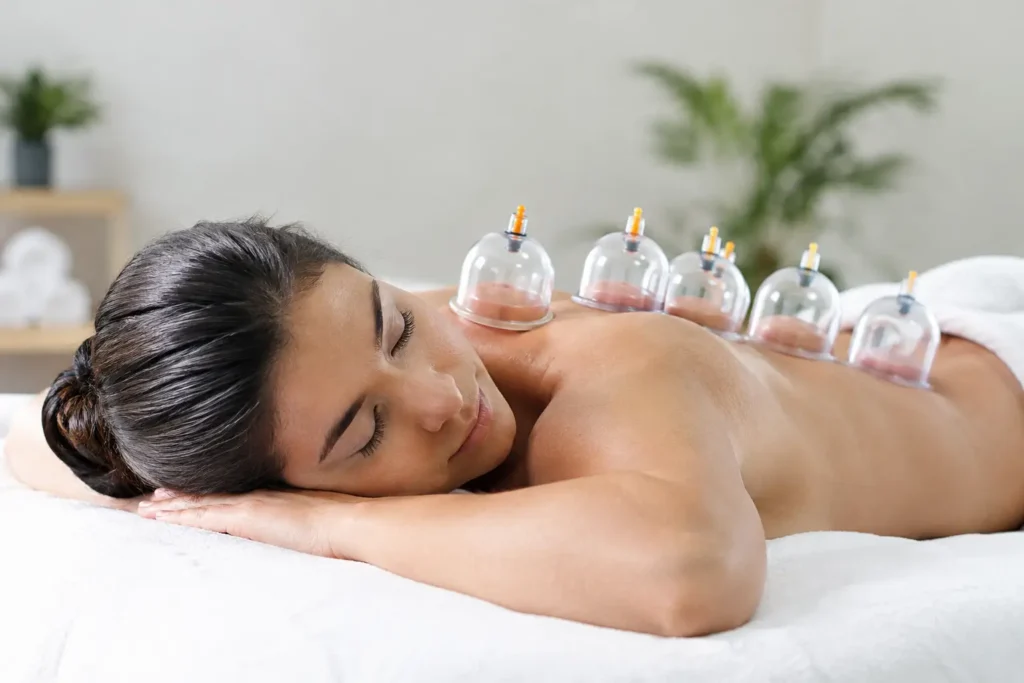
A shoulder knot that returns after every demanding week rarely needs a one-size-fits-all answer. Cupping therapy is one technique that may help create a different kind of input for tight, overworked tissue, especially when it is thoughtfully blended into a personalized therapeutic massage session.
For people dealing with desk-work posture strain, recurring upper-back tightness, training-related soreness, or the feeling that their body never quite settles, cups can be a useful option. They are not necessary in every session, and they are not a shortcut around skilled hands-on work. At Senju Holistic Healing, cupping is considered alongside your comfort, sensitivity, tension patterns, and goals for the session.
What Cupping Therapy Feels Like
Cupping uses smooth cups placed on the skin with gentle suction. Rather than pressing downward into muscle as massage does, the cup lightly lifts the superficial tissue. A practitioner may leave cups in one area briefly or glide them slowly over oiled skin as part of the massage.
The sensation is often described as a pulling, spreading, or decompressing feeling. It should not feel sharp, pinching, or alarming. Some areas, particularly around the shoulders, upper back, hips, or legs, may feel more sensitive than others. Clear communication matters: the amount of suction can be adjusted, cups can be moved, and the technique can be stopped at any point.
People sometimes expect cupping to feel intense because of the circular marks it can leave behind. In practice, a session does not need strong suction to be effective or worthwhile. The goal is not to create a dramatic mark. It is to use an appropriate amount of pressure and movement for the person on the table that day.
Why Cups May Be Helpful for Tight Muscles
Muscle tension is not always just one dense spot that needs more pressure. A person may have a familiar knot near the shoulder blade, but the broader pattern can include a stiff chest, guarded neck muscles, fatigue from long hours at a computer, or an overworked lower back after lifting and training. Direct deep pressure can be helpful in some cases, but it can also feel like too much when tissue is already sensitive.
Cups offer a different approach. The lifting sensation may provide temporary relief from the feeling of restriction while allowing the practitioner to work around an area without repeatedly pressing into the same tender point. Used with therapeutic massage, trigger point work, and shiatsu-informed techniques, cupping may help a session feel more balanced and less forceful.
This is particularly relevant for clients who say, “I like deep work, but I do not want to leave feeling beat up.” Effective bodywork does not have to mean maximum intensity. Sometimes a measured combination of slower massage, focused work around a tight area, gentle cup movement, and time for the nervous system to settle is more useful than pushing harder.
Cupping Therapy Is One Part of a Personalized Session
At a private therapeutic massage practice, the technique should follow the person, not the other way around. Cupping may be used for a small portion of a session, then set aside for hands-on work, stretching, or quieter calming techniques. On another day, it may not be the best fit at all.
For example, a client with persistent upper-back tension from computer work may benefit from cups applied briefly across the upper back, followed by careful work through the shoulders, neck, and chest. Someone with post-training leg tightness may prefer light gliding cups along the larger muscles of the legs before more specific massage. A client who is stressed, sleep-deprived, and especially sensitive may respond better to gentler work without cups.
That flexibility is essential. The same body can have different needs from week to week. Sleep, workload, exercise, stress, hydration, and prior soreness can all affect how a session feels. A useful treatment plan leaves room to adapt rather than repeating a fixed routine.
What the Circular Marks Mean
Cupping can leave temporary circular discoloration ranging from faint pink to deep red or purple. These marks are a common response to suction and can last from a few days to roughly two weeks, depending on the person, the area treated, and the degree of suction used. They are not an indication that toxins have been released, nor are darker marks proof of a better session.
The marks are one practical reason to plan ahead. If you have a wedding, photo session, beach trip, or another event where visible marks would be inconvenient, let your massage therapist know. Cupping can be avoided, performed in less visible areas, or used with a lighter approach that may reduce marking.
It is also normal to feel mild tenderness in the treated area afterward, much like the tenderness that can follow focused massage. That should be manageable and short-lived. If you have questions about what you are feeling after a session, contact your practitioner rather than trying to push through significant discomfort.
When Cupping May Not Be the Right Choice
Cupping is not appropriate for every body or every appointment. A trained massage therapist should review relevant health information and inspect the area before using cups. It is especially important to speak up about skin irritation, recent injuries, easy bruising, circulation concerns, and medications or supplements that affect bleeding or bruising.
Cupping is generally avoided over open skin, rashes, sunburn, active inflammation, or areas with significant bruising. It may also need to be postponed or modified after a recent procedure, during an acute illness, or when a client has a medical condition that changes what is appropriate for massage. If you are unsure, check with your medical provider and share the guidance with your massage therapist.
A good therapeutic session never treats consent as a formality. You should know what is being used, why it may be helpful, what it is likely to feel like, and what visible effects are possible. You remain in control of the session throughout.
Preparing for and Caring for Your Session
There is no complicated preparation required. Arriving hydrated, having eaten normally, and wearing clothing that allows easy access to the areas being addressed can help you feel more comfortable. Avoid scheduling a first cupping session immediately before an activity that could be affected by temporary marks or muscle tenderness.
Afterward, gentle movement is often more useful than trying to aggressively stretch a tender area. A walk, normal daily activity, or a warm shower may feel good. Pay attention to how your body responds over the next day or two. Do you notice easier shoulder movement? Does a familiar area feel less guarded? Or do you feel that a lighter approach would suit you better next time? That feedback helps shape future sessions.
For clients in SW Portland and nearby communities, a quiet one-on-one setting can make these observations easier. There is room to talk about what has been building in your body, try an approach carefully, and adjust without rushing through a standard sequence.
The Value of a Measured Approach
Cupping therapy is often most useful when viewed as a supportive technique rather than the entire plan. It may complement deep tissue massage when an area feels dense, offer a gentler alternative to repeated direct pressure, or simply add variety to care for recurring tension patterns. Its value depends on the person, the day, and the quality of the assessment behind it.
If you are curious about cupping, bring it up at the start of your next therapeutic massage session. A brief conversation about your tension, sensitivities, schedule, and comfort level is the best place to begin – and often the most practical step toward feeling more at ease in your body.