
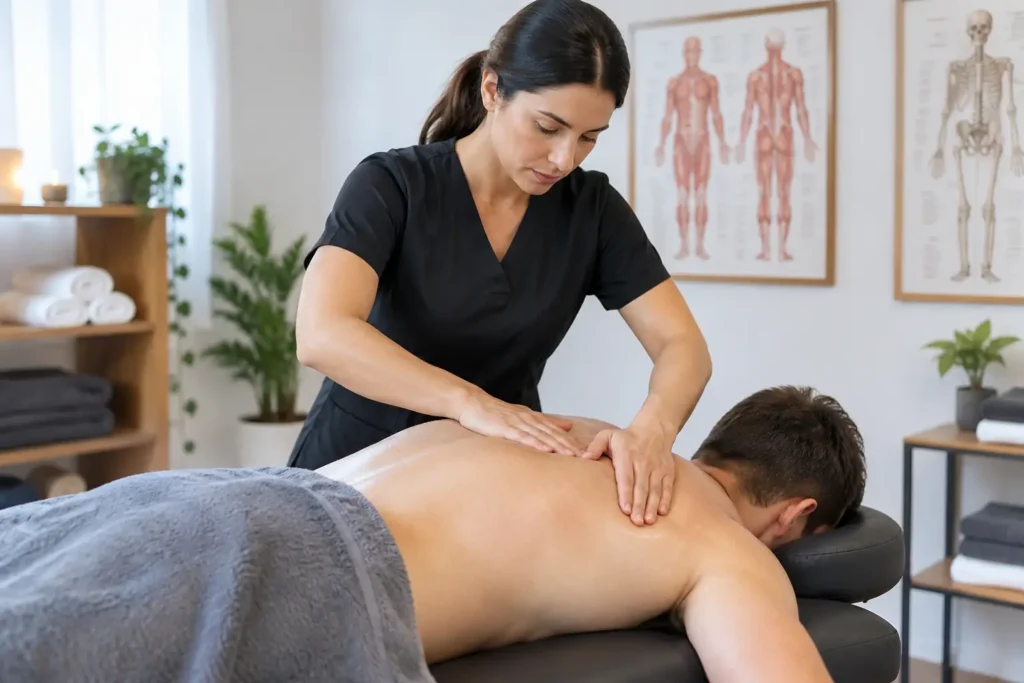
A back massage is often requested for one simple reason: your body is tired of compensating. The ache may start between the shoulder blades after a long day at a computer, settle into the low back after driving, or show up as a familiar knot that returns after workouts and busy weeks. What feels like one tight spot is often part of a larger pattern involving the neck, shoulders, ribs, hips, breathing habits, and daily movement.
Thoughtful therapeutic massage gives those patterns attention without treating every back the same. Rather than following a routine, the work can be adjusted to where you feel tension, how your body responds to pressure, and what you need most from the session: relief from persistent tightness, more comfortable movement, or simply a chance to stop bracing for a while.
Why Back Tension Rarely Stays in One Place
The back does a great deal of quiet work. It helps stabilize you while you sit, stand, reach, carry groceries, train, care for children, and sleep in less-than-ideal positions. When demands repeat without enough recovery, muscles can become guarded and sensitive. You may notice stiffness when turning your head, discomfort when getting up from a chair, or a dull pull across the upper or lower back by the end of the day.
Desk work is a common contributor, but it is not the only one. A standing job can leave the low back and hips fatigued. Training can create short-term soreness or highlight an old pattern of overuse. Stress can show up physically as raised shoulders, shallow breathing, jaw tension, and a back that never fully settles. None of these experiences mean there is one universal cause, which is why individualized care matters.
The area that hurts is still important, but it may not be the only area that needs attention. For example, upper-back tightness can be affected by tension around the chest, shoulders, neck, and shoulder blades. Low-back discomfort may be influenced by the hips, glutes, hamstrings, or the way the body has adapted to prolonged sitting. A skilled session considers these relationships while staying focused on your comfort and goals.
What a Therapeutic Back Massage Can Feel Like
A therapeutic back massage does not need to be punishing to be effective. Some people arrive expecting deep pressure everywhere because their muscles feel especially tight. In practice, pressure that is too intense can make a guarded body brace even more. The most useful approach is often steady, specific work that your nervous system and tissues can receive without feeling overwhelmed.
Depending on your needs, a session may include slow, focused pressure for dense areas of tension; trigger point work for recurring knots; and broader massage strokes to help surrounding muscles soften. Shiatsu-informed and Japanese-informed bodywork can bring attention to compression, positioning, and the body’s overall response. When appropriate, therapeutic cupping, craniosacral techniques, lymphatic drainage approaches, or visceral bodywork may support the larger session. These are not separate formulas. They are tools a therapist may use thoughtfully based on your presentation and preferences.
Communication is part of the treatment. You should be able to say when pressure is too much, when an area feels particularly sensitive, or when you would prefer the work to stay focused on a specific region. A calm, private setting makes it easier to notice those details. The goal is not to prove how much pressure you can tolerate. It is to create productive, respectful work that leaves you feeling more at ease in your body.
Deep Pressure Is Only One Option
Deep tissue techniques can be helpful for some long-standing tension patterns, especially when applied gradually and with care. But deeper is not always better, and a lighter approach is not less legitimate. If you are stressed, sore from recent activity, sensitive to touch, or returning to massage after a long break, the right session may use less intensity and more time helping the body settle.
A good therapist adapts throughout the appointment. Areas that initially feel dense may respond better after nearby tissues have been addressed. Other areas may need only brief attention. This flexibility is one reason a personalized session can feel very different from a standard back routine.
How to Get More From Your Back Massage
You do not need to arrive with the perfect explanation for your discomfort. Still, a few observations can help shape the session. Notice whether tension is worse in the morning or evening, whether it changes with sitting or exercise, and which movements make you feel restricted. Share any recent changes in activity, old injuries that still affect comfort, or areas you do not want worked on.
It also helps to be clear about your priorities. Perhaps your upper back and neck are the immediate concern, but you also want help with the low-back tightness that builds during long drives. Maybe your goal is to move more comfortably for an upcoming trip, return to training with less stiffness, or create a regular body-care rhythm during a demanding season. There is room for both short-term comfort and longer-term maintenance.
Afterward, give your body a little space to respond. Many people appreciate drinking water, taking an easy walk, or avoiding an unusually demanding workout for the rest of the day if they feel tender. Gentle movement is often more useful than becoming completely still. Some people feel an immediate sense of ease, while others notice gradual changes over the next day or two. Response varies with stress level, activity, sleep, and how long the tension has been present.
When Ongoing Care Makes Sense
One session can be valuable, particularly when a stressful week or strenuous activity has left your back feeling overworked. Recurring tightness, however, usually develops through repeated demands. For that reason, periodic massage may be more supportive than waiting until discomfort becomes difficult to ignore.
The right frequency depends on your situation. Someone managing a temporary flare of desk-work tension may benefit from closer sessions for a short period. Someone with a stable but recurring pattern may prefer occasional maintenance appointments. Your work schedule, training load, budget, and response to prior sessions all matter. A practical plan should fit your real life rather than create another obligation.
Massage also works best alongside simple habits that support your body between appointments. This does not require an elaborate wellness routine. Brief movement breaks, changing positions during the day, pacing heavy tasks, and choosing recovery after hard training can all reduce the sense that your back is carrying everything alone. Your therapist can help you notice patterns, but day-to-day comfort is built through small, repeatable choices as well.
When to Pause and Seek Additional Guidance
Massage can support common muscular tension and everyday discomfort, but it is not appropriate for every situation. If you have a new or severe injury, unexplained symptoms, fever, significant swelling, numbness, weakness, or pain that feels sudden or unusual for you, check with an appropriate health professional before scheduling bodywork. The same applies if you have a condition or recent procedure that could affect what touch is safe and comfortable.
Being upfront about health history helps a licensed massage therapist make careful decisions about positioning, pressure, and which techniques to avoid. Therapeutic care should feel collaborative, not like a one-size-fits-all solution.
For adults in SW Portland seeking one-on-one care for persistent back, neck, and shoulder tension, Senju Holistic Healing offers a quiet setting where the session can be shaped around the way your body is feeling that day. The value of a back massage is not just a temporary break from tension. It is the opportunity to pay attention to your body before discomfort becomes the background noise of everyday life.