
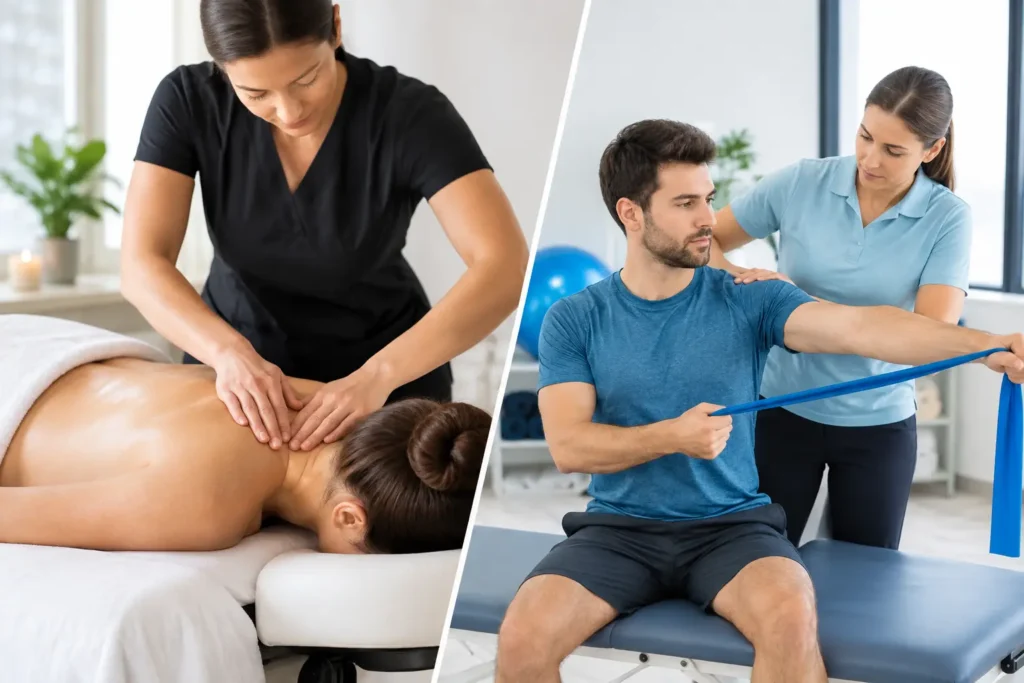
A stiff neck after hours at a laptop, a low back that tightens after a long drive, or a shoulder that always seems to carry the day’s stress can leave you wondering where to turn. When comparing massage versus physical therapy, the most useful question is not which option is better overall. It is which type of care best matches what your body needs right now.
Therapeutic massage and physical therapy can both support comfort, movement, and a more capable daily routine. They differ in their focus, methods, and professional scope. In some situations, one is the clearer fit. In others, they may complement each other well when each provider understands your goals.
Massage Versus Physical Therapy: The Core Difference
Physical therapy is healthcare focused on restoring or improving movement and function. A physical therapist evaluates how you move, identifies functional limitations, and may build an exercise, mobility, strengthening, and activity plan around a specific concern. Physical therapy is often a strong choice after surgery, following an injury, or when pain or weakness is noticeably affecting what you can do at work, at home, or during exercise.
Therapeutic massage is hands-on bodywork focused on muscle tension, sensitive areas, movement comfort, and relaxation of the nervous system. A licensed massage therapist works with the soft tissues of the body and adapts pressure, pace, and techniques to the person on the table. Sessions may help when tight shoulders, recurring knots, stress-related bracing, or general overuse are making it hard to feel at ease in your body.
The distinction matters because the experience is different. Physical therapy often asks you to participate actively through movement and home exercises. Massage gives your body time to receive skilled, responsive hands-on care. Neither approach needs to be treated as an all-or-nothing choice.
When Therapeutic Massage May Be the Better Fit
Massage is often a practical starting point when tension has gradually accumulated rather than appearing after a clear injury. Many people seek care because their upper back feels bound up, their jaw and neck stay tight during demanding weeks, or their hips and low back feel less comfortable after too much sitting, standing, lifting, or training.
A therapeutic massage session can be especially useful when your main goal is to ease persistent muscle tightness, reduce the feeling of being guarded or wound up, and improve day-to-day comfort. It can also be valuable when stress is showing up physically. The body does not separate a packed schedule from muscle tension very neatly. Shoulders rise, breathing becomes shallow, and familiar tight spots become more noticeable.
At a private therapeutic massage practice, the session should not follow a fixed routine. One client may need focused work around the neck, shoulders, and upper back. Another may benefit from slower work through the hips and low back, with attention to how the whole body is compensating. Deep tissue massage, trigger point work, shiatsu-informed techniques, and gentle approaches such as craniosacral work may all be considered, depending on comfort, sensitivity, and the pattern of tension.
More pressure is not automatically better. Effective bodywork is responsive. If an area is highly sensitive or has been bracing for a long time, slower and more moderate work may be more productive than forcing intensity. Clear communication during the session helps the massage therapist adjust the approach.
When Physical Therapy May Be the Better Starting Point
Physical therapy is often the better first step when you need help rebuilding capacity, confidence, or control in a movement. Perhaps bending, reaching, walking, climbing stairs, or returning to a sport has become difficult. Perhaps you are recovering from a procedure or have been advised by a healthcare provider to begin rehabilitation.
A physical therapist can assess movement patterns and guide a progression of exercises designed around functional goals. That structure can be particularly helpful when you want to strengthen an area, improve balance, work through a return-to-activity plan, or understand how to modify movements that keep aggravating symptoms.
It also makes sense to seek appropriate medical or physical therapy guidance when discomfort is new and severe, follows a significant accident, or comes with symptoms such as numbness, unusual weakness, loss of coordination, unexplained swelling, fever, or changes in bladder or bowel function. Massage therapists do not diagnose medical conditions, and a careful practitioner should encourage the right referral when a concern falls outside massage scope.
This is not a dismissal of massage. It is a way to choose care responsibly. A body that needs assessment, rehabilitation, or medical evaluation deserves that attention first.
How Massage and Physical Therapy Can Work Together
For many people, the comparison between massage and physical therapy becomes less rigid over time. Physical therapy may provide the active plan: exercises, movement education, and progressive loading. Massage may support the person who is carrying extra tension, struggling to settle after demanding workouts, or finding that guarded muscles make movement practice less comfortable.
For example, a desk-based professional may work with a physical therapist to improve shoulder strength and movement habits while receiving periodic massage for persistent neck and upper-back tightness. An active adult may use physical therapy to return gradually after an injury and schedule massage when training volume leaves the hips, calves, or back feeling overworked.
Coordination matters. Tell each provider what the other is working on, what exercises you have been given, and how your body responds after sessions. Massage should complement your broader care plan, not compete with it. The goal is practical: help you move through work, family life, and activity with more comfort and awareness.
Questions to Ask Before You Book
Your choice becomes clearer when you move beyond labels and consider your immediate goal. Are you looking for hands-on relief from long-standing tightness? Do you need a structured plan to regain strength or return to a particular activity? Did your symptoms begin gradually, or after a specific event?
Also consider what helps you follow through. Some people want an active program and welcome exercises between appointments. Others need a quiet, one-on-one setting where they can slow down, notice what their body has been holding, and receive focused hands-on work. Both preferences are valid, and they can change from one season of life to another.
Before a massage appointment, share relevant health history, recent injuries, surgeries, medications, and any guidance you have received from other providers. During the session, speak up about pressure, positioning, and areas that feel too tender. Good therapeutic massage is collaborative, not something done without your feedback.
A Practical Choice for Recurring Tension
If your main concern is recurring neck, shoulder, or back tension tied to desk work, stress, training, or everyday demands, therapeutic massage may be a sensible place to begin. The work can be tailored to your current tolerance rather than forcing your body into a standard sequence. At Senju Holistic Healing in SW Portland, each session is shaped around the client’s tension patterns, comfort level, and goals for lasting day-to-day relief.
If your concern involves a meaningful loss of function, recovery after a procedure, or a need for guided rehabilitation, physical therapy may provide the structure you need. And if both seem relevant, there is room for each.
Your body does not need a perfect label before it deserves care. Start with the support that fits your current needs, pay attention to how you respond, and let that information guide the next step.