
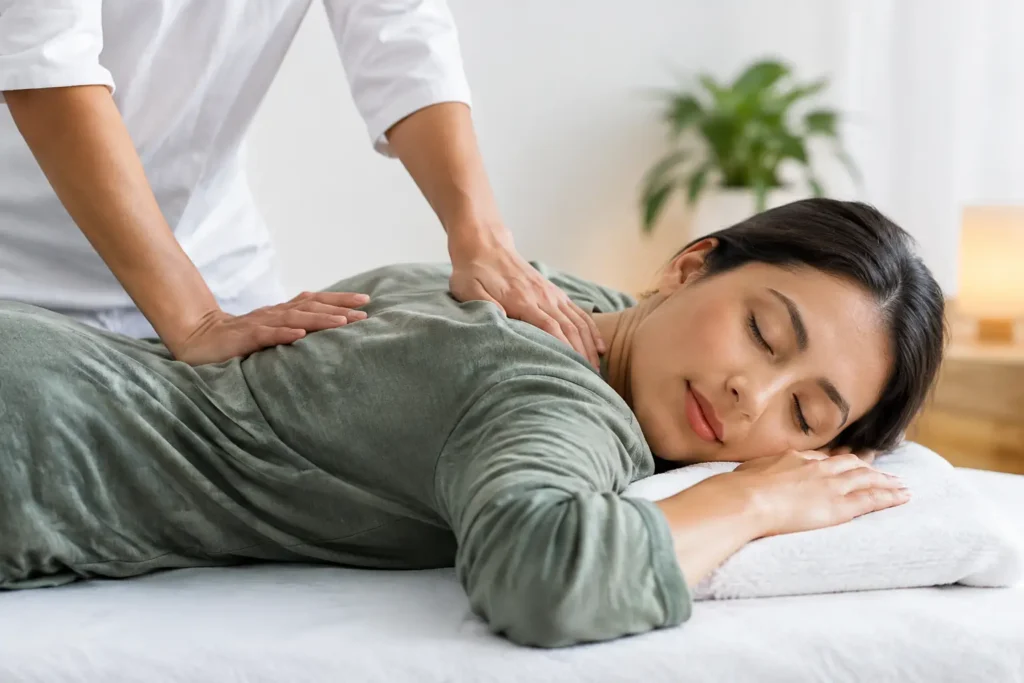
A neck that never quite softens, shoulders that creep toward the ears during a workday, or a back that feels guarded after weeks of stress can leave the whole body feeling on alert. This is where how shiatsu supports nervous system balance becomes a useful, practical question. Shiatsu-informed bodywork is not about forcing the body to relax. It uses steady, attentive touch to create conditions where tension patterns may begin to ease and the body can shift out of its constant bracing response.
For many people, stress is not only a thought or a feeling. It shows up in the jaw, breath, upper back, hips, hands, and sleep habits. A personalized massage session can address those physical patterns while offering a quiet period of focused care – one that respects comfort, sensitivity, and the reality that no two bodies hold stress in exactly the same way.
The Nervous System and Everyday Tension
The nervous system continually takes in information from the body and surroundings. When a deadline, difficult commute, poor sleep, intense workout, or persistent discomfort registers as a demand, the body may become more prepared for action. Muscles can tighten, breathing can become shallower, and attention may narrow. This response is normal and useful in short bursts.
The problem is not that the body responds to stress. The problem is when it has very few opportunities to come back down. Desk work, repetitive movements, caregiving responsibilities, and ongoing pain or discomfort can all contribute to a pattern of low-level guarding. Over time, people may notice recurring knots, limited ease in the neck and shoulders, or a sense that they are always holding themselves up against something.
Massage therapy does not diagnose or treat nervous system disorders. It can, however, provide supportive sensory input in a calm environment. When touch is skilled, predictable, and adjusted to the person receiving it, many clients experience a greater sense of physical ease during and after a session. That shift can matter because a body that feels less guarded often moves, rests, and breathes more comfortably.
How Shiatsu Supports Nervous System Balance Through Touch
Shiatsu is a Japanese bodywork tradition that uses pressure, supported contact, stretches, and attention to the body as a connected whole. In a modern therapeutic massage setting, shiatsu-informed techniques may be blended with other approaches rather than offered as a fixed routine. The practitioner may use palms, thumbs, forearms, or gentle holds to work with areas that feel tight, overworked, or disconnected from the rest of the body.
One reason this style of touch can feel grounding is its pace. Rather than moving quickly from one area to the next, sustained pressure gives the client time to notice what changes. The pressure should not be a test of endurance. It can be adjusted based on tenderness, tissue sensitivity, current stress level, and personal preference.
For someone who spends hours at a computer, for example, the most obvious concern may be a tight upper back. Yet the session may also include careful work around the chest, arms, scalp, hips, or feet, depending on what is contributing to the overall pattern. This broader approach can help the body feel less segmented – not just like a collection of sore spots that need to be pushed harder.
Consistent, respectful contact can reduce guarding
When muscles have been bracing for days or weeks, aggressive pressure is not always the most effective choice. Sometimes it encourages more guarding. Shiatsu-informed work often emphasizes listening through the hands and responding to the tissue rather than applying the same pressure everywhere.
That responsiveness is particularly valuable for clients who feel sensitive, fatigued, or overwhelmed. A session may begin with broader, calmer contact and gradually focus on specific areas as the body settles. Other times, targeted trigger point work or deep tissue techniques may be appropriate for a familiar area of tightness. The useful approach depends on the person, the day, and how their body responds.
Breathing and body awareness have a role
People often discover during bodywork that they have been holding their breath or breathing only into the upper chest. No special breathing technique is required, but a practitioner may invite a client to take an unforced breath, notice an area of contact, or let the exhale lengthen naturally.
This is not about performing relaxation correctly. It is simply a way of giving the body more information: you are supported, you do not have to rush, and you can pay attention without needing to solve everything at once. For clients accustomed to moving through the day on autopilot, that pause can be meaningful.
Why Individualized Pressure Matters
A therapeutic session should not follow a formula based on a modality name. Two people can both say they have shoulder tension while needing very different care. One may benefit from focused work around the shoulder blade and upper back. Another may need a slower session because poor sleep and sustained stress have left their entire system feeling more reactive.
Pressure is only one part of effective bodywork. Timing, positioning, pace, communication, and the ability to stop or change course are equally important. Stronger work may be useful when tissue is resilient and the client wants focused attention on chronic tightness. Lighter, more gradual contact may be a better fit after a demanding week, when soreness is high, or when deeper pressure feels uncomfortable.
At Senju Holistic Healing, shiatsu-informed bodywork can be integrated with therapeutic deep tissue massage, trigger point work, craniosacral techniques, gentle stretching, or other supportive approaches when appropriate. The goal is not to use every technique in one appointment. It is to choose what best supports comfort, mobility, and a more settled physical state that day.
What a Session May Feel Like
A shiatsu-informed therapeutic massage session often feels intentional rather than rushed. Some areas may receive sustained, steady pressure. Others may be addressed with slower kneading, broad contact, or movement that helps a tight region feel less fixed. Clients sometimes notice warmth, easier breathing, less pull through the neck or back, or a clearer awareness of where they have been carrying tension.
Responses vary. You may feel calm and sleepy afterward, or you may simply notice that your shoulders sit lower and movement feels easier. If an area has been especially tight, temporary tenderness is possible, particularly after more focused work. Clear communication about pressure and next-day expectations helps keep the session productive without asking the body to do too much at once.
Lasting change usually comes from repetition and context, not one dramatic appointment. Regular bodywork can be part of a broader maintenance plan alongside movement, ergonomic adjustments, hydration, rest, and breaks from repetitive positions. For some clients, a short series of sessions is helpful during a high-stress period. Others prefer occasional care to address tension before it becomes more disruptive.
When to Take a More Cautious Approach
Massage is not appropriate for every situation, and a responsible practitioner will ask questions before beginning. Recent injuries, unexplained symptoms, fever, active inflammation, skin concerns, blood clotting risks, recent surgery, or certain medical conditions may call for postponing bodywork, modifying the session, or checking with a qualified health care provider first.
It is also useful to speak up about anxiety around touch, past experiences with massage, or areas you prefer not to have worked on. Therapeutic bodywork should feel collaborative. You remain in charge of your comfort, and your feedback guides the session.
Building a More Sustainable Relationship With Tension
Nervous system balance is not a permanent state of perfect calm. Life includes deadlines, training, family needs, and difficult seasons. A more realistic goal is to notice when stress is becoming physical and give the body regular opportunities to recover.
Shiatsu-informed bodywork can be one of those opportunities. Through measured pressure, careful attention, and individualized therapeutic massage, it may help interrupt the familiar cycle of stress, tightening, and discomfort. The next time your shoulders begin to rise or your back starts to feel guarded, consider it useful information from your body – and an invitation to respond with steady, practical care.