
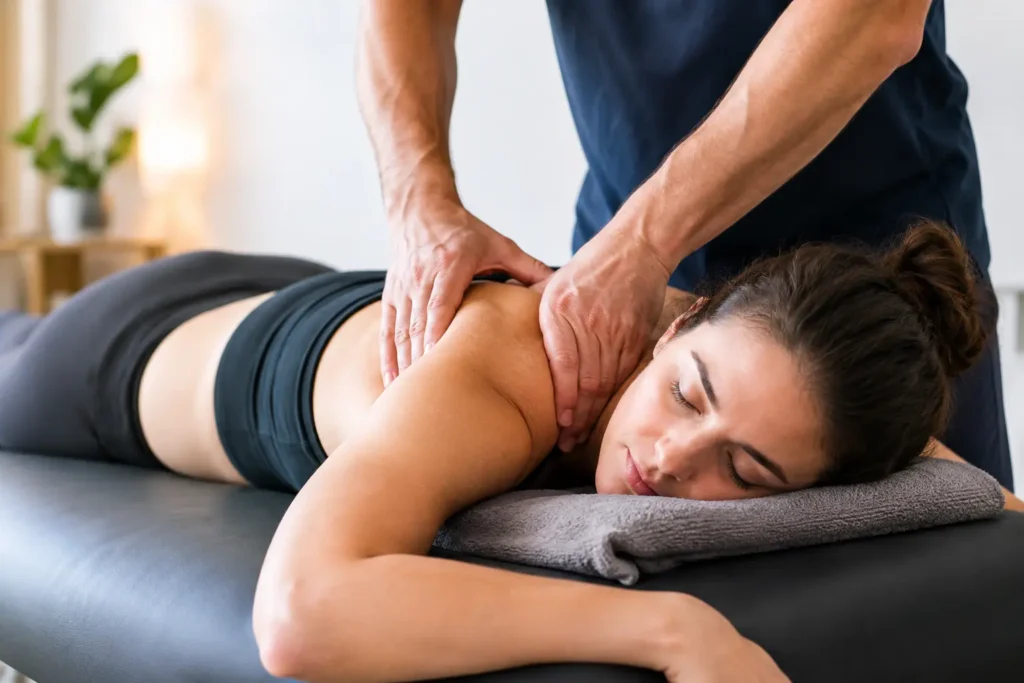
A deep tissue review should begin with a simple distinction: therapeutic deep tissue massage is not about tolerating as much pressure as possible. For people living with a constantly tight neck, heavy shoulders, a sore low back after desk work, or recurring knots that return after a busy week, the value is in thoughtful, specific work. The goal is to address the areas and patterns asking for attention while keeping the session productive, comfortable, and responsive to your body.
Deep tissue massage can be a useful part of ongoing body care, but it is not identical for every person. A runner with tight calves, a parent carrying a child on one hip, and a professional who spends long hours at a laptop may all describe “tightness,” yet their sessions may look quite different.
What Deep Tissue Massage Actually Means
Deep tissue massage generally refers to therapeutic work that uses slower, more focused pressure to reach tension in deeper layers of muscle and connective tissue. Rather than moving quickly across the whole body, a practitioner may spend more time in a few areas that feel restricted, overworked, or persistently uncomfortable.
That does not mean every stroke is intense. Effective work often includes gradual warming, slower compression, movement, and pauses that allow the body to respond. If the tissue is guarded, beginning with heavy pressure can cause a person to tense further. In many cases, measured pressure and clear communication accomplish more than forcing a release.
At Senju Holistic Healing, deep tissue techniques are used as part of a personalized therapeutic session rather than as a rigid routine. Depending on what is happening in your body that day, the work may also include trigger point techniques, shiatsu-informed bodywork, gentle stretching or movement, and other supportive approaches. Therapeutic cupping, craniosacral techniques, lymphatic drainage methods, visceral bodywork, or reflexology may be considered when appropriate to the client’s goals and comfort.
A Deep Tissue Review: Who May Find It Helpful?
Deep tissue work is often a good fit for people who feel that their tension has a pattern. Perhaps the same spot between the shoulder blades keeps returning, one side of the neck feels tighter after computer work, or the low back becomes achy after driving, training, or standing for long periods. It can also suit people who want focused care rather than a general full-body session with the same sequence every time.
Common reasons people seek this style of massage include recurring neck and shoulder tightness, back discomfort, postural strain, muscle fatigue from activity, and stress that seems to settle physically in the jaw, upper back, or hips. Many clients appreciate the chance to slow down and notice how one area may be contributing to another. A shoulder that feels “stuck,” for example, may be influenced by patterns through the upper back, chest, arm, or neck.
Still, deep tissue massage is not automatically the best choice just because discomfort has been present for a long time. If you are highly sensitive to pressure, are exhausted, have recently had a strenuous workout, or feel generally run down, a lighter and more gradual approach may be more useful. The best session is not the one that feels most intense. It is the one that meets your body where it is and leaves you feeling cared for rather than depleted.
Pressure Is a Conversation, Not a Test
One of the most common misunderstandings about deep tissue work is that pain equals progress. Some focused sensation can be normal, especially around chronically tense areas. But sharp, burning, electric, or breath-holding pain is not something to push through. Neither is pressure that makes you brace, clench, or feel unable to relax.
A skilled therapeutic massage session includes ongoing adjustments. You should be able to tell your practitioner when pressure is too much, when an area feels especially sensitive, or when a technique is helping. Good communication is practical information, not a disruption. It helps shape a session that respects both your goals and your nervous system’s response.
What a Personalized Session Can Feel Like
A session usually begins before any hands-on work. Your practitioner may ask about where you feel tension, what makes it better or worse, how your work or activity affects your body, and what you hope to get from the appointment. This conversation helps narrow the focus. It also gives you room to share preferences around pressure, areas you do not want addressed, and anything that may affect comfort on the table.
From there, the work often develops in stages. Broader techniques may help the body settle first, followed by slower work in the areas that need more attention. Trigger point work may be useful for a specific knot or tender band of muscle. Shiatsu-informed pressure can offer another way to work with persistent tension patterns. If a person arrives feeling overstimulated or guarded, gentler techniques may be the most productive starting point.
The experience can be quietly active. You may be asked to take a slow breath, move an arm, or notice how a particular position feels. You may also simply rest while the practitioner works. There is no requirement to perform or endure. The purpose is to create the conditions for useful, professional bodywork.
What to Expect Afterward
People respond differently after deep tissue massage. Some feel lighter, calmer, or more mobile right away. Others notice a temporary tenderness in the worked areas, especially if those muscles have been holding tension for a long time. Mild soreness can happen, but a session should not leave you feeling severely bruised or unable to go about your normal routine.
Giving yourself a little space after the appointment can help. Gentle walking, normal hydration, and avoiding an unusually demanding workout immediately afterward may be sensible, depending on how your body feels. Pay attention to changes over the next day or two: Do you turn your head more easily? Does sitting feel less taxing? Did one area settle while another pattern became more noticeable? These observations can guide future sessions.
If you have an injury, a health condition, recent surgery, unexplained symptoms, or concerns about whether massage is appropriate, it is wise to consult a qualified health care provider. Massage therapists can work within a therapeutic scope, but they do not diagnose medical conditions. Clear information supports safer, better-informed care.
Why Consistency Often Matters More Than Intensity
Many tension patterns are built through repetition. Hours of computer work, long commutes, strength training, caregiving, stress, sleep positions, and everyday habits all add up. One session may provide meaningful relief, but lasting comfort often comes from paying attention before tension becomes overwhelming again.
That does not mean everyone needs the same schedule. Some people benefit from more frequent appointments during a particularly demanding season, then shift into maintenance visits. Others come in when a familiar area begins to tighten. A personalized approach considers your workload, activity level, sensitivity, goals, and budget instead of treating massage as a one-size-fits-all prescription.
Deep tissue work also works best alongside ordinary, sustainable habits. Adjusting a workstation, changing positions more often, taking brief walks, scaling back an activity during a flare-up, or using the mobility practices that feel good to your body can all support the benefits of hands-on care. The aim is not perfection. It is to give your body more opportunities to move and rest with less strain.
Choosing a Therapeutic Massage Practice
When looking for deep tissue massage in SW Portland, consider more than the words “deep pressure” on a service menu. Look for a licensed practitioner who asks questions, explains their approach, respects boundaries, and adapts the work rather than following a fixed sequence. A private, one-on-one setting can be especially helpful for clients who want time to discuss recurring patterns without feeling rushed.
It is also reasonable to ask how the practitioner handles pressure preferences and whether they use more than one technique when needed. Deep tissue massage is one valuable tool, not a complete philosophy of care. The right approach may be focused and firm one day, then slower and gentler at the next visit.
Your body does not need to earn care by reaching a breaking point. Paying attention to recurring tension early, communicating honestly during sessions, and choosing support that fits your actual life can make body care feel less like a rescue plan and more like a steady return to comfort.