
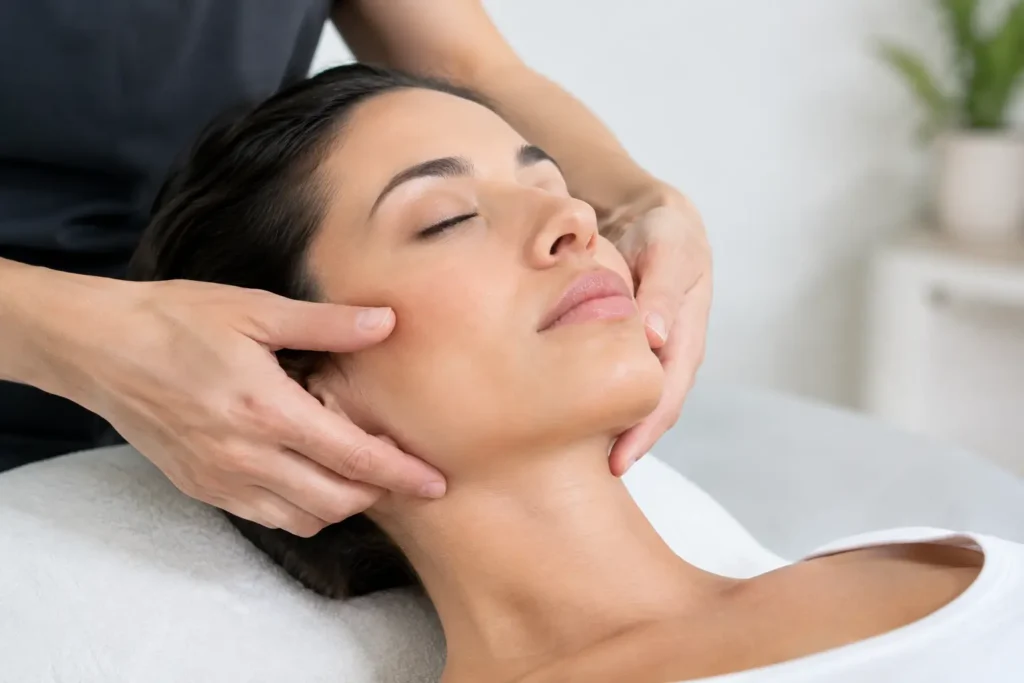
A tight jaw rarely feels limited to the jaw. It can arrive with a dull ache at the temples, a stiff neck by late afternoon, tender cheeks, headaches, or shoulders that seem to creep toward the ears. The best massage for jaw tension is usually not one intense technique applied to a single sore spot. It is a thoughtful, individualized approach that considers the jaw alongside the neck, shoulders, posture, stress load, and habits that may be keeping those muscles on guard.
For many people, jaw tension builds quietly. A demanding workday, long hours at a screen, concentrated driving, training, or simply holding the body tense during stressful moments can all contribute. Massage cannot determine the cause of jaw symptoms or replace dental or medical care when that is needed. It can, however, offer skilled hands-on support for overworked muscles and help the surrounding areas feel less restricted and more comfortable.
What Makes the Best Massage for Jaw Tension?
The most helpful work is usually targeted but not forceful. The jaw is a sensitive, compact area with several small muscles working alongside the larger structures of the neck and shoulders. Pressing hard directly into a painful cheek or temple can sometimes make the area feel more guarded, not less.
A therapeutic session often begins by listening to what you notice: whether the tension is worse in the morning or evening, whether it is mostly on one side, and whether neck or shoulder tightness shows up at the same time. Your comfort with pressure matters just as much as the location of the tension. The goal is not to push through discomfort, but to use appropriate pressure and pacing so the tissue has room to soften.
For jaw tension, therapeutic deep tissue massage and trigger point work may be useful in a careful, measured way. These methods can focus on the masseter muscles along the sides of the jaw, the temporalis muscles at the temples, and the connective tissue around the face. Slow, precise contact is often more effective than aggressive pressure.
The best approach also looks beyond the face. Muscles at the base of the skull, along the sides of the neck, across the upper shoulders, and through the chest can all influence how the head and jaw are held. If these areas are consistently tight, treating the jaw alone may provide only short-lived relief.
Why Neck and Shoulder Work Often Matters
The jaw does not operate in isolation. When the head is carried forward over a laptop, phone, steering wheel, or work surface, the neck muscles work harder to support it. The shoulders may round forward, the upper back may become less mobile, and the jaw can begin to participate in that overall bracing pattern.
This does not mean that posture has to be perfect. Bodies move through many positions during a normal day, and there is no single ideal shape to maintain at all times. What matters more is whether one position is held for too long and whether the body gets enough variation, rest, and movement.
A personalized massage for jaw tension may include work through the upper back, shoulders, neck, and base of the skull before returning to the face and jaw. This wider approach can make direct jaw work feel more comfortable and may help address the familiar combination of temple tightness, neck stiffness, and shoulder knots.
Shiatsu-informed bodywork can also be blended into a session when it suits the client’s needs. Its slower, grounded pressure may be useful for people who feel generally wound up or sensitive to deeper work. Gentle craniosacral techniques may be considered as a supporting approach when a quieter pace feels more appropriate. Neither needs to be treated as a separate, one-size-fits-all service. The right combination depends on how your body responds that day.
The muscles commonly involved
The masseter is the thick muscle at the side of the jaw that becomes active when chewing or clenching. The temporalis spans the side of the head above the ears and can feel tender around the temples. Smaller muscles deeper in the jaw also play a role, though they require particular care.
A licensed massage therapist may work externally around these areas using gentle compression, slow gliding strokes, and sustained contact. In some settings, intraoral massage may be appropriate when it is within the therapist’s training, scope, and the client’s informed comfort level. It is never required for an effective session, and external work through the jaw, neck, and shoulders can be very helpful on its own.
What a Jaw-Focused Massage Session Should Feel Like
A productive therapeutic massage does not need to feel punishing. There may be moments of tenderness, especially around long-held tightness, but you should be able to breathe normally and communicate easily. Sharp pain, a protective flinch, or the feeling that you need to endure the pressure are useful signals to speak up.
Clear communication is especially valuable with jaw work. Let your therapist know if you clench during focused pressure, if you are sensitive at the temples, or if a position on the table irritates your neck. Small changes in head support, pressure, or pacing can make a meaningful difference.
After a session, the jaw and surrounding muscles may feel lighter, warmer, or more aware for a day or two. Some people notice they can more easily recognize when they are holding their teeth together during work or while concentrating. Results vary, particularly when tension has been present for a long time or is tied to an ongoing daily habit. Regular bodywork, when it fits your needs, tends to be more useful as part of an overall maintenance plan than as a single attempt to fix everything at once.
Simple Ways to Support the Work Between Sessions
Massage is most useful when daily habits give the body opportunities to stop bracing. Start with a simple check-in a few times a day: Are your teeth touching when you are not eating? Can you let the tongue rest gently and allow a little space between the upper and lower teeth? This is not about forcing the jaw to relax. It is a brief cue to notice unnecessary effort.
Short movement breaks can also help, especially for desk-based work. Stand up, let the arms move, turn the head gently within a comfortable range, and change your visual focus away from the screen. If you tend to hold the phone between your shoulder and ear, use a headset or speaker option instead. These small adjustments reduce the amount of static work the neck and jaw must do over the course of a day.
Heat may feel soothing for some people with general muscle tightness, while others prefer a cool cloth after a particularly tense day. Avoid aggressive self-massage inside the mouth or forceful jaw stretching. More pressure is not always better in this area.
When to seek additional evaluation
Massage is appropriate for many common patterns of muscular tightness, but certain symptoms deserve timely evaluation from a qualified health or dental professional. Seek guidance if you have significant jaw locking, a sudden change in how your bite fits together, swelling, fever, recent facial injury, numbness, severe or rapidly worsening pain, or difficulty opening or closing the mouth.
If you use a night guard, have ongoing dental concerns, or suspect nighttime grinding, a dentist can help you understand options that massage cannot provide. Therapeutic bodywork can still complement that care by addressing the neck, shoulders, and facial muscles that may be working overtime.
A Personalized Approach in a Private Setting
At Senju Holistic Healing in SW Portland, jaw tension is approached as part of the whole pattern rather than a standalone problem. A session may blend therapeutic deep tissue massage, trigger point work, Japanese-informed techniques, and quieter supportive methods based on your sensitivity, goals, and the way tension is showing up in your body.
The most useful massage is the one that respects the complexity of the area and gives you room to participate in your own care. When jaw, neck, and shoulder tension have become a familiar part of your day, a calm, well-paced session can be a practical place to begin noticing what your body has been carrying – and what it may be ready to let go of.