
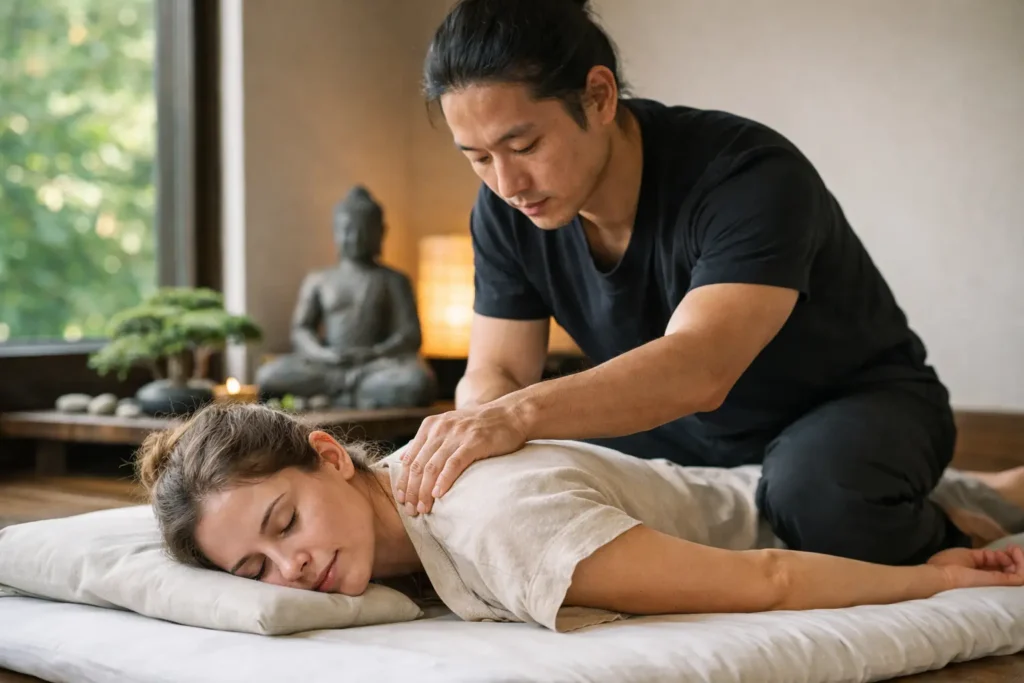
A neck that feels locked by late afternoon, shoulders that stay lifted long after a demanding day, or a familiar knot between the shoulder blades rarely comes from one simple cause. For people seeking shiatsu informed massage Portland care, the value is often in a session that pays attention to the larger pattern: how stress, desk posture, activity, sleep, and accumulated muscle guarding may be affecting the body together.
Shiatsu-informed work can bring a grounded, attentive quality to therapeutic massage. At Senju Holistic Healing in SW Portland, it is not treated as a fixed sequence or a separate, one-size-fits-all service. It is one influence within personalized massage sessions designed around your areas of tension, sensitivity, comfort level, and practical goals.
What Shiatsu-Informed Massage Means
Shiatsu is a Japanese bodywork tradition that uses intentional touch, sustained pressure, and an awareness of how different areas of the body relate to one another. In a massage setting, shiatsu-informed techniques may include broad palm pressure, comfortable holds, compression, assisted movement, and attentive work around patterns of tightness.
The word “informed” matters. A shiatsu-informed massage does not require every session to follow a traditional shiatsu format. Some clients arrive with a highly specific concern, such as a persistent spot near the shoulder blade or low back tightness after long hours at a computer. Others feel generally worn down, with tension spread across the neck, shoulders, hips, and legs. The most useful approach depends on what is happening in the body that day.
A therapist may blend shiatsu-informed pressure with therapeutic deep tissue work, trigger point techniques, focused work on restricted areas, or slower calming touch. When appropriate, a session may also include supportive methods such as therapeutic cupping, craniosacral techniques, reflexology, lymphatic drainage techniques, or visceral bodywork. These are not automatic additions. They are selected carefully when they fit the client’s needs and the direction of the session.
Why This Approach Can Feel Different
Many people think massage pressure must be either light and relaxing or intense and deep. In practice, effective therapeutic massage is more nuanced. Pressure can be firm without being rushed, and targeted without becoming a test of endurance.
Shiatsu-informed bodywork often emphasizes patient contact rather than quick, repetitive strokes. A therapist may use a steady palm or thumb pressure to invite an overworked area to soften, then reassess how the surrounding tissue responds. This can be especially useful for people whose muscles tend to brace against aggressive pressure.
For recurring neck and shoulder tension, the point of discomfort is not always the only area worth addressing. Tightness around the upper back, chest, forearms, jaw, hips, or even the way someone holds themselves while seated can contribute to the feeling that the shoulders never fully settle. That does not mean every session needs to cover the whole body. It means the work should be guided by observation and communication, not a predetermined routine.
This approach also leaves room for quiet. Clients who spend their days answering messages, managing responsibilities, or training hard often benefit from an hour where someone skilled is paying close attention to the body without asking it to perform. A private therapeutic setting can make that easier, particularly for people who do not feel comfortable in a busy, impersonal environment.
Shiatsu-Informed Massage Portland Clients May Consider for Common Tension Patterns
A personalized session can be helpful when tension has become a regular part of daily life rather than an occasional inconvenience. Common reasons people seek this kind of bodywork include desk-work posture stress, tight upper shoulders, low back discomfort, recurring knots, training-related stiffness, and stress that seems to settle physically in the body.
Neck and shoulder tightness
Neck and shoulder tension often develops gradually. Laptop work, driving, phone use, stress, and poor recovery between busy days can all encourage the head and shoulders to work harder than they need to. A session may combine slower pressure through the upper back and shoulders with careful work around the neck, chest, arms, and scalp, depending on what feels appropriate.
The goal is not to force the neck to move farther or to chase discomfort with more pressure. It is to work within a tolerable range and help reduce the sense of constant holding. Some people prefer focused therapeutic work; others respond better when deeper techniques are balanced with gentler contact. Both responses are valid.
Back tension and recurring knots
A “knot” is often a useful description of a spot that feels dense, sore, or persistently tight. Yet the sensation can be influenced by several nearby areas and by how frequently the body has been under strain. Direct trigger point work may be useful for some spots, while broader compression and deep tissue massage may better support others.
For back tension, a therapist may consider the relationship between the shoulders, ribs, hips, and legs instead of treating the painful location as an isolated problem. This does not promise a permanent fix in one session. It can, however, create a more thoughtful starting point for improving comfort and mobility over time.
Stress-related muscle guarding
Stress does not stay only in the mind. Many people notice it in a clenched jaw, shallow breathing, raised shoulders, a tense low back, or difficulty letting the body rest. Massage cannot remove the source of a demanding job or family schedule, but it can offer a structured pause and help the body shift out of a familiar pattern of bracing.
Shiatsu-informed touch is often well suited to this because it can be both specific and unhurried. The session remains therapeutic, but the pace can support a deeper sense of settling rather than simply working as hard as possible on every tight area.
What a Personalized Session May Look Like
Good therapeutic bodywork begins before the first technique. A brief conversation helps clarify what has been bothering you, what activities may be contributing, what pressure feels productive, and what you hope to get from the session. If you have an area that is newly painful, highly sensitive, or changing quickly, sharing that context helps the therapist work more cautiously and appropriately.
During the massage, feedback is part of the treatment process. You do not need to tolerate sharp, alarming, or overwhelming pressure to make progress. Useful work may feel like a tolerable ache, warmth, release, or a gradual softening of guarded tissue. If something feels too intense, too light, or simply not right, adjustment is expected.
The session may stay concentrated on one region, such as the neck, shoulders, and upper back. On another day, it may include the hips and legs because they appear to be contributing to low back strain. The plan can change based on how your body responds. That flexibility is a strength, not a lack of structure.
Setting Realistic Expectations for Lasting Comfort
Massage results vary. A person with tension from a particularly stressful week may feel noticeable relief after one focused session. Someone dealing with a longstanding pattern related to years of desk work, repetitive activity, or frequent training may benefit more from ongoing care, paired with practical changes in movement, rest, workspace setup, or exercise habits.
It also helps to avoid treating soreness as proof that a massage was effective. Some tenderness can occur after deeper work, especially in areas that have been sensitive or underused, but more intensity is not always better. Thoughtful pacing and clear communication usually create a better experience than pushing past the body’s limits.
Massage is not a substitute for medical evaluation when symptoms are severe, unexplained, worsening, or accompanied by concerns such as numbness, weakness, fever, or significant injury. In those cases, appropriate medical guidance comes first. For the everyday patterns of tightness and discomfort that build through work and life, therapeutic massage can be a practical part of regular body care.
The right session should leave you feeling listened to, not processed through a routine. Whether your goal is easing a stubborn upper-back knot, moving with less stiffness after a long week, or giving your body room to settle, individualized shiatsu-informed bodywork offers a calm, skillful place to begin.